Bringing Ancient History to Life with Marvelous Designer: An Interview with Pablo Aparicio Resco
Ever wondered how 3D digital technology can breathe fresh life into ancient history? Step inside Pablo Aparicio Resco's creative process to discover how he uses Marvelous Designer to transform complex Roman tunics and togas into stunning, painterly 2D-style illustrations that tell rich human stories!
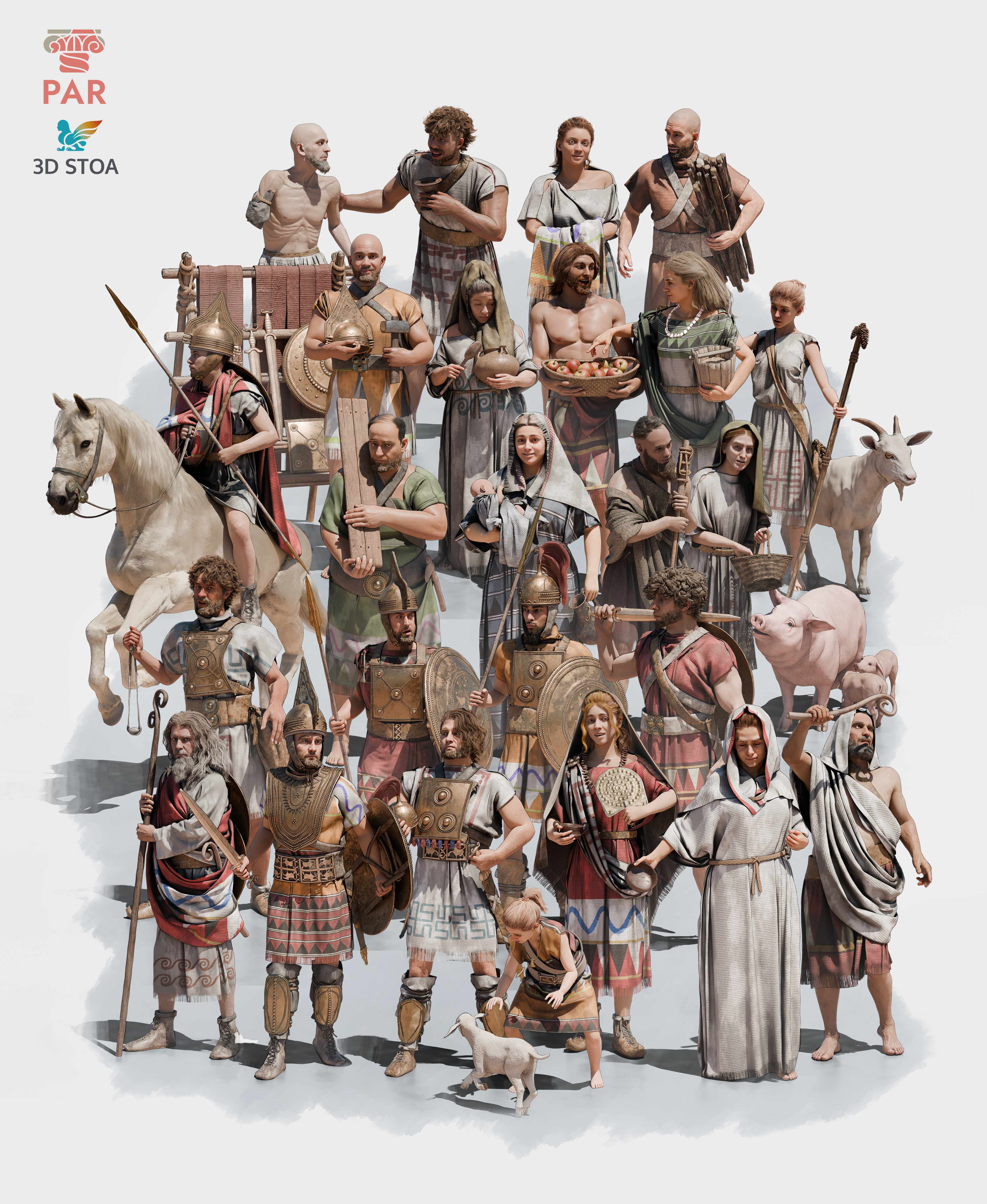
Could you briefly introduce yourself and tell us about the "PAR - Arqueología y Patrimonio Virtual" infographic project?
My name is Pablo Aparicio Resco, and for more than ten years I have been working at the intersection of archaeology and technology through the scientific virtual reconstruction of the past. Although my personal brand is PAR – Archaeology and Virtual Heritage (www.parpatrimonio.com), in 2021 we launched the company 3D Stoa – Heritage and Technology (www.3dstoa.com), through which we carry out all kinds of projects related to heritage documentation, analysis, and valorization through the use of technology. In addition, we provide online training focused on all these techniques through KORÉ – Online Training in Heritage and Technology (www.koreformacion.com).
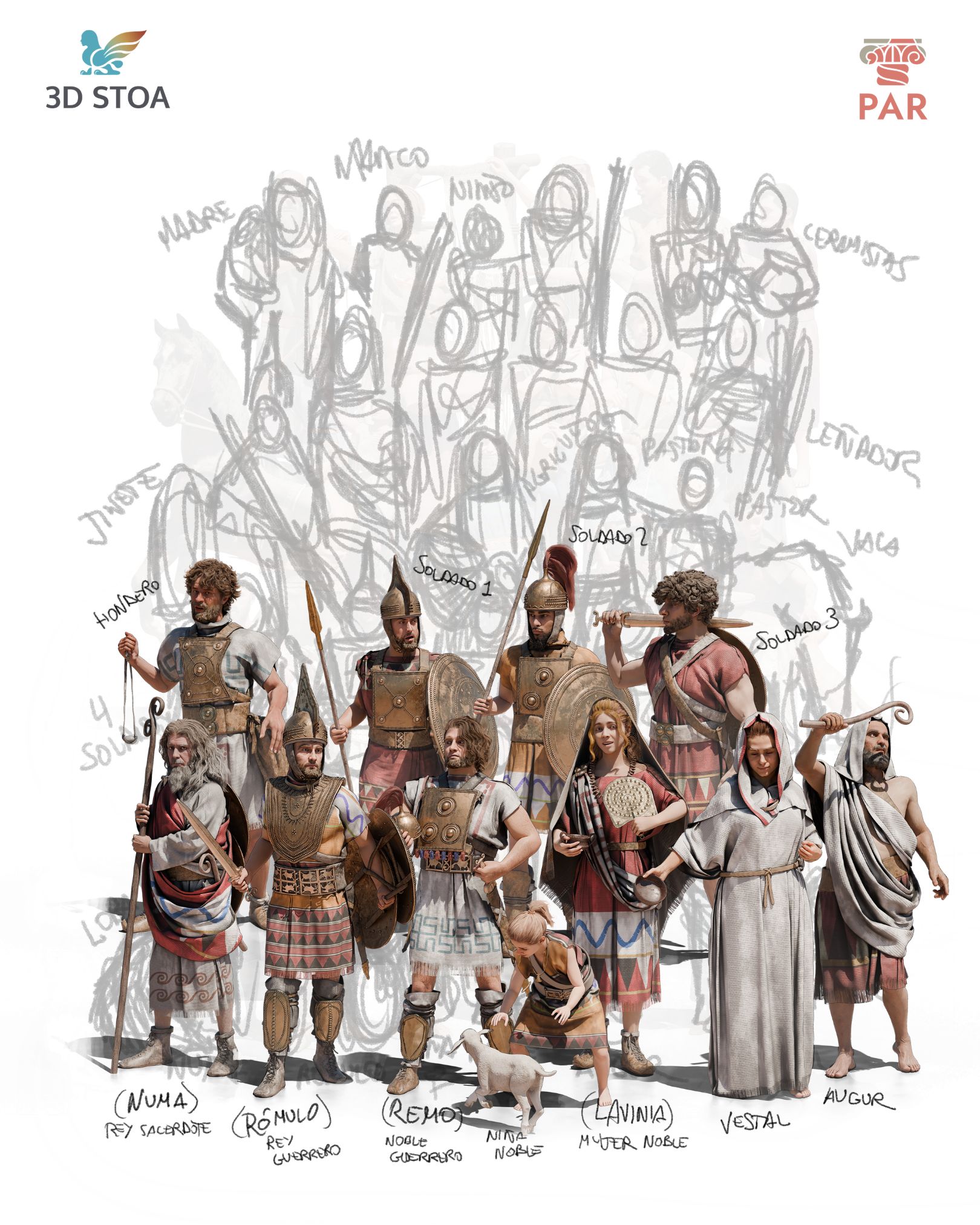
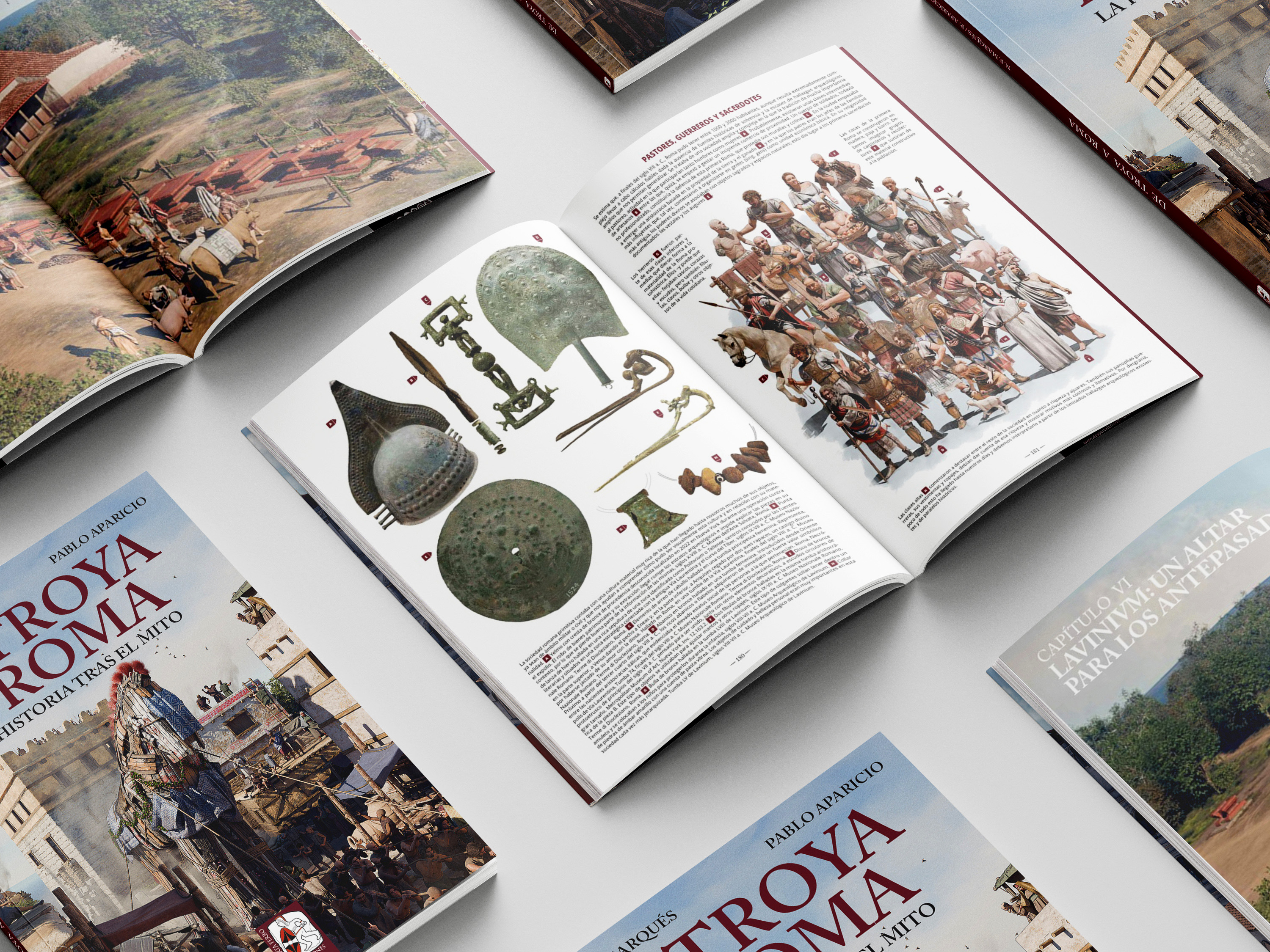
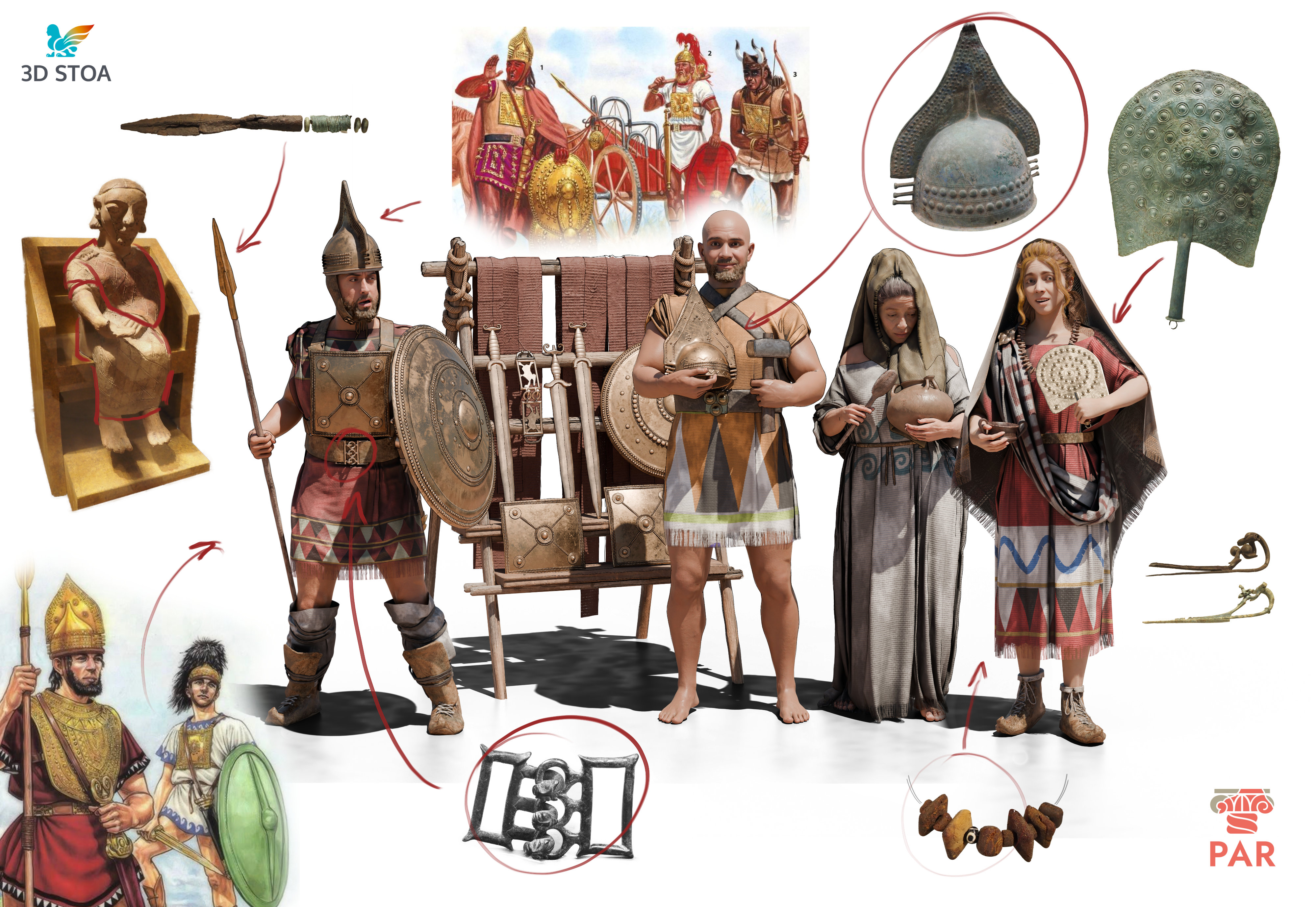
This project emerged as part of the development of the second illustrated book that I am publishing together with my colleague, Néstor F. Marqués, with the Spanish publishing house Desperta Ferro (www.despertaferro-ediciones.com). In this book, From Troy to Rome. The History Behind the Myth (De Troya a Roma. La historia tras el mito), we explore the founding myths of Rome, from Aeneas to Romulus, as well as the historical reality that we know lies behind them. It is for this book that I created several infographics representing historical characters, including the infographic of early Roman society that I present here.
For creating historically accurate clothing from 8th century BC Rome, what made you decide to use Marvelous Designer for this project?
When approaching the 3D recreation of historical clothing, we must be extremely careful and, in many cases, we do not have as much information as we would like. For this reason, we need to rely on iconographic and ethnographic references, as well as archaeological finds of objects associated with garments — such as brooches or belt buckles — and subsequently carry out testing when arranging the clothing on the characters’ bodies.
In this regard, Marvelous Designer is the perfect tool for working with separate garments such as tunics, togas, and veils, which require naturalistic drapery and realistic folds. Working with this software provides a warmth and visual strength to the final results that is very difficult to match with other alternatives.
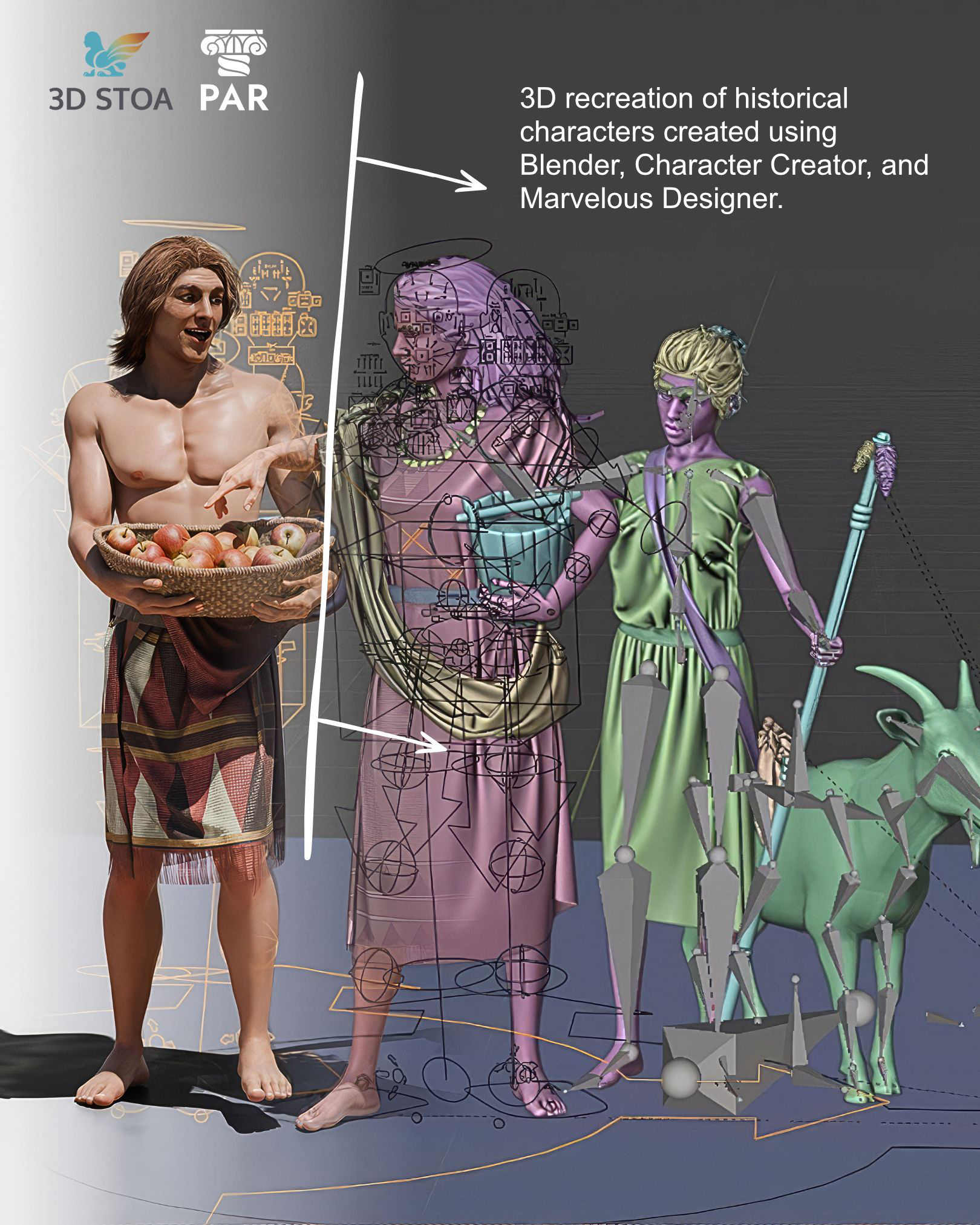
The most fascinating aspect of your work is that despite using a 3D tool like Marvelous Designer, the final output has a beautiful, 2D illustrative and painterly feel. Could you walk us through your workflow (rendering, texturing, post-processing) to achieve this specific style?
I really like the way this question is framed because it means I have achieved exactly what I was aiming for: moving away from the ultra-realistic three-dimensional look and developing a distinctive style of my own, one that feels closer to 2D illustration.
In Marvelous Designer, I usually work with a Particle Distance of 10 mm, while adjusting the Thickness parameter of the material’s physical properties depending on the type of fabric — generally ranging from 1 mm to 4 mm depending on its weight and thickness. It is an intuitive and fairly free process that, while always guided by the historical references available to us, proves particularly well suited to achieving the visual style I am looking for.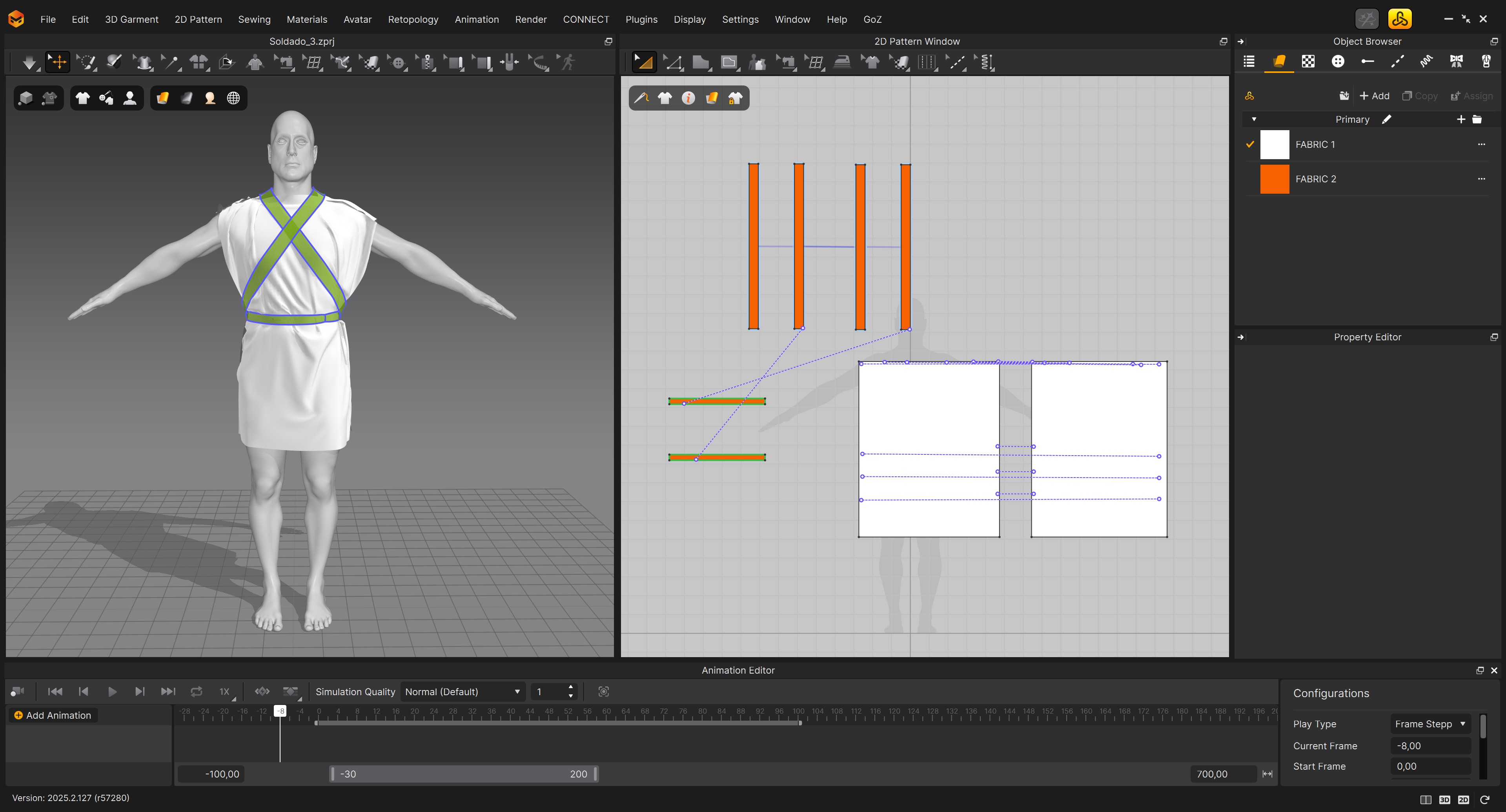
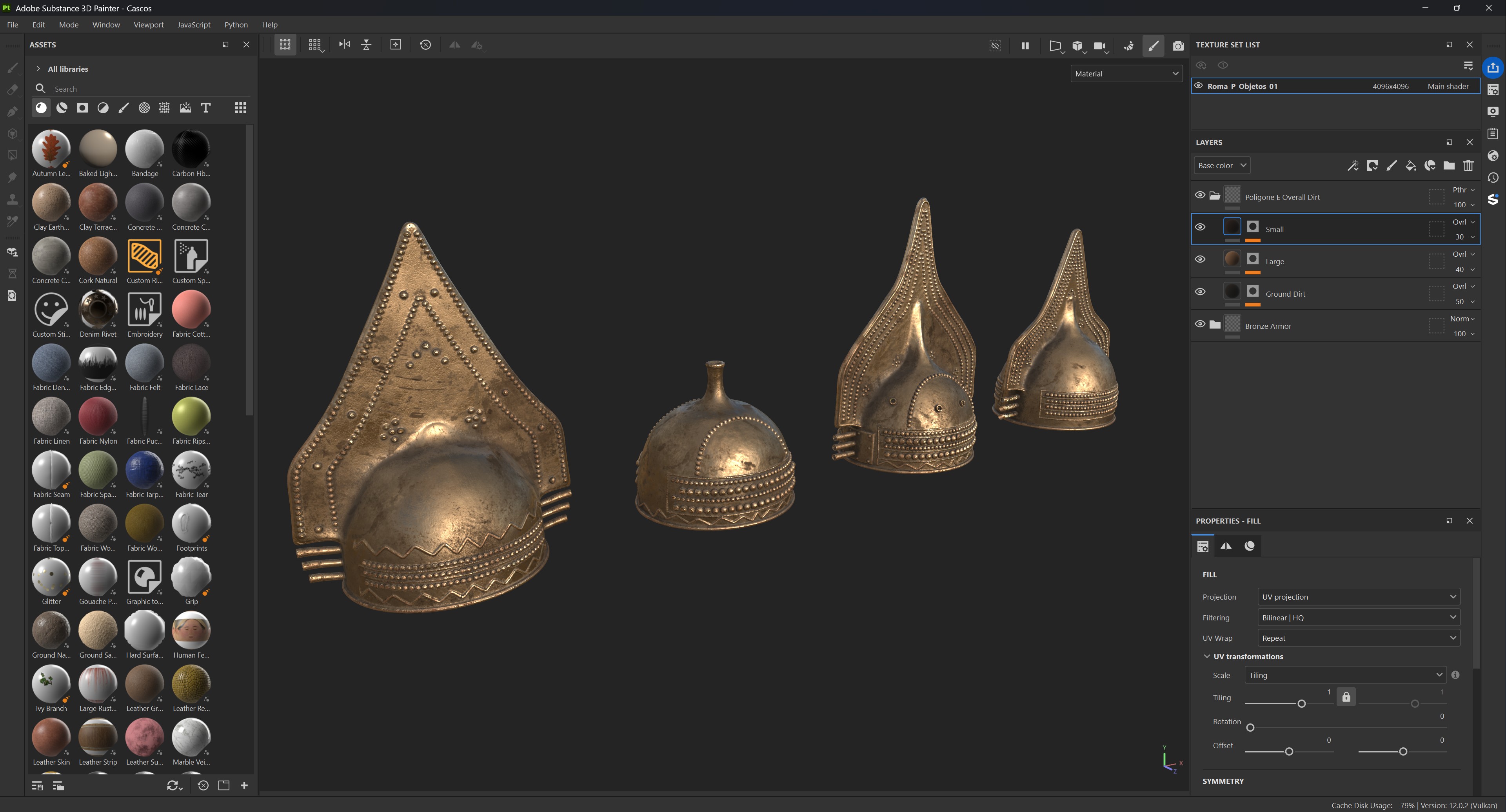
I generally carry out the texturing process in Blender using procedural workflows, although for certain objects or garments I may also use Substance 3D Painter. The final key lies in rendering with Blender Cycles and then combining, in post-production, the traditional 3D finish with an outline render generated through the Line Art tool, which adds that traditional hand-drawn quality that I find especially appealing.
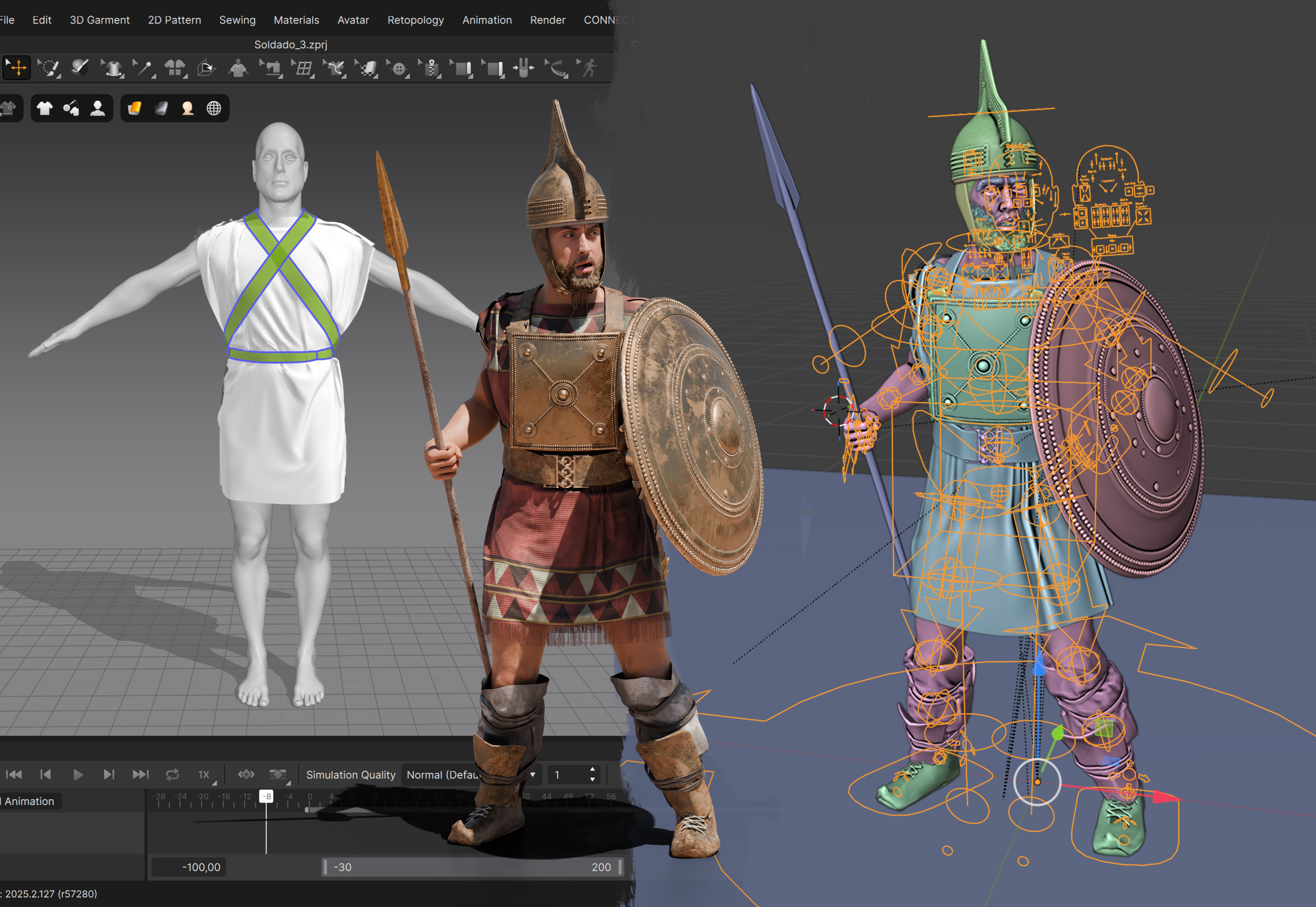
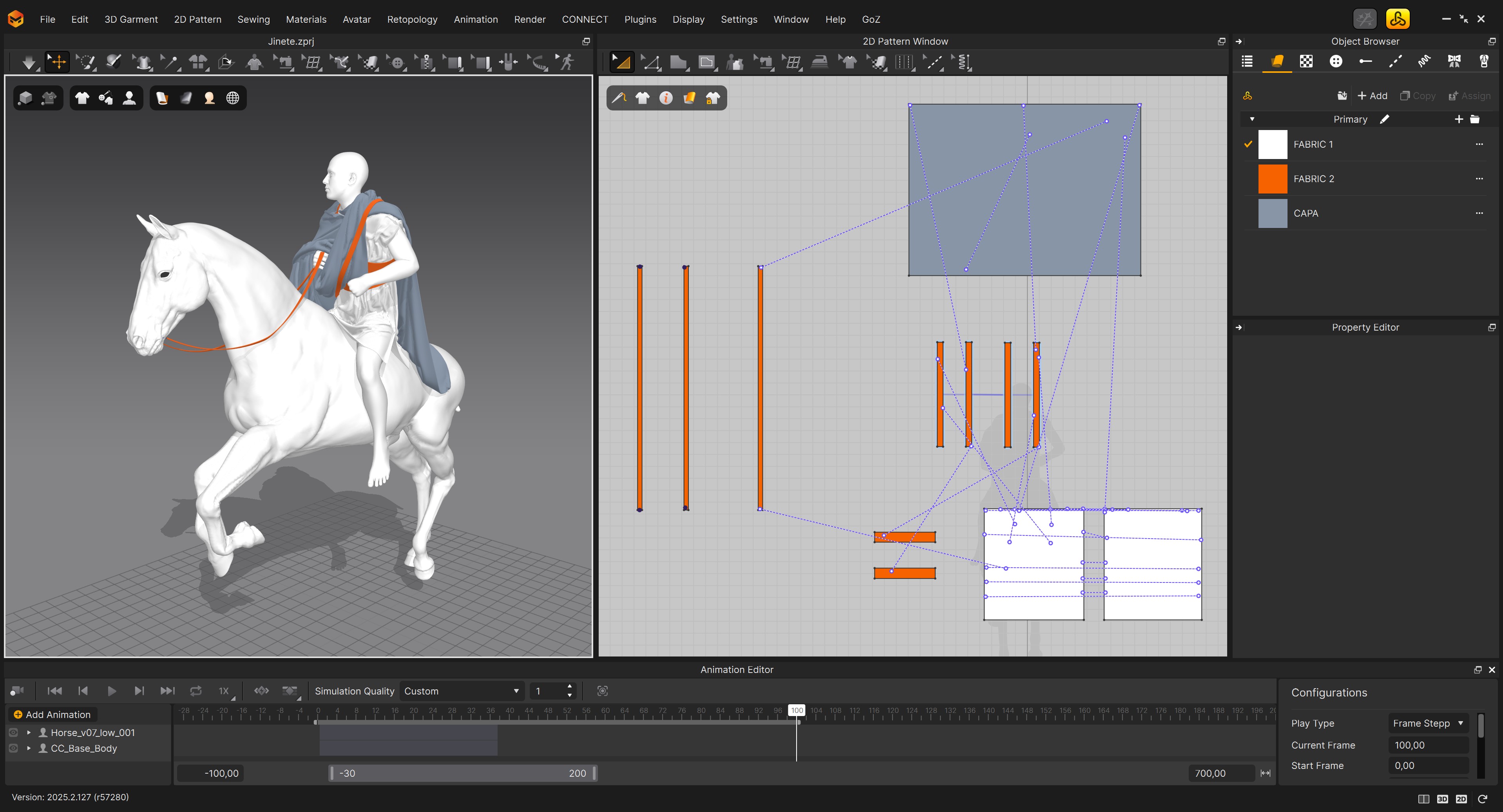
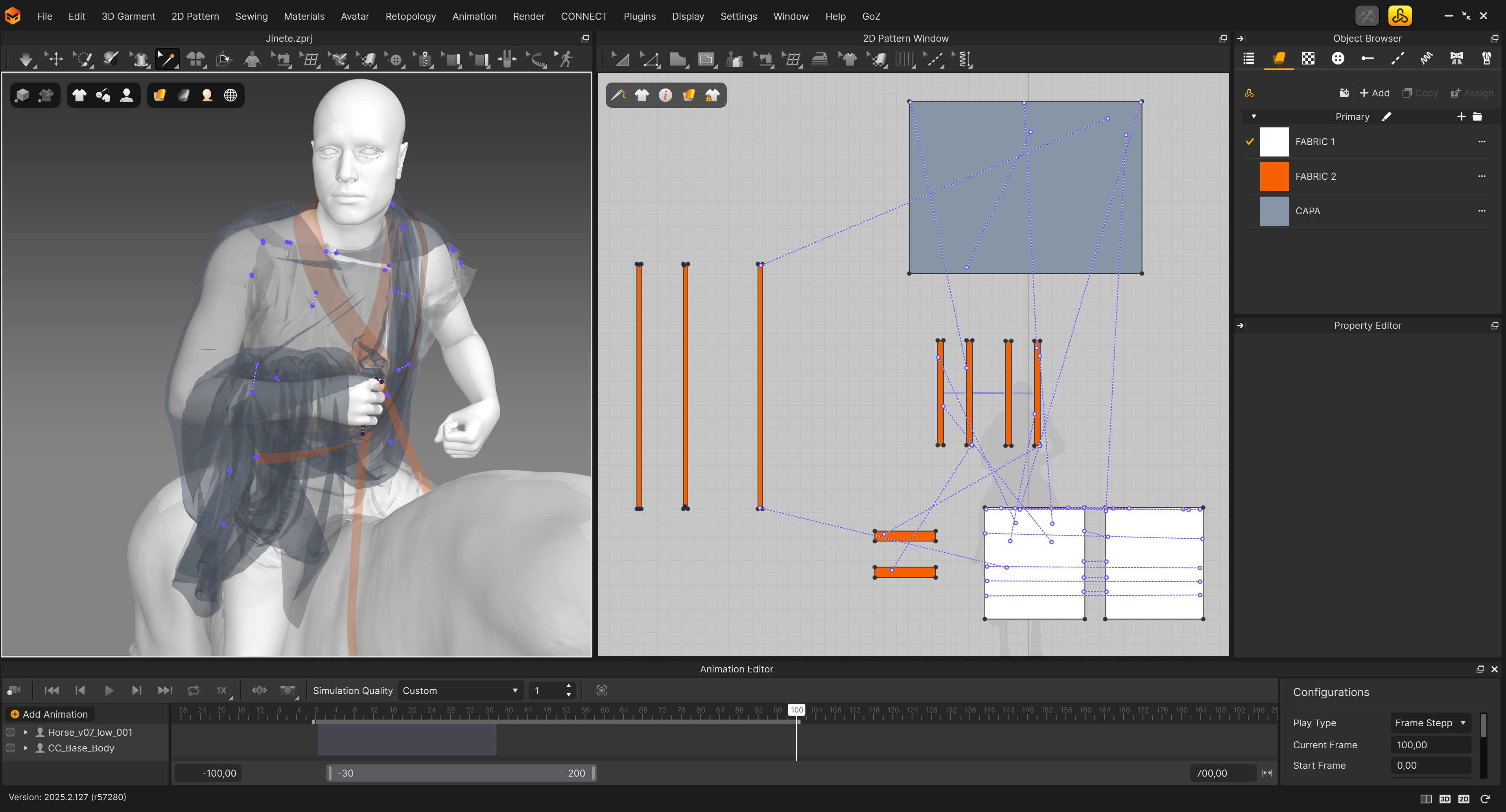
Ancient Roman garments (like tunics or togas) often rely heavily on draping large pieces of fabric rather than complex tailoring. Which Marvelous Designer features (e.g., Pins, Tacks) were the most helpful in creating these natural drapes?
Indeed, working with tunics and togas is particularly challenging because, rather than dealing with complex garments made up of many parts, we are usually working with very few elements that must be carefully “wrapped” around the characters. In this sense, both pins—used to temporarily hold the garment in space—and, especially, tacks, which allow us to connect points of the fabric to each other and also to the avatar itself, are essential tools. Ultimately, it is a complex and careful process of combining pins (which are later removed to enable proper animation of the models) and tacks until the desired result is achieved.
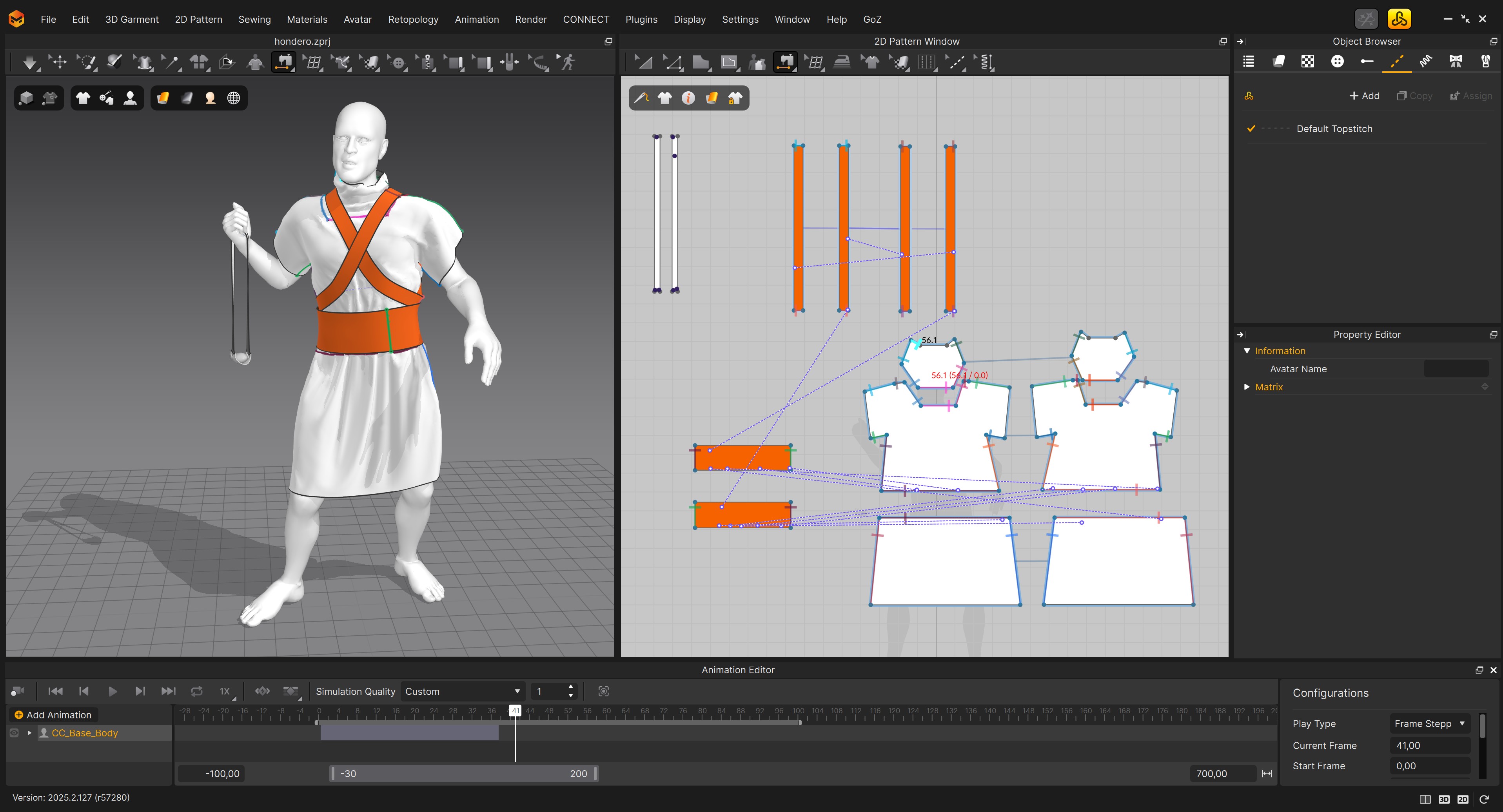
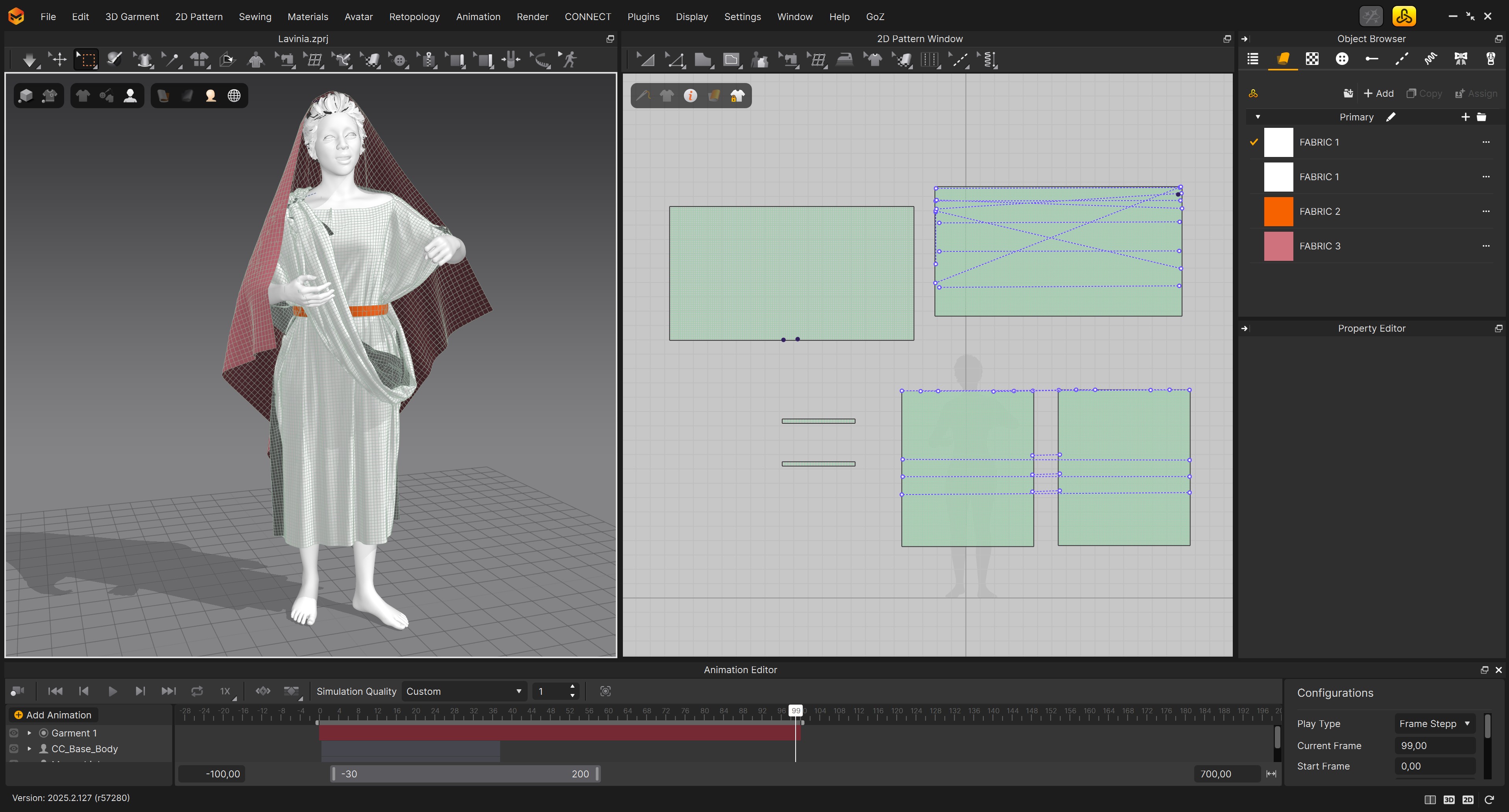
The infographic features various social classes from the lowest to the highest. How did you visually differentiate the clothing across classes? (e.g., fabric type, fold shapes, fit) within Marvelous Designer?
One of the aims of this type of infographic was precisely to represent these social classes through their clothing and equipment, but also through their professional and social activities, so that the viewer can understand the differences and visualize a kind of visual summary of the society as a whole. In this sense, both the garments and the ornaments of the different figures are highly significant.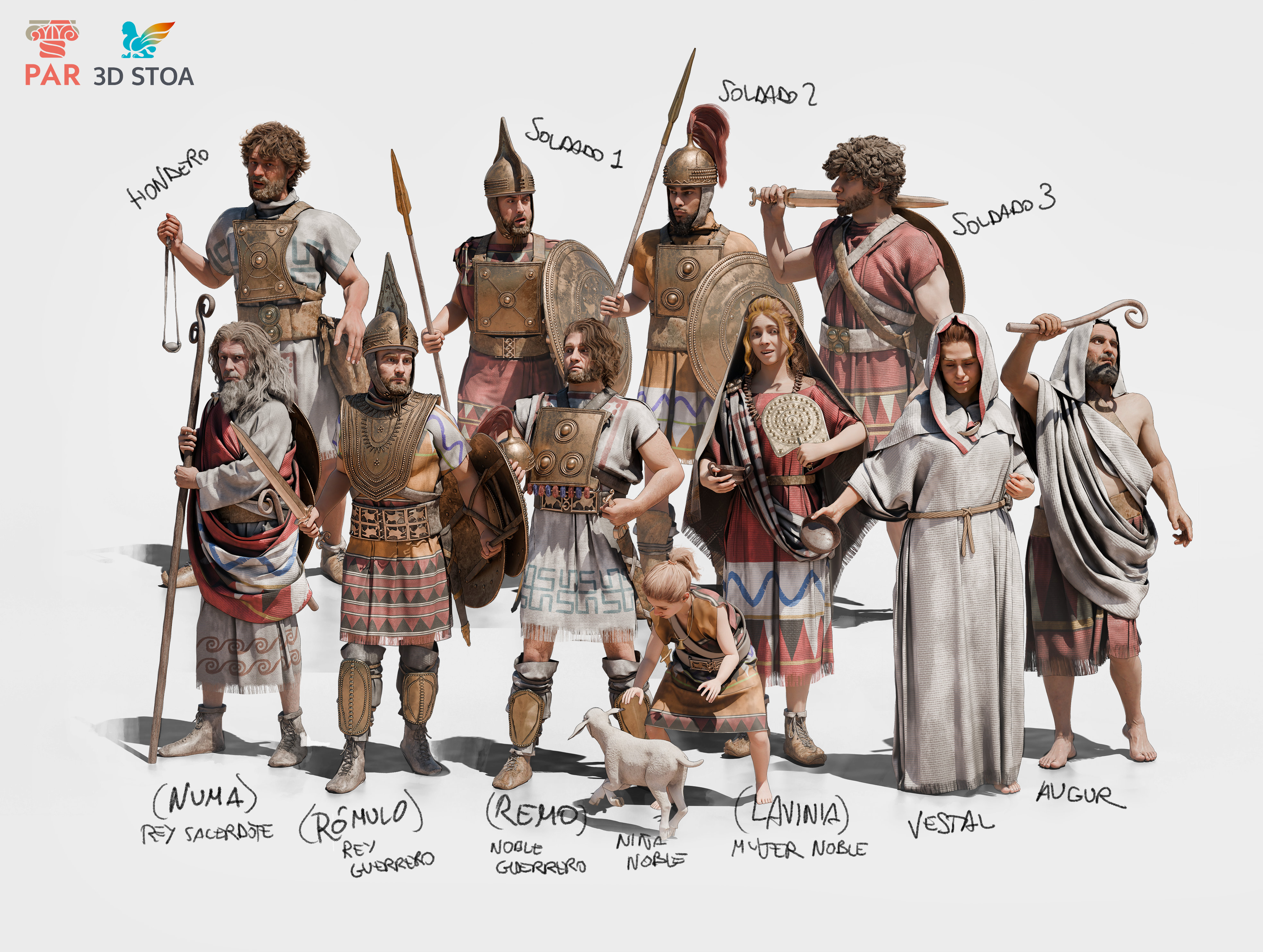
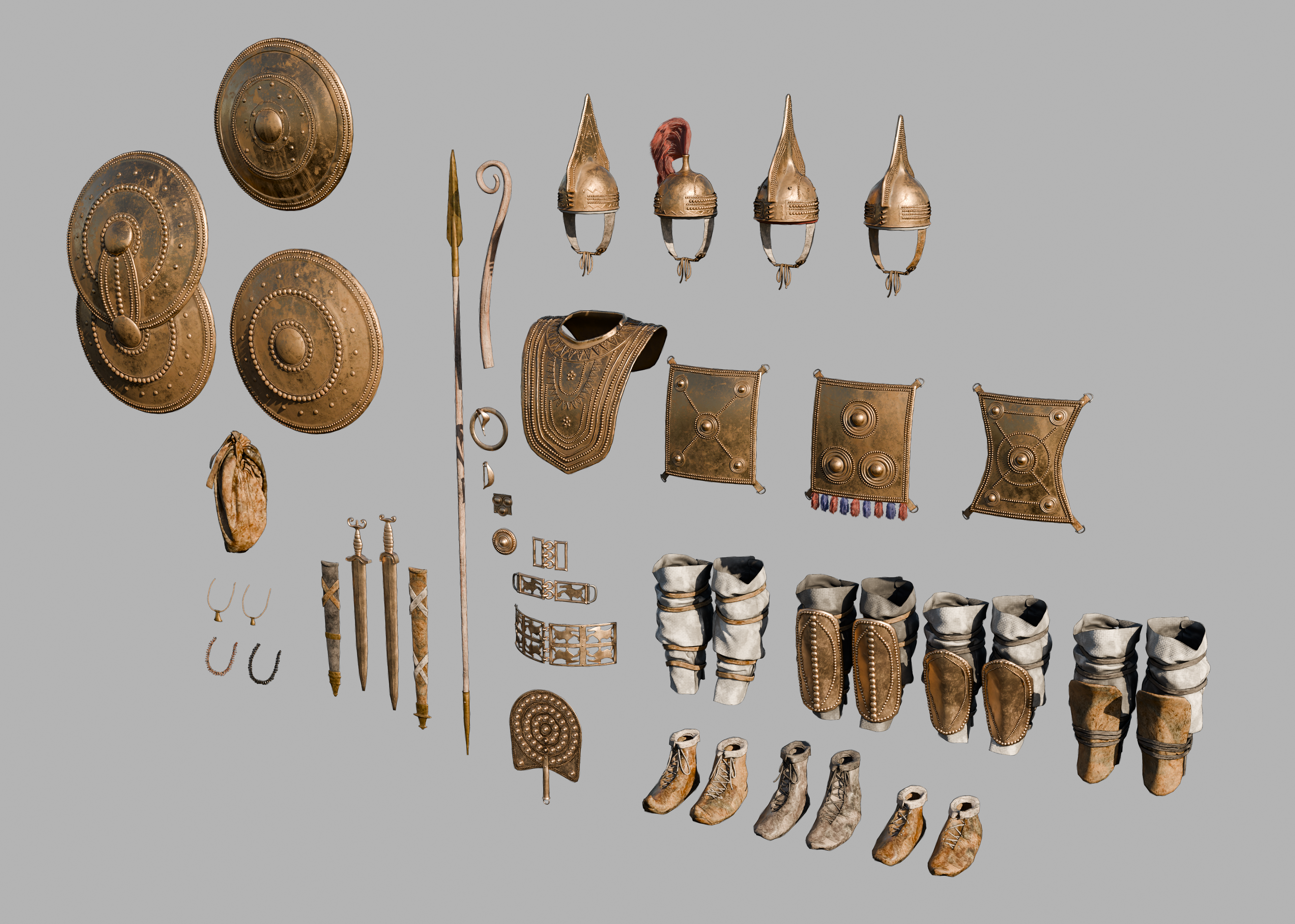
The complexity of clothing increases as we move up the social scale, as do the colours, which become more vivid and elaborate. These differences are subtle—especially in societies that had not yet developed the level of hierarchical stratification seen in later periods—but they nevertheless help to clarify and communicate social distinction.
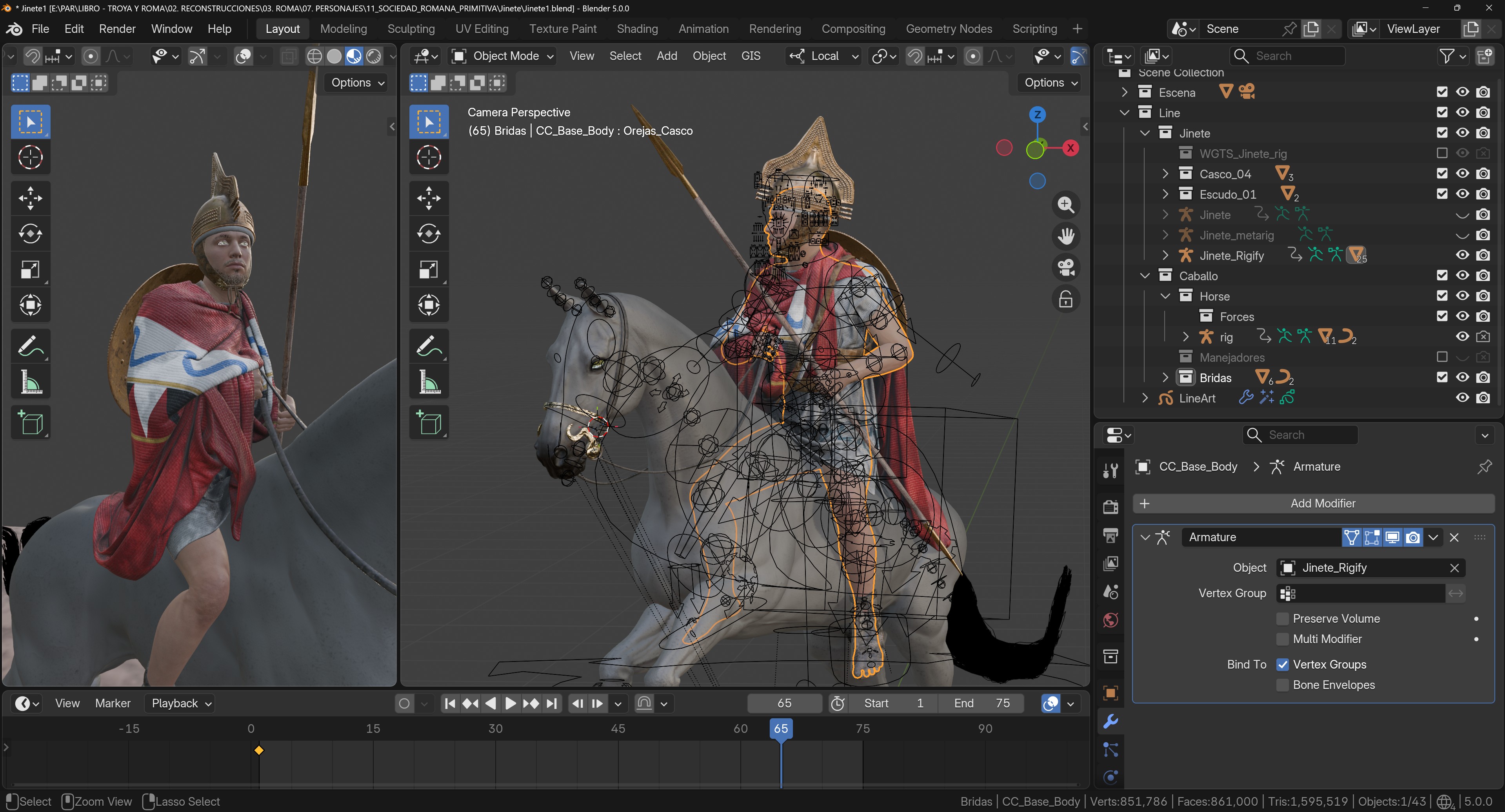
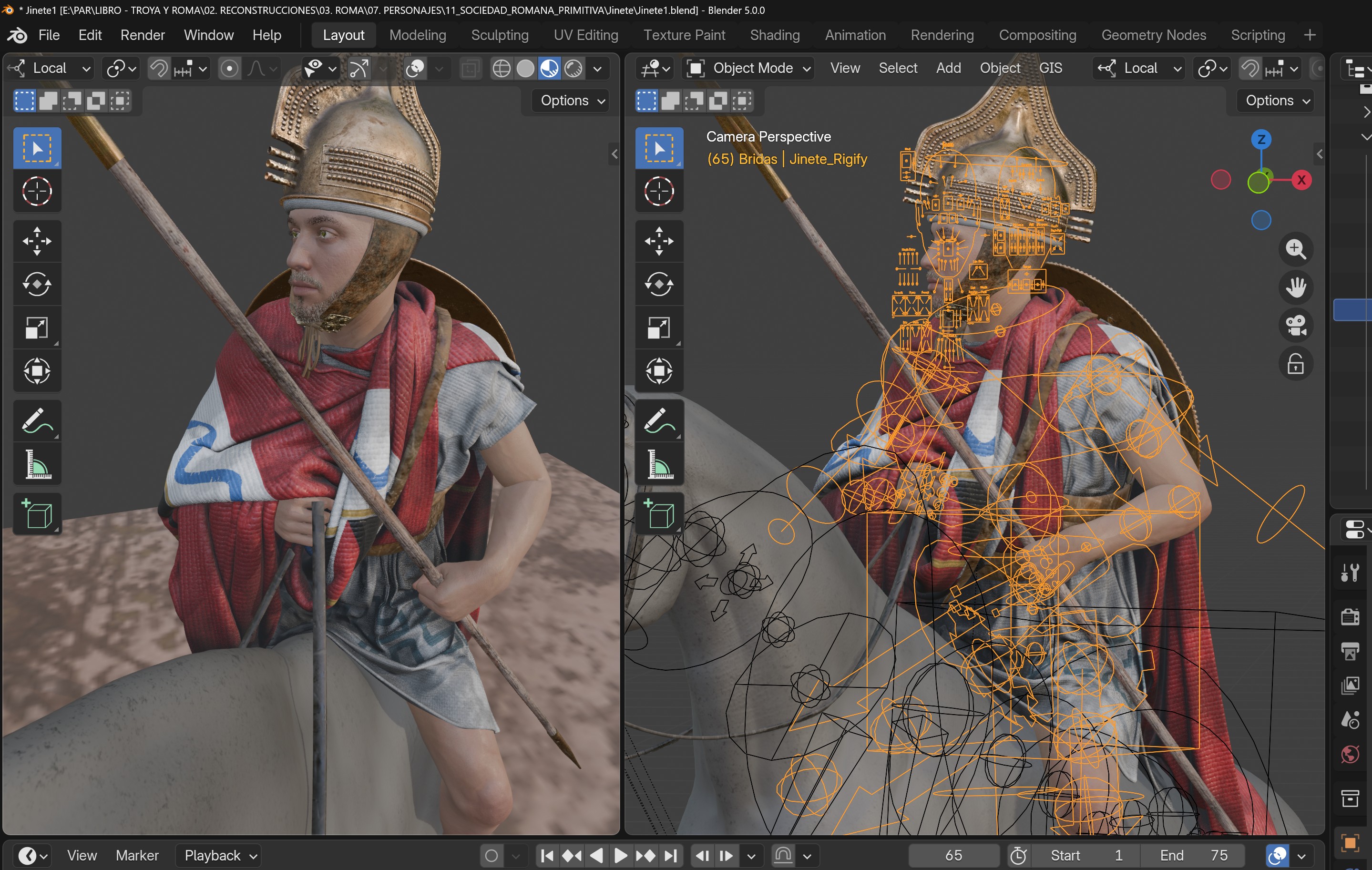
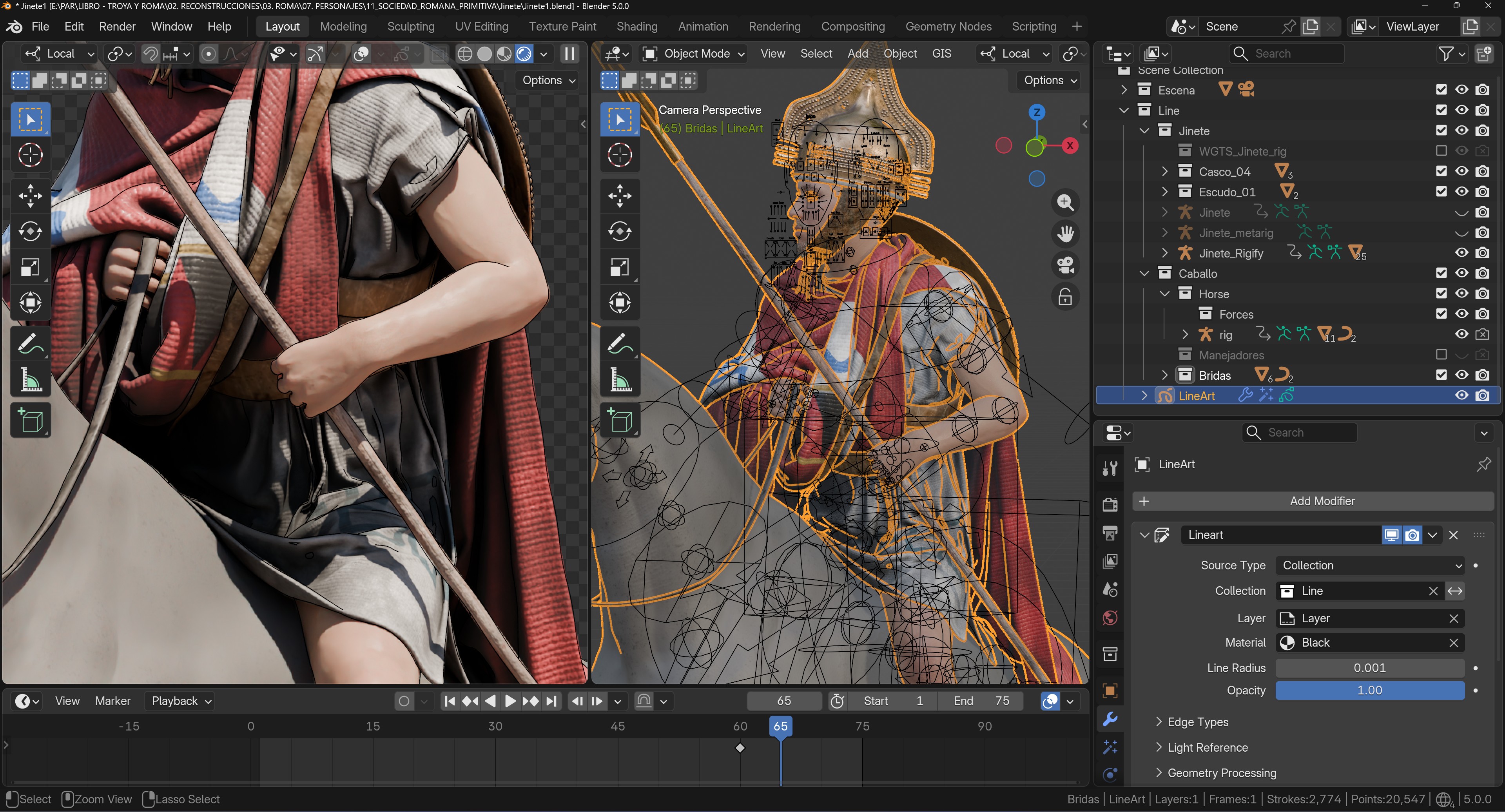
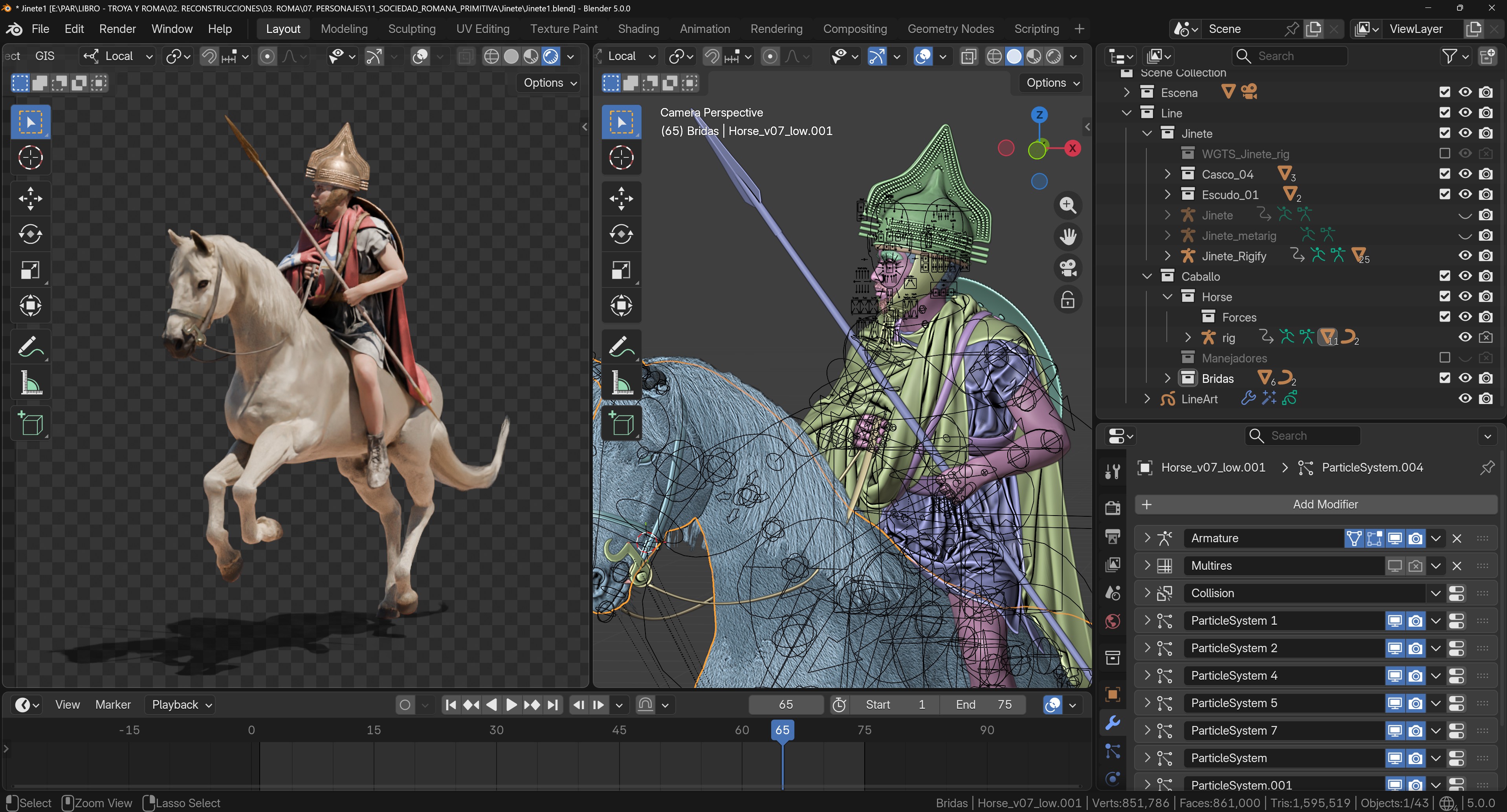
Lastly, do you have any "secret tips" for Marvelous Designer community users who want to create illustrative-style artworks or historical garments?
I would recommend, first of all, carrying out the most accurate documentation possible and seeking appropriate references. This process is essential to achieving the best possible final result. After that, it is very important that the characters interact with one another, as well as with animals or objects. This adds a great deal of life to the scene. To streamline the workflow, I recommend working in groups of characters rather than as isolated individuals, so that the process becomes more fluid and time-efficient.
In general, my advice is that any artist reading this should be aware of the potential of their work and commit to it, continue training, and work with advanced and powerful tools such as Marvelous Designer, which allow for the necessary level of control when producing high-quality historical reconstructions. They should avoid the siren calls of AI-generated imagery, as that only leads to mediocrity. As artists, we have great power, and we are the ones who can give soul to visual works.
Artstation
이 작업은 CharacterArt, AutoFitting, Simulation, Pattern, Substance, Blender 등의 기술로 제작되었습니다.
Marvelous Designer로 이와 같은 3D 의상·캐릭터 작업을 직접 만들어볼 수 있습니다.