The Convergence of Originality and Technology: Original Characters and Nano-banana
3D artist Soohwan pushes the boundaries of virtual garments by layering sophisticated AI textures from 'Nano-banana' onto Marvelous Designer’s realistic geometry. Discover his smart, practical pipeline that flips the traditional UV workflow to maximize both efficiency and high-fidelity quality.
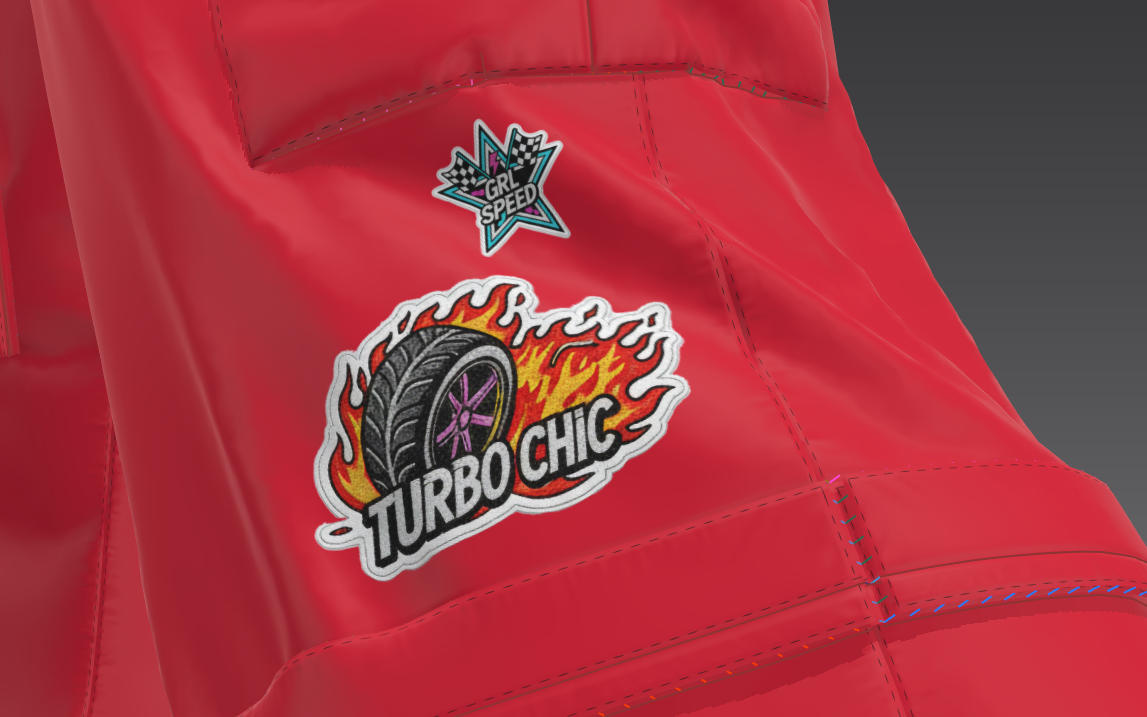
Discover the work and expert Marvelous Designer tips of Soohwan Oh in this exclusive series! [Go to Previous Post]
How much creative flexibility does Marvelous Designer (MD) provide when working on original characters without restrictions? We’d love to know how MD influences the conceptualization and fleshing out of ideas during the initial design phase.
Of course, before diving into production, we always establish the direction during the planning phase—deciding what kind of garments to create and what elements to include—before launching Marvelous Designer. However, since we are crafting digital-based clothing, we often end up adding artistic interpretations and creativity rather than just stopping at a realistic replication. In that process, garments are frequently completed in a way that is more evolved or slightly different in direction from the initial concept.
In particular, during the garment creation process, adjusting pattern measurements, fabric physical properties, and settings like Particle Distance, weight, and pressure can create entirely different silhouettes and styles from the exact same pattern. Thanks to these characteristics, my ideas naturally expanded during the workflow, and I experienced the project concepts becoming increasingly concrete and fleshed out.
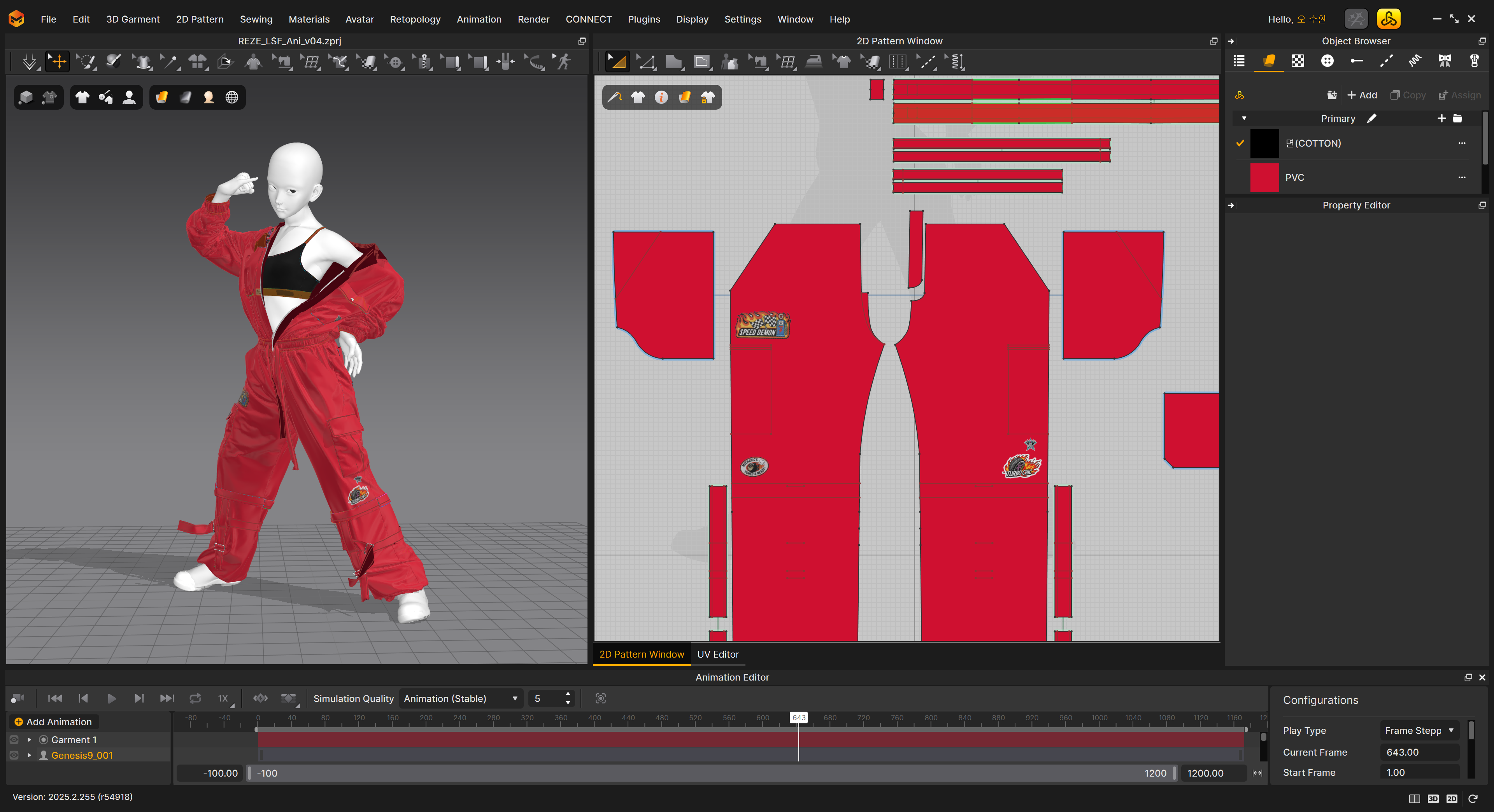
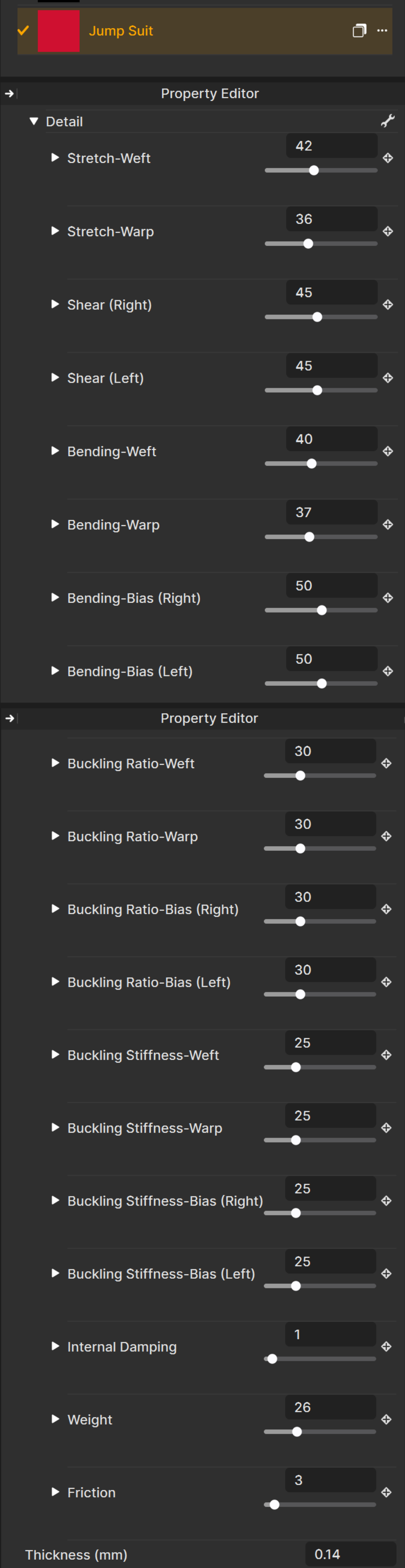
There is a growing body of research on workflows utilizing AI tools. You also applied textures created with 'Nano-banana' to MD garments. What kind of synergy did you experience when those sophisticated textures met MD’s realistic geometry and wrinkles?
I believe that texturing with AI tools offers massive advantages in terms of both fine detail and time efficiency. This is especially true for garments with intricate patchwork or designs where graphics play a key role; in the past, because we had to manually paint these in Photoshop, it was a heavy time burden, or we often had to opt for simpler designs instead. However, by leveraging AI, the burden of this graphic work has been significantly reduced, allowing me to enjoy making a wider variety of creative attempts.
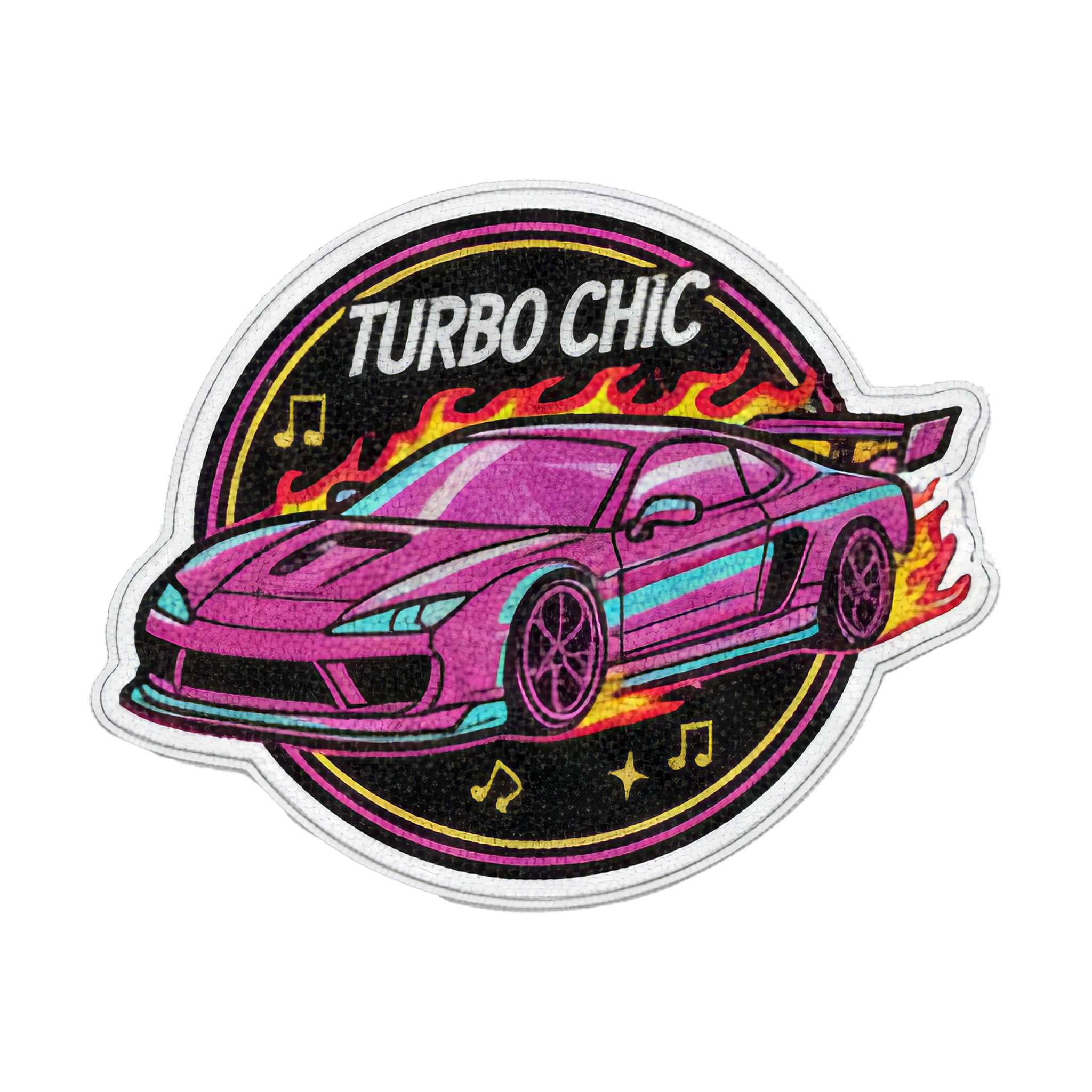
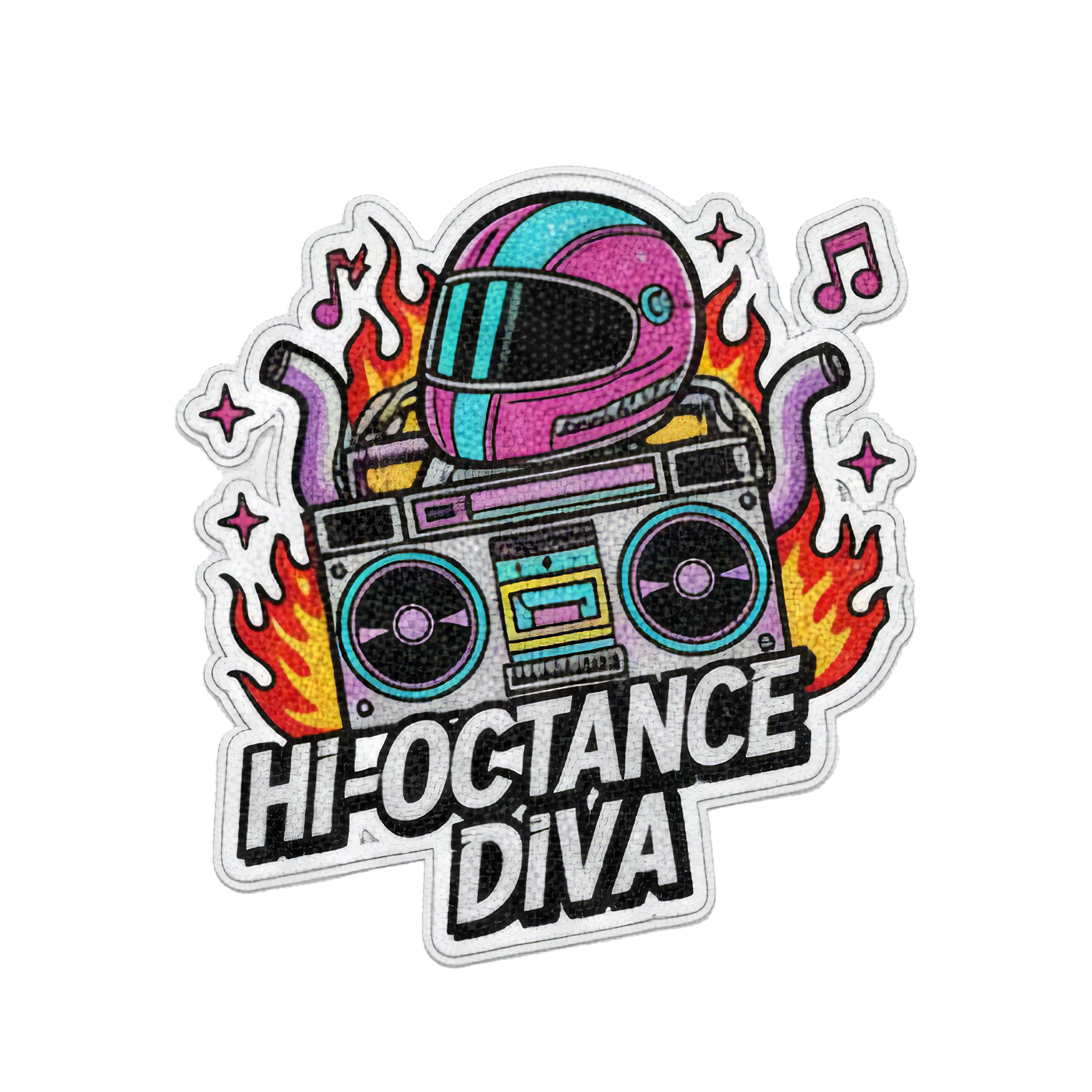 When these high-quality textures are applied to garments made in Marvelous Designer, they lock in perfectly with the generated wrinkles and geometry, delivering a much more convincing and realistic result. It doesn't just feel like a flat graphic anymore; because the texture responds naturally on top of a three-dimensional form, I felt the overall quality and polish of the asset was elevated to the next level.
Additionally, I utilize a workflow where I take the UV layout exported from Marvelous Designer, input the desired style into an AI tool like Nano-banana, and generate the textures. This workflow has vastly improved the efficiency of the texturing process, and as a result, I believe it has enabled a much faster, higher-quality pipeline.
What is your personal pipeline tip for maintaining high quality while optimizing high-resolution textures and Marvelous Designer (MD) data?
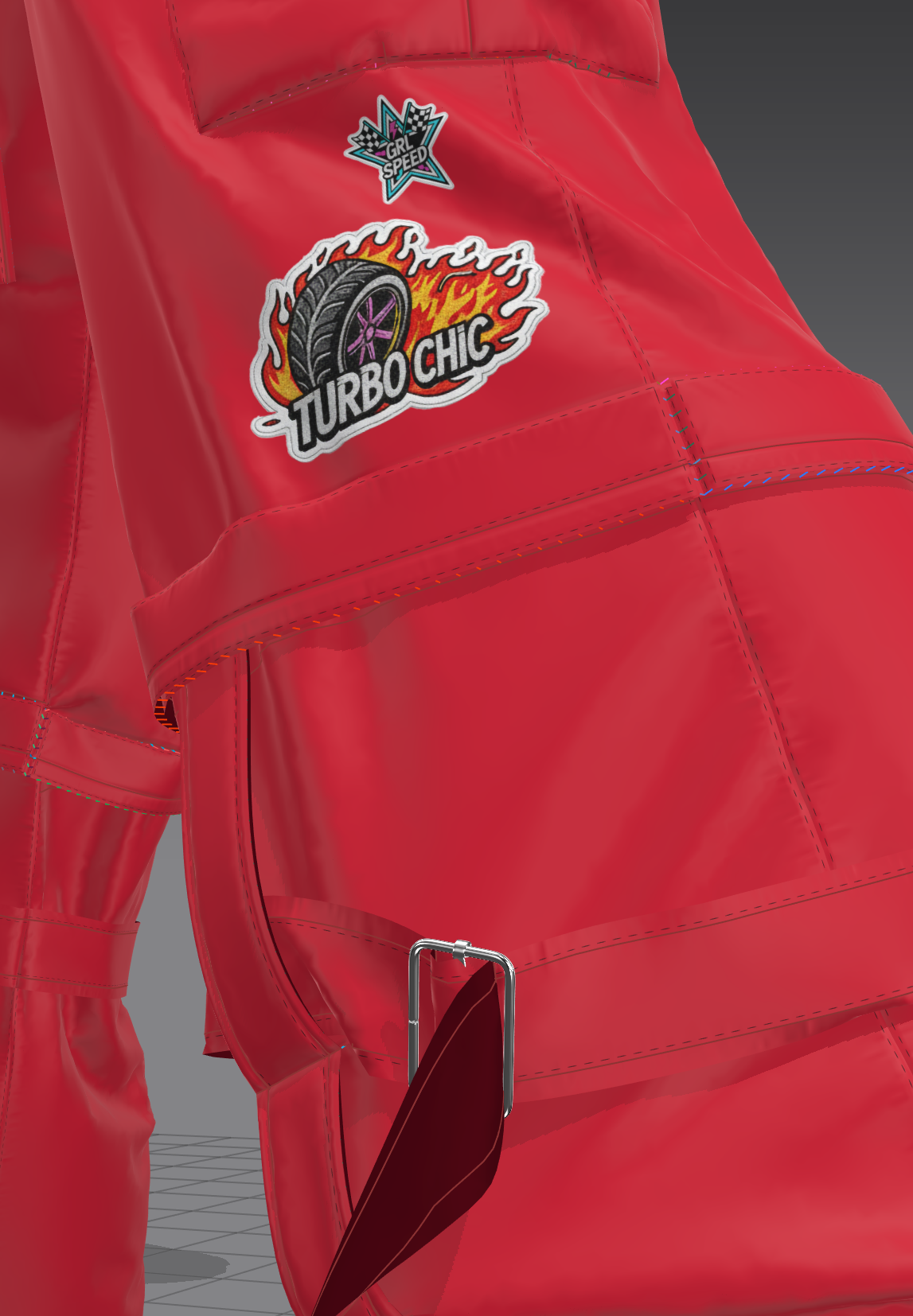
To be honest, rather than relying on a unique or special pipeline, I tend to take a more practical approach to my workflow. First, after fully finalizing the garment design and pattern work, I don’t jump straight into organizing the UVs. Instead, I use MD’s 2D Pattern Graphic feature to preview the textures or graphics created via Nano-banana first, allowing me to check the overall look and feel.
The reason I hold off on organizing the UVs is that if the patterns get modified during the process, I would have to redo the UVs all over again. Therefore, I use AI during the design phase to quickly test out textures, and only when I feel the direction of the garment is fully locked in do I clean up the UV layout.
Rather than the pipeline itself drastically changing since adopting AI, I feel that the overall workflow speed and efficiency have significantly improved because I can now visualize and iterate on the desired results much faster.
Stay tuned for our special series featuring Su-hwan Oh’s diverse portfolio and his expert Marvelous Designer know-how!
이 작업은 AI, Animation, Avatar, Material, Retopology, Simulation 등의 기술로 제작되었습니다.
Marvelous Designer로 이와 같은 3D 의상·캐릭터 작업을 직접 만들어볼 수 있습니다.