MUSINSA Promotion: Fashion Meets Motion Graphics
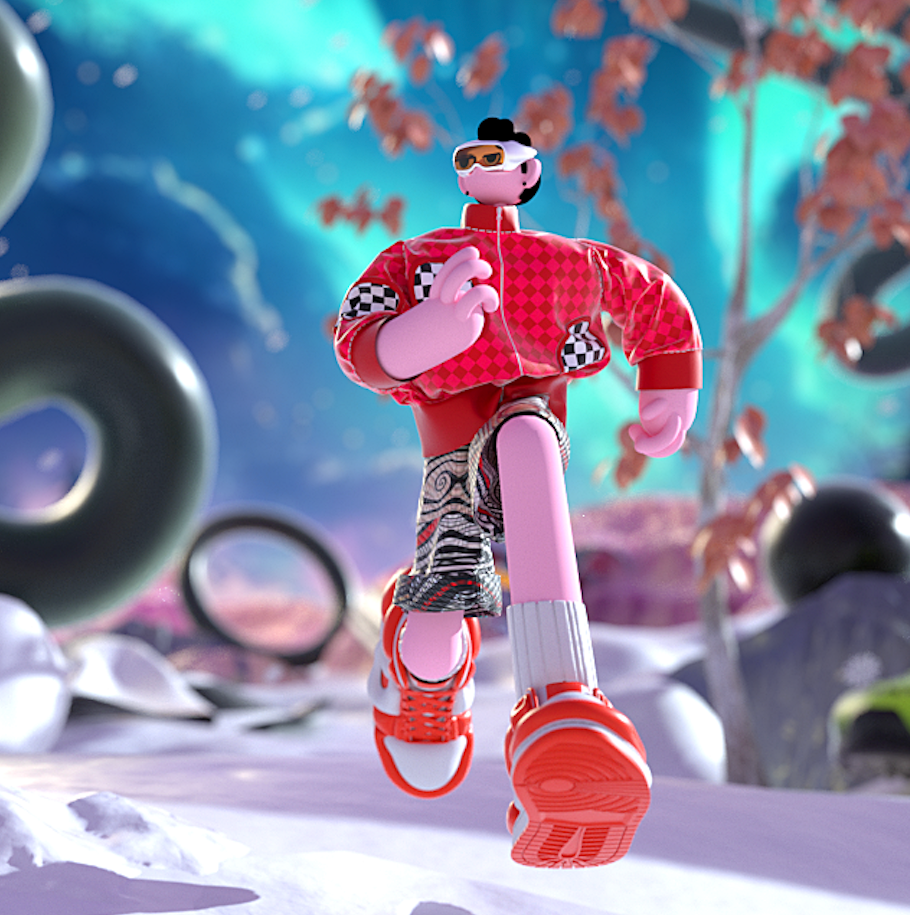
3D motion graphic designer Junyoung Park shares his deep passion for fashion, his design philosophy that bridges photorealistic and casual styles, and his creative workflow using Marvelous Designer.
Could you briefly introduce yourself and share what led you to start working in 3D design?
Hello, my name is Junyoung Park, and I work as a 3D motion graphic designer.
I studied Visual Design in university, and I actually entered the field of motion graphics and 3D design relatively late compared to others. Around the time I was transitioning from my third to fourth year in college, I saw a 3D graphic project created by a friend I had grown close to while preparing for art school entrance exams. I was so impressed by the work that I felt a strong desire to learn 3D graphics myself. That moment sparked my journey—I immediately began studying through YouTube and online classes, which led me to take my first steps into the world of 3D motion graphics.
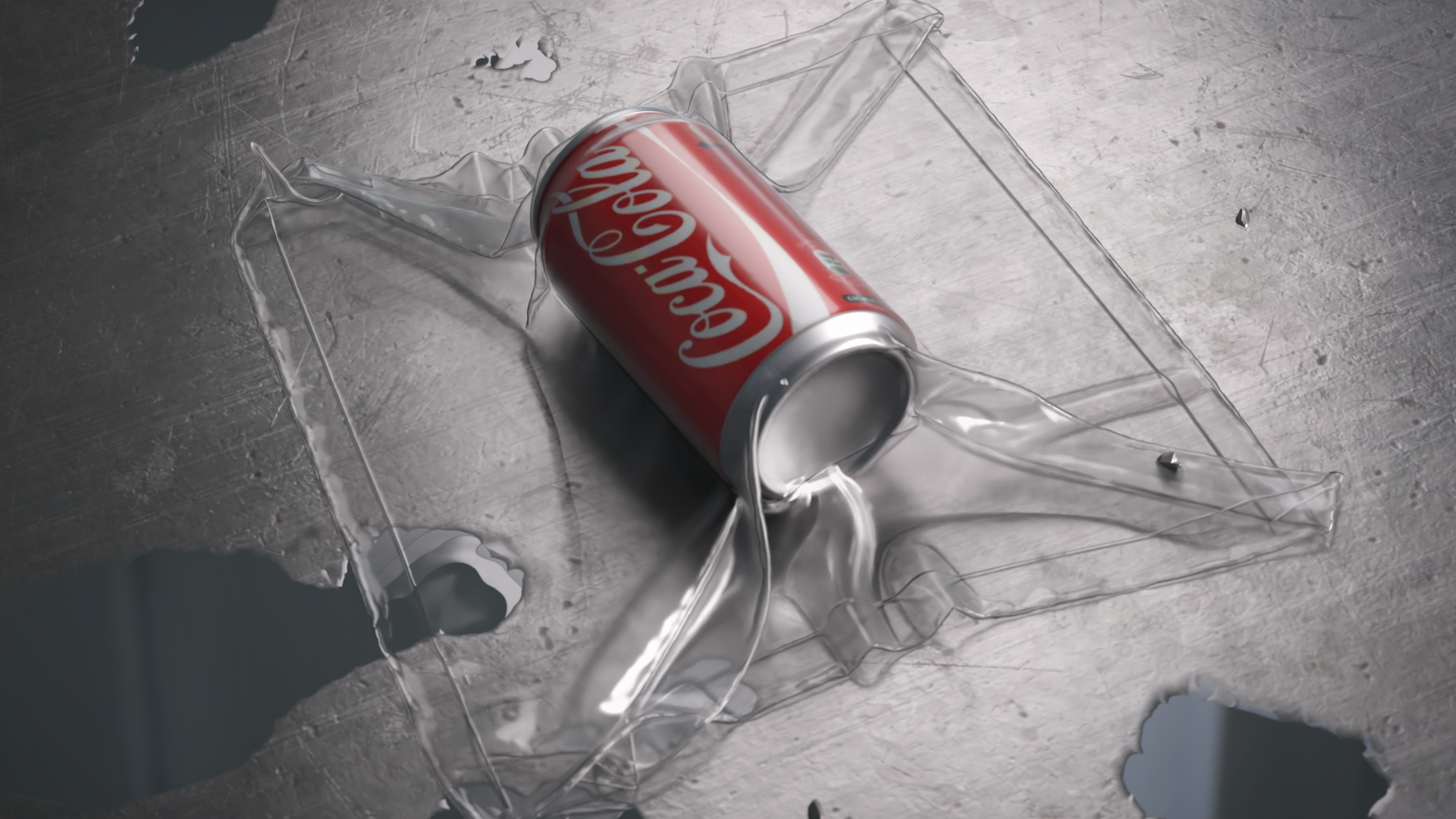
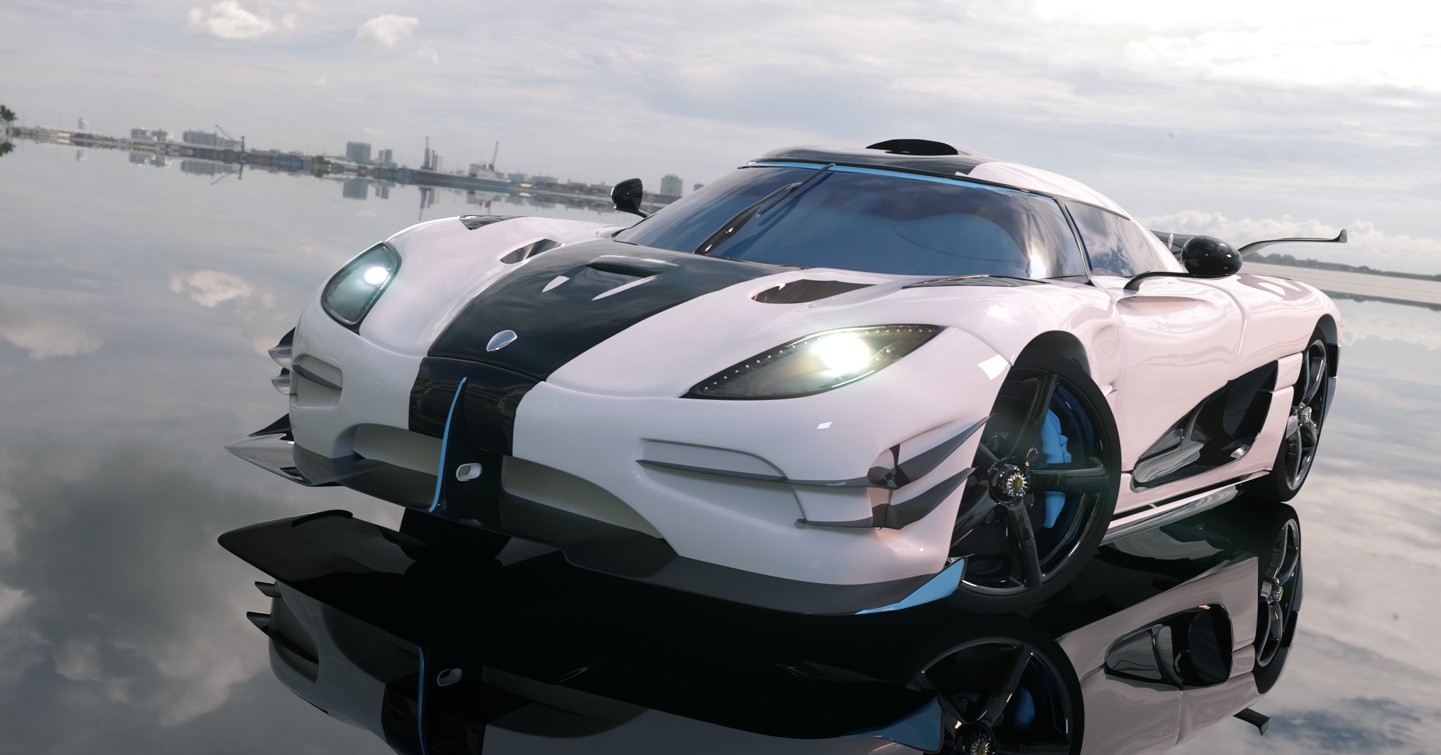
Initially, I was deeply drawn to photorealistic work. I believed that truly impressive 3D projects had to look as real as possible, as if they existed in the physical world. For about one to two years, I worked professionally on product-focused 3D projects with a photorealistic approach. Then, by chance, I joined a company that specialized in interactions for a financial app, and that experience completely changed my perspective on 3D design.
At that company, the work leaned more toward a casual mood rather than photorealism. Through those projects, I realized that 3D graphics don’t always need to mimic reality—casual-style designs have their own unique charm and appeal. Since then, I’ve embraced both photorealistic and casual styles, and I currently work as a designer who appreciates and incorporates the strengths of both approaches.
How does your interest in fashion influence your 3D work? If you've ever incorporated your favorite brands or styles into your projects, please share an example.
Fashion is one of the areas I’m most passionate about outside of my design work.
To be honest, motion graphics often involve creating videos that are around a minute long, which can be quite exhausting as the project progresses—even if you start with excitement. That’s why, when working on personal projects rather than commercial ones, choosing a theme you genuinely enjoy helps reduce that fatigue and makes the process much more enjoyable. For me, selecting “fashion” as the theme for this project felt like a natural choice.
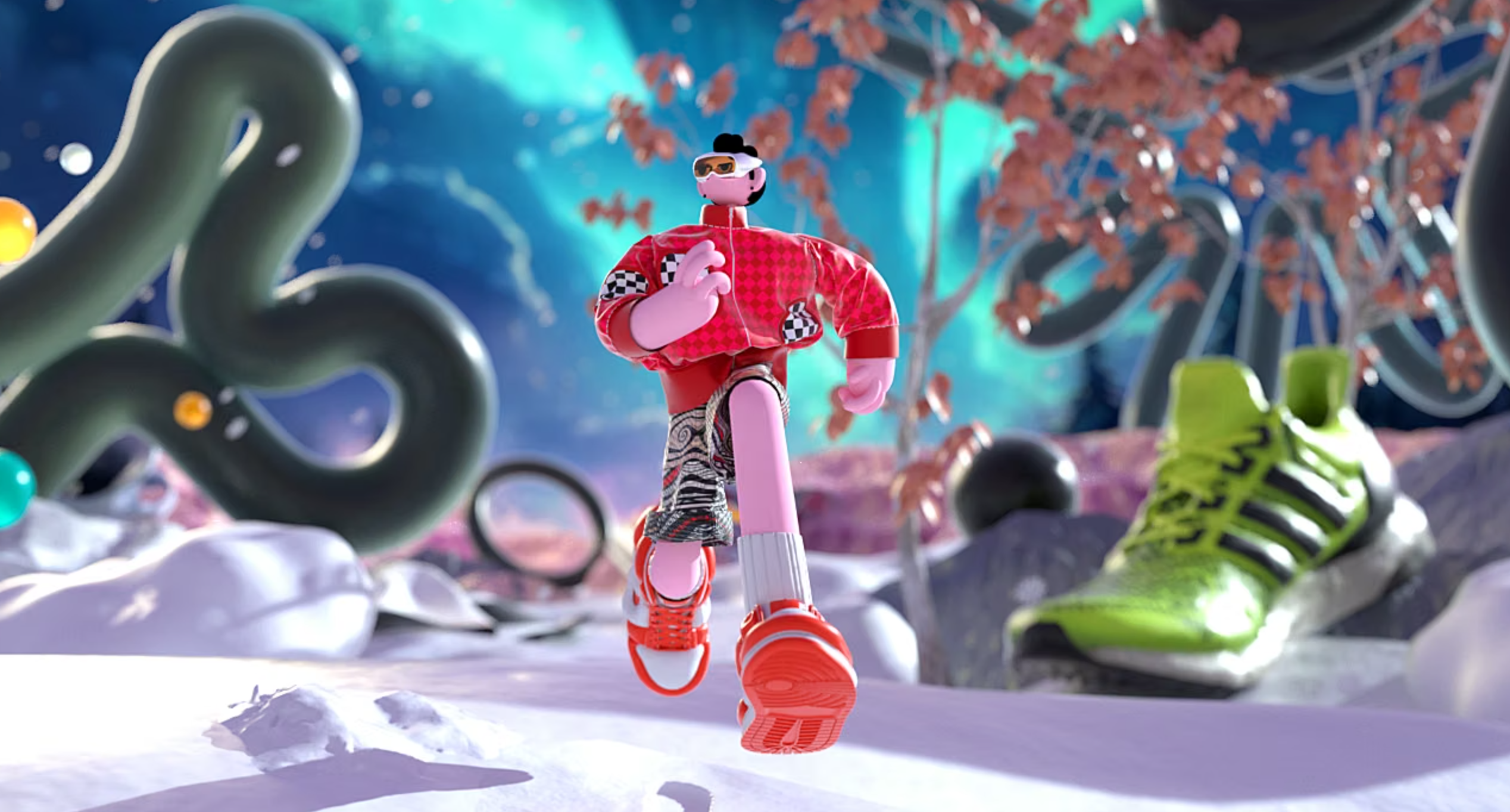
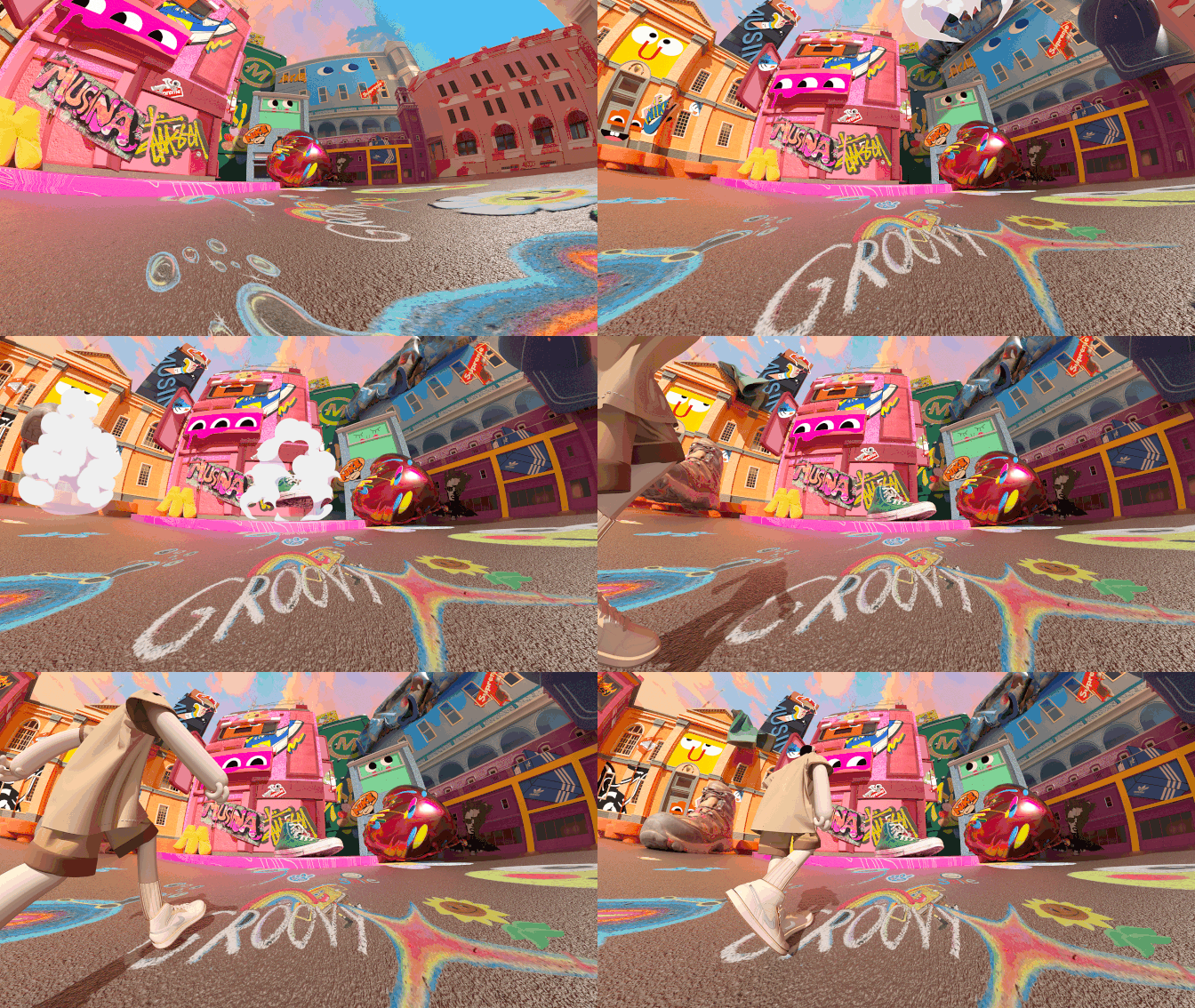
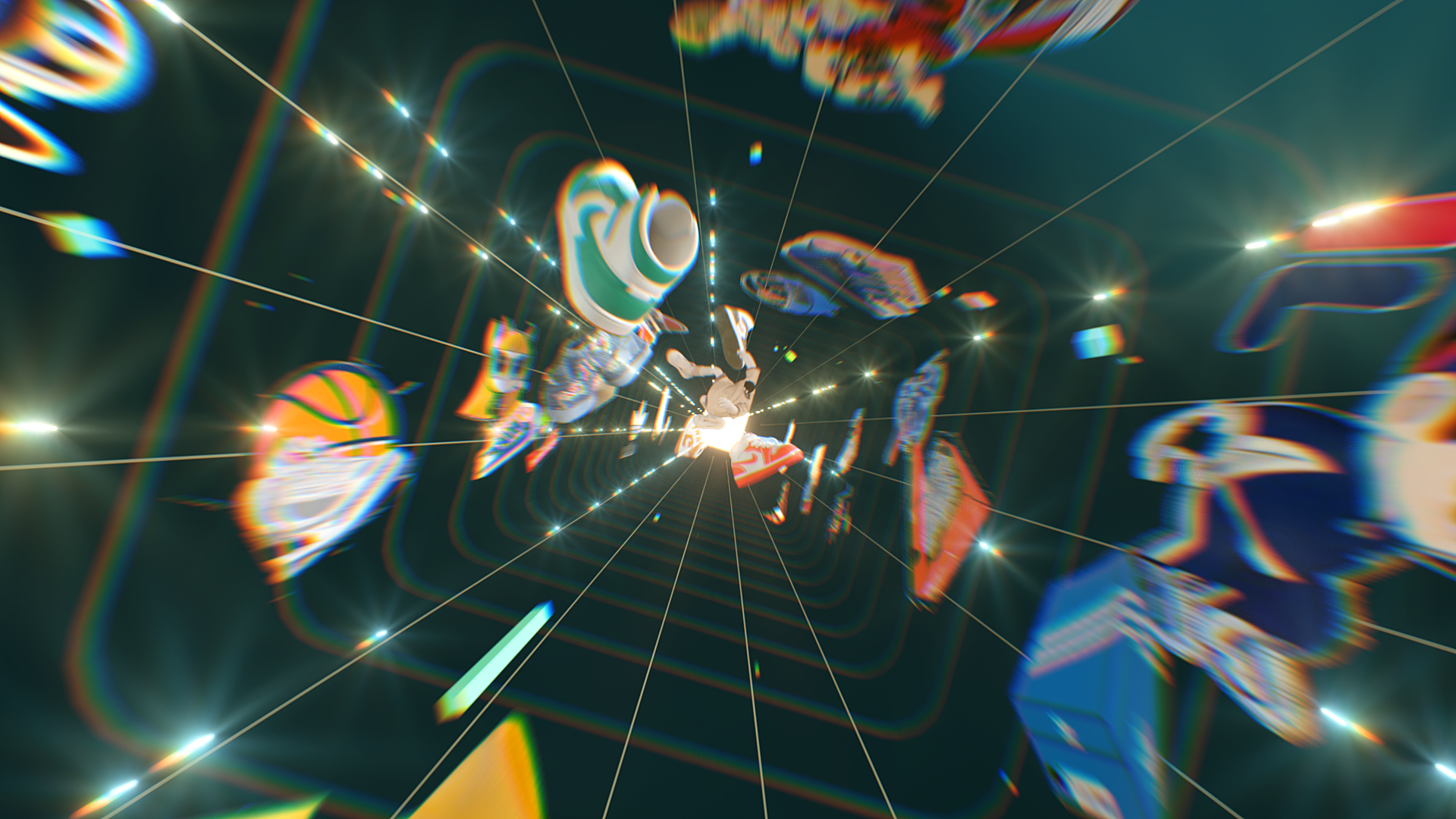 When I was creating the promotional video for Musinsa, I went through a lot of trial and error and development in every stage—from planning the storyboard, to styling the looks, to designing the characters. But when it came to choosing the theme of fashion, I didn’t hesitate for a moment. It was the most instinctive and effortless part of the process.
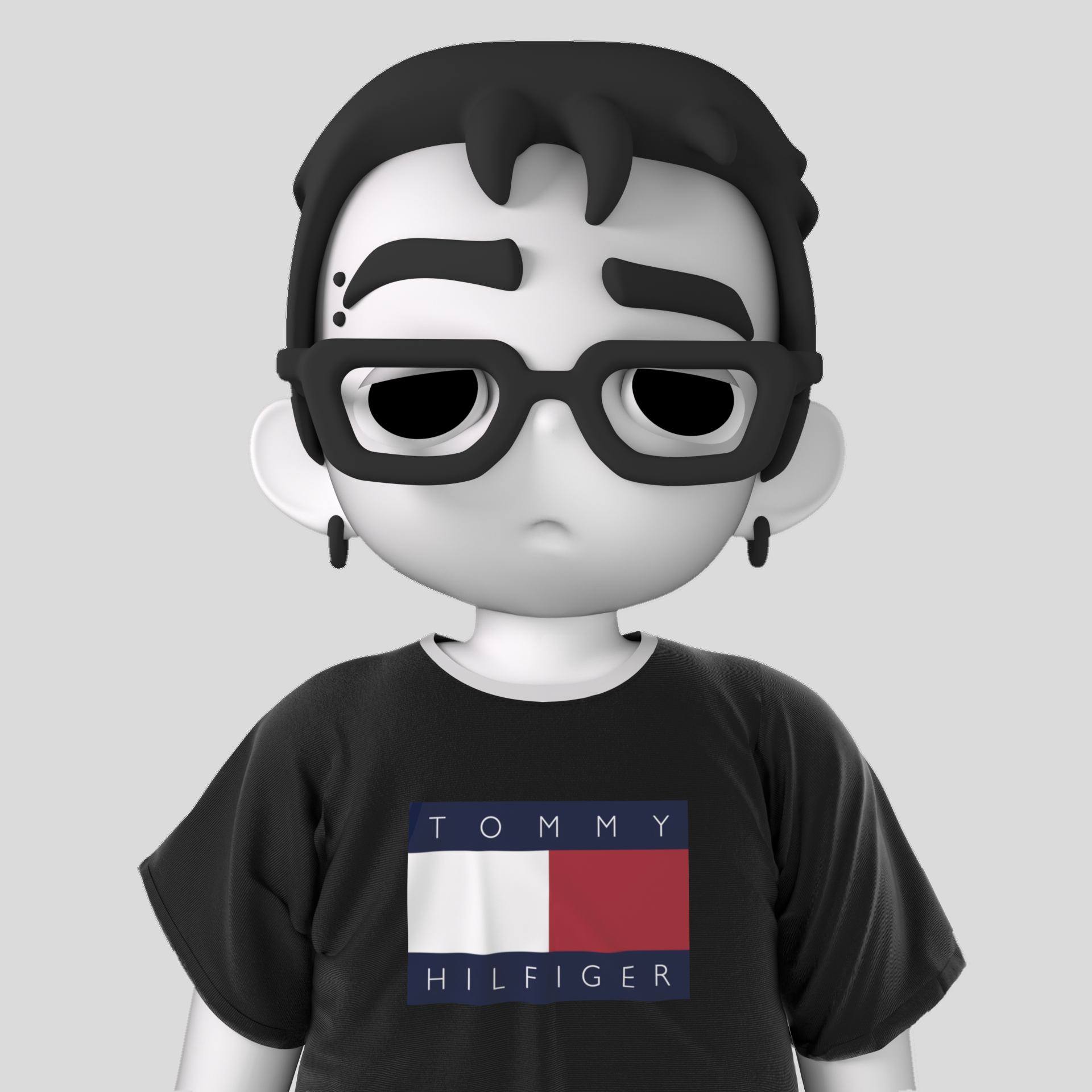
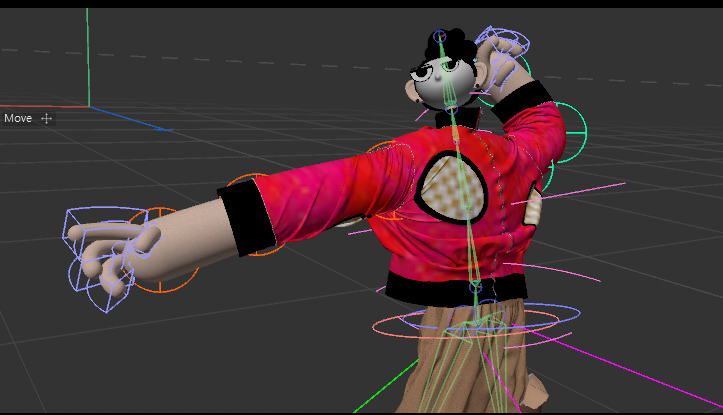
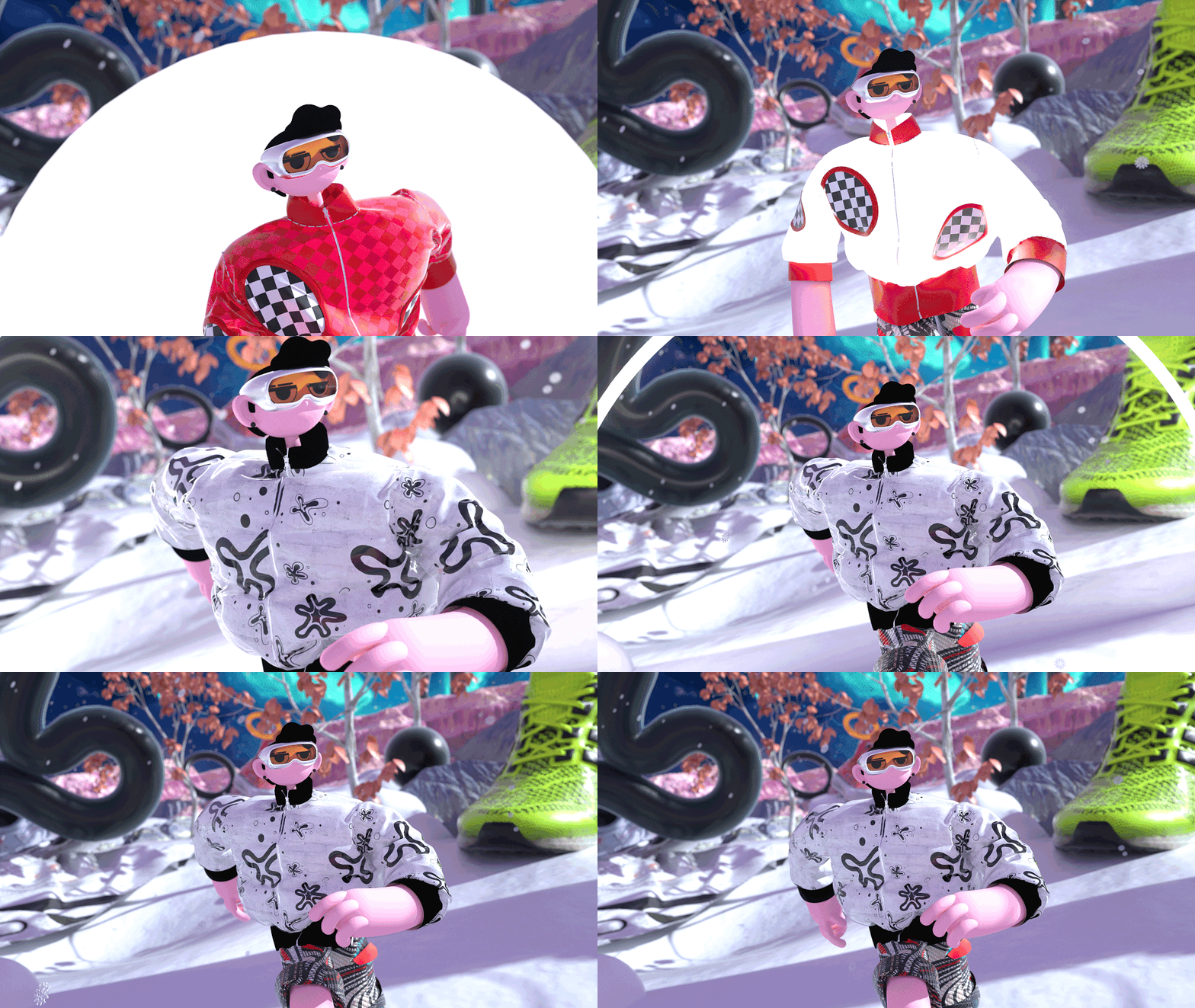 In fact, I often bring imagined clothing—pieces that don’t exist in real life but live in my mind—into my work, which gives me a strong sense of catharsis. When designing characters, I enjoy experimenting with bold and daring outfits that might be too much for everyday wear, but under the umbrella of “design” and “virtuality,” I feel free to explore and try many things. A good example is my current profile character, which I’ve styled mainly with clothing from one of my favorite brands, Tommy Hilfiger.
You work across both photorealistic and casual styles. What do you consider most important when balancing these two approaches?
If I were to highlight one key point for each style:
For photorealistic work, I believe real-world scale is the most crucial element—and also one of the details that beginners often overlook. Since photorealistic design aims to replicate what we see in the real world, even slight discrepancies in texture tiling, material pattern sizes, or the relative scale between objects can create a strong sense of visual inconsistency.
On the other hand, for casual-style work, I think aesthetic appeal is the most important factor. Unlike photorealistic design, casual graphics aren’t based on real-world colors or patterns. Instead, they aim to create visually pleasing and beautiful objects in a more stylized way. If the audience doesn’t immediately perceive aesthetic value when encountering a casual-style piece, they’re unlikely to feel curious or engaged with the work at all.
Although photorealistic and casual styles may seem like completely different fields with opposite characteristics, I believe the process of achieving high-quality results in both is fundamentally similar. The most important thing is to begin with thorough reference research and solid planning. Whether you're working in a realistic or casual mood, a well-grounded creative process leads to consistent execution and excellent outcomes.
What was the most impressive feature or experience when you first encountered Marvelous Designer?
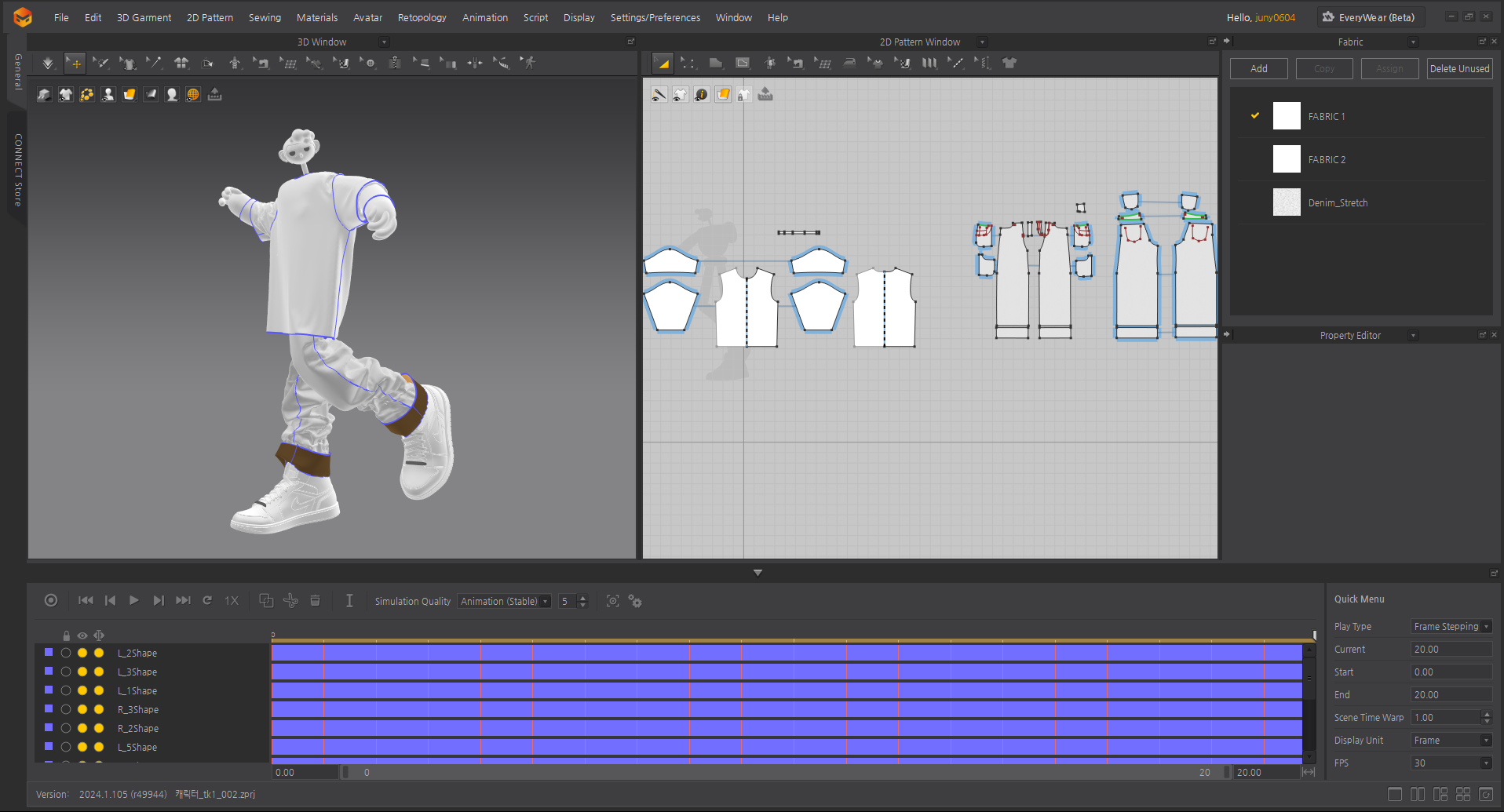
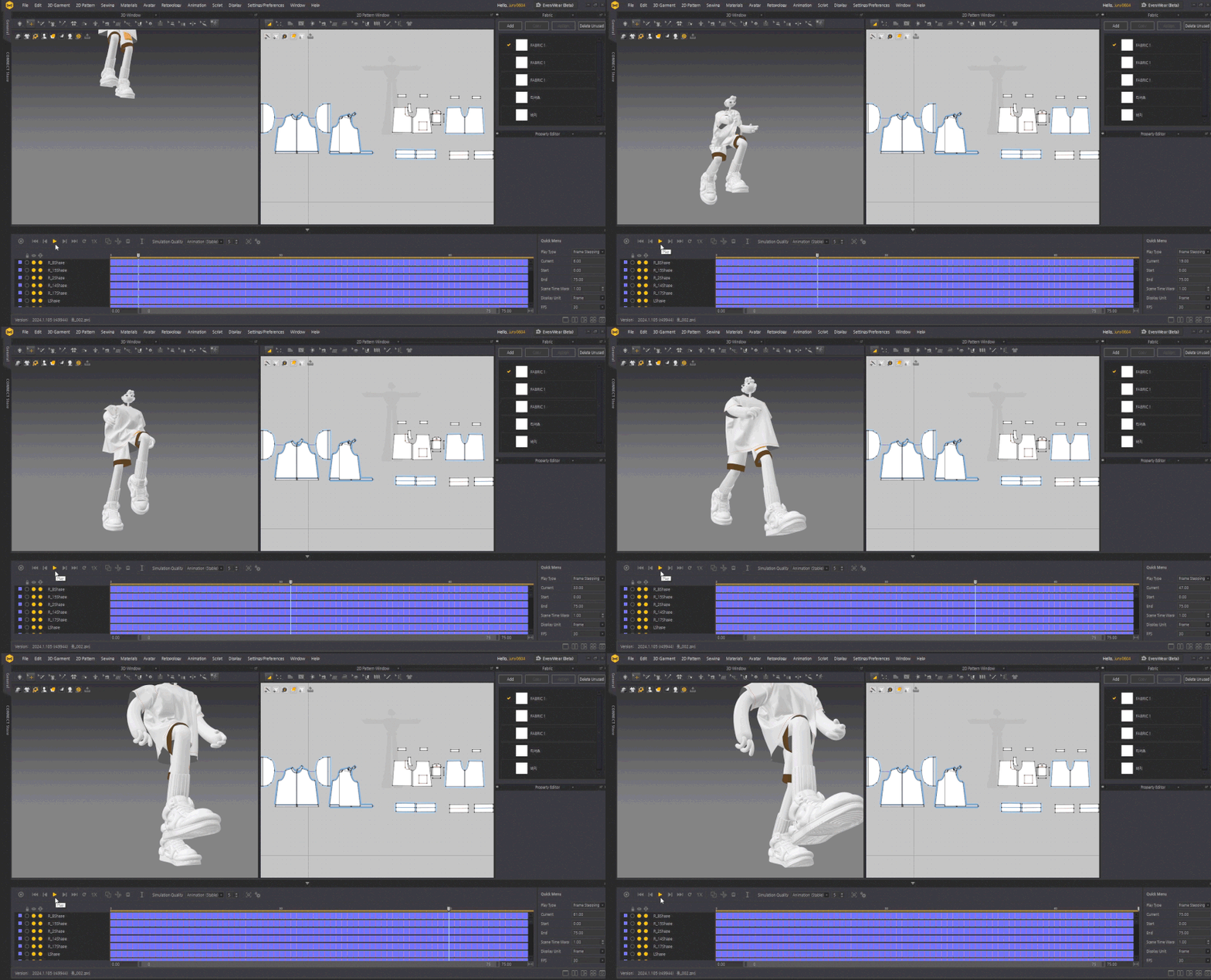
The most impressive aspect for me was its relatively lightweight simulation capabilities that still produce high-quality, realistic clothing movement. As a 3D designer who works with characters, there are generally two main approaches depending on the mood of the project: creating clothing with mesh modeling, or using Marvelous Designer to achieve more lifelike simulated garment movement.
Before I learned how to use Marvelous Designer, I had no choice but to create all clothing through mesh modeling, which limited my workflow and creative options. But once I became proficient with Marvelous Designer, the spectrum of designs I could express expanded significantly. Of course, even now, there are times when I still choose to model clothing with mesh, but I believe there's a clear difference between having no choice and making a deliberate choice between two methods you fully understand.
Being able to choose between mesh and simulation-based workflows depending on the project’s needs has fundamentally changed how I approach character design and garment creation.
You mentioned that you voluntarily studied tutorials after work. What learning resources or methods were most helpful to you?
I’ve heard that senior designers from earlier generations had a hard time studying due to the scarcity of resources. In contrast, I believe our generation is incredibly fortunate when it comes to learning. There are countless high-quality tutorials available for free on YouTube, and we also have access to paid classes from highly skilled senior designers. On top of that, with the emergence of ChatGPT, even minor errors that used to require extensive searching can now be resolved quickly and easily.
For me, the most helpful learning method has been not being afraid to upload my work and receive feedback. I understand that it’s difficult for anyone to completely let go of the fear—“What if someone criticizes my work or leaves a negative comment?” Even as I say this, I still feel that fear myself. But I believe that even the most accomplished creators started out the same way, and there’s no faster or more effective way to improve than by listening to others’ opinions and refining your work accordingly.
What has been the biggest synergy effect you've experienced from working in both motion graphics and 3D design?
Motion graphics include both 2D and 3D elements, but by working alongside 3D graphics, I feel that I’ve significantly expanded my expressive range. While 2D has its own charm and is a wonderful field, I found that 3D allowed me to satisfy my creative cravings in both photorealistic and casual styles.
In the beginning, I was fixated on photorealism in 3D work, stubbornly believing that “it only looks cool if it looks real!”—a narrow mindset that I held onto with a sense of pride. However, through various projects and professional experiences, I came to realize that casual moods, 2D work, and all forms of design have their own demand and purpose. I also learned that my perspective isn’t the only correct one.
Though I’m still a developing designer with a long way to go, I’ve been fortunate to experience many different areas in my relatively short career. One of those areas was Marvelous Designer, which reignited my passion for 3D graphics by allowing me to integrate my personal interests—like fashion and clothing—into high-quality professional projects.
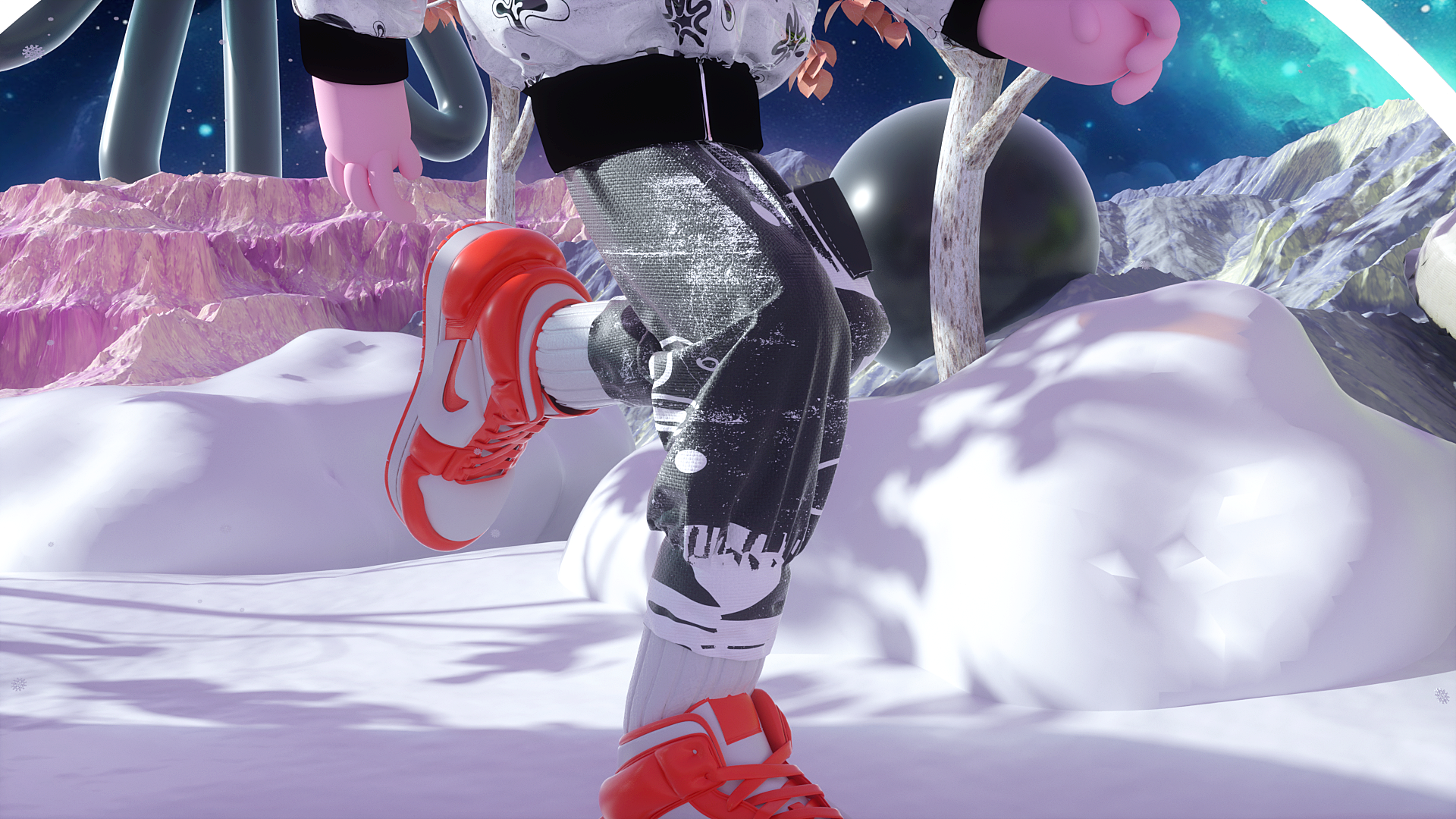
The ability to visualize and create clothing that exists only in my imagination, or to see a 3D character I designed wearing the same clothes I enjoy in real life, brings a kind of emotional impact that deepens my attachment to both 3D graphics and motion graphics. That visual connection between imagination and reality is what continues to inspire me in this field.
Lastly, if you're planning a future project that combines fashion and 3D, what kind of theme would you like to explore?
Since I’ve already created a casual, kitschy-style video, I’d love to explore a project that focuses on highly detailed, photorealistic clothing in the future. I’ve always been inspired by senior designers who collaborate with K-pop artists to create CG elements for music videos and teaser content, featuring a wide range of stage outfits. It’s something I’ve long admired from afar, and now I’m determined to work toward that goal by continuing to study and improve my skills in every way I can.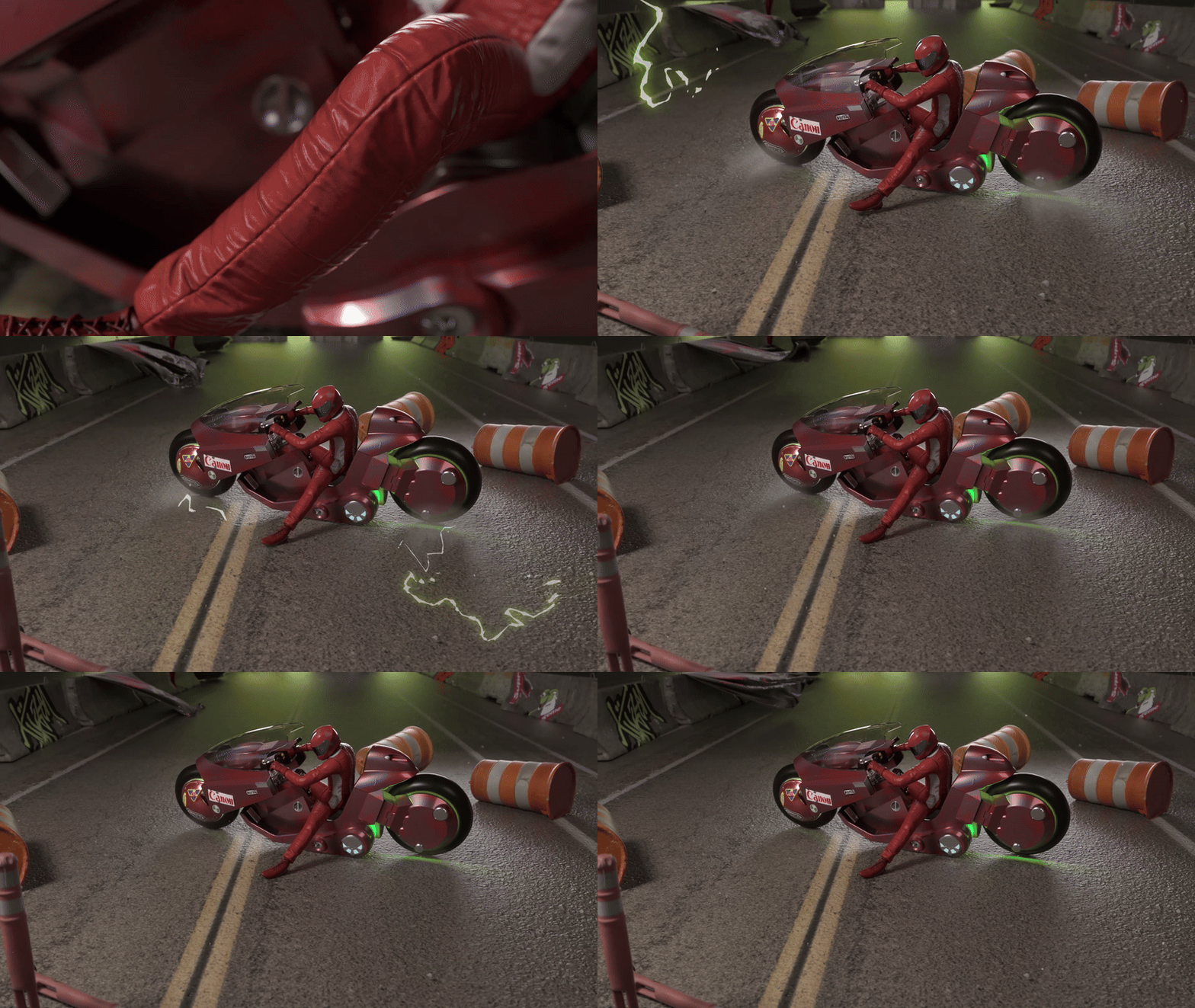
이 작업은 Animation, characterart, motiongraphic, shoes, Avatar, Pattern 등의 기술로 제작되었습니다.
Marvelous Designer로 이와 같은 3D 의상·캐릭터 작업을 직접 만들어볼 수 있습니다.