Bethesda Mastery Meets Anime Realism: A Deep Dive with Simon_ltw
How do you translate an anime icon into a cinematic masterpiece? Former Bethesda artist Tingwei Liu(Simon_ltw) bridges the gap between AAA technical precision and anime aesthetics. By leveraging the physical logic of Marvelous Designer, he moves beyond "pretty" renders to craft garments that carry weight, history, and social status.
To start off, could you give us a brief introduction? How did you first break into the 3D art world, and how has your experience at Bethesda Game Studios shaped your creative mindset?
Hello everyone, I’m Tingwei Liu(Simon_ltw). I formerly served as an Outsourcing Artist at Bethesda Game Studios, where I contributed to the iconic The Elder Scrolls and Fallout series. Currently, I’m active as a content creator across various platforms, focusing on the realistic interpretation of anime characters and sharing my journey of learning art from scratch.
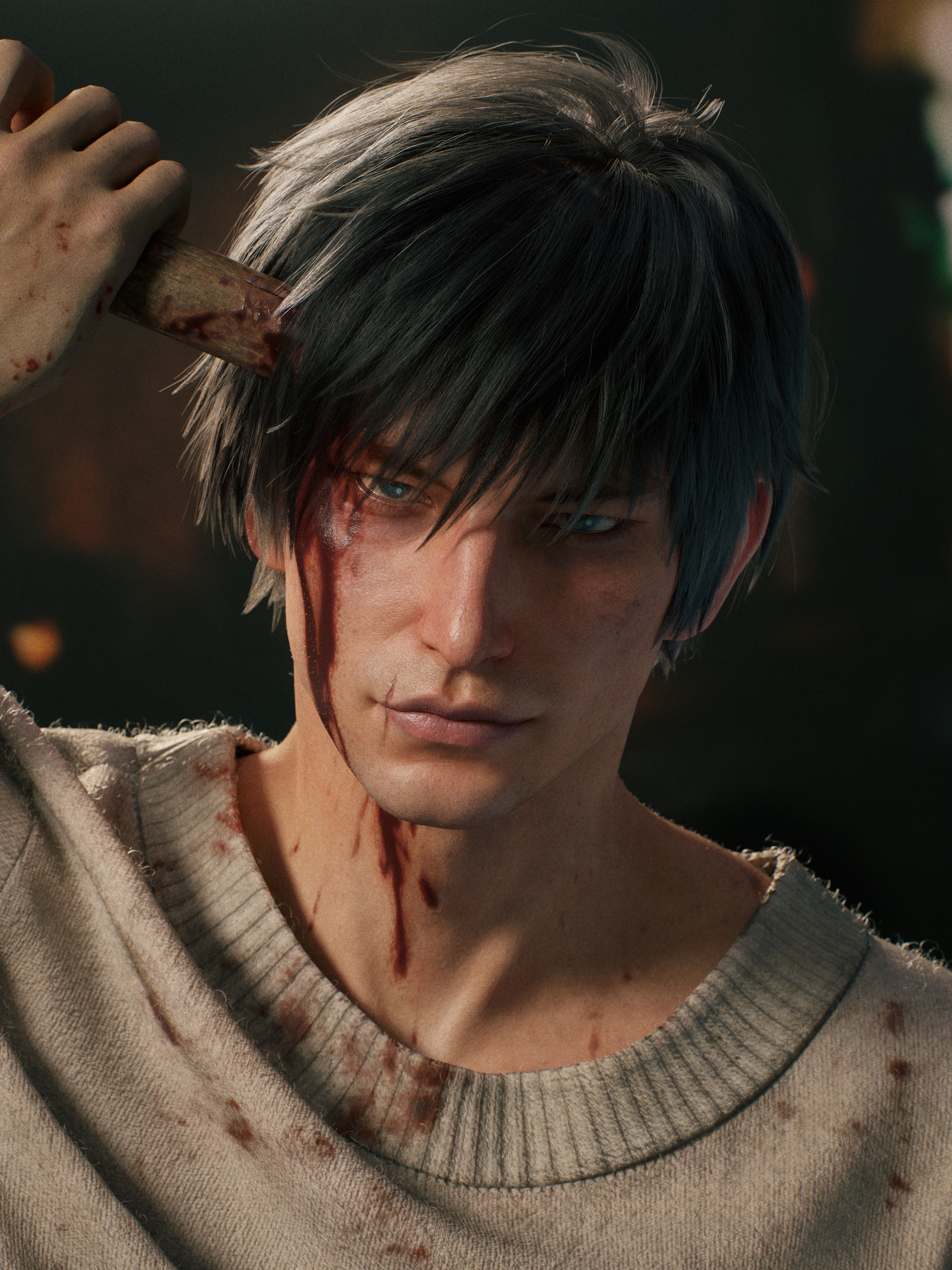
My journey into 3D art actually began with a "3D assists 2D" approach. It was CrazyJN's courses that sparked my transition from a 2D illustrator to someone truly in love with 3D as a creative medium. His guidance taught me how to leverage different software to bring my internal visions to life. Later on, well-known industry veterans like Zhelong Xu and Johnny Xiao became my mentors, helping me stand on the shoulders of giants. They not only elevated my aesthetic sensibilities but also helped me systematically master the foundations of 3D creation—both technically and artistically.
Joining Bethesda was an absolute honor for me. As a former Civil Engineering student with a background in science and engineering, being able to work on legendary franchises like Fallout and The Elder Scrolls gave me a massive boost in confidence. It provided the ultimate validation of my hard work and made me truly believe in my ability to create engaging, resonant art.
Beyond the confidence boost, the sheer wealth of professional experience was invaluable. I had the opportunity to work across vastly different world-builds—from medieval fantasy to post-apocalyptic wastelands—handling a diverse range of costumes and environment assets. Because these projects demanded such a wide variety of clothing types and fabric textures, the experience significantly sharpened my core skills. I gained a much deeper understanding of silhouette control, the logic of cloth folds, the rhythm of density and spacing, and the authentic rendering of different materials.
Working at a legacy AAA studio known for its hyper-realistic style eventually sparked a strong curiosity in me: What would happen if I applied the high-end technical expertise I gained in a professional setting to the things I’m personally passionate about? I started wondering what kind of spark would fly if I recreated iconic 2D anime characters in a hyper-realistic style while meticulously preserving their original essence and charm.
How would you define your artistic style? Furthermore, how do you utilize "clothing" as a medium to enrich a character’s personality and depth?
I would define my style as a 3D hyper-realistic reimagining of anime characters, rooted in an Asian aesthetic. As a creator from China, my work naturally leans toward an Asian-centric sensibility. My tenure at a major AAA studio like Bethesda provided me with extensive experience in hyper-realism. The intersection of these two influences allows my work to preserve the "idealized beauty" characteristic of Asian aesthetics while maintaining a profound sense of humanity and grounded realism.
In my creative process, clothing is a critical storytelling medium. As the saying goes, "Clothes make the man." A person’s attire—their choices and how they wear them—directly reflects their personality, traits, and even their social standing or economic background. For instance, a character living in harsh, impoverished conditions would have clothing marked by "memory folds", grime, and visible wear-and-tear. In contrast, an elegant, affluent individual would typically maintain their garments meticulously. They would use premium fabrics with tailored fits that remain "as good as new." For such characters, the specular highlights, intricate weave details, and material layering of the fabric must be much richer and more visually apparent.
To me, clothing isn’t just something a character "wears"; it is an integral part of character building. The synergy between fabric texture and personality manifests in specific details: Does the silhouette fit properly? Is the fabric's physical property conveyed accurately? For example, does silk have the correct fold logic and highlight response? Does the outfit reflect the wearer's taste, and more importantly, does it make the audience believe this character truly belongs in that world?
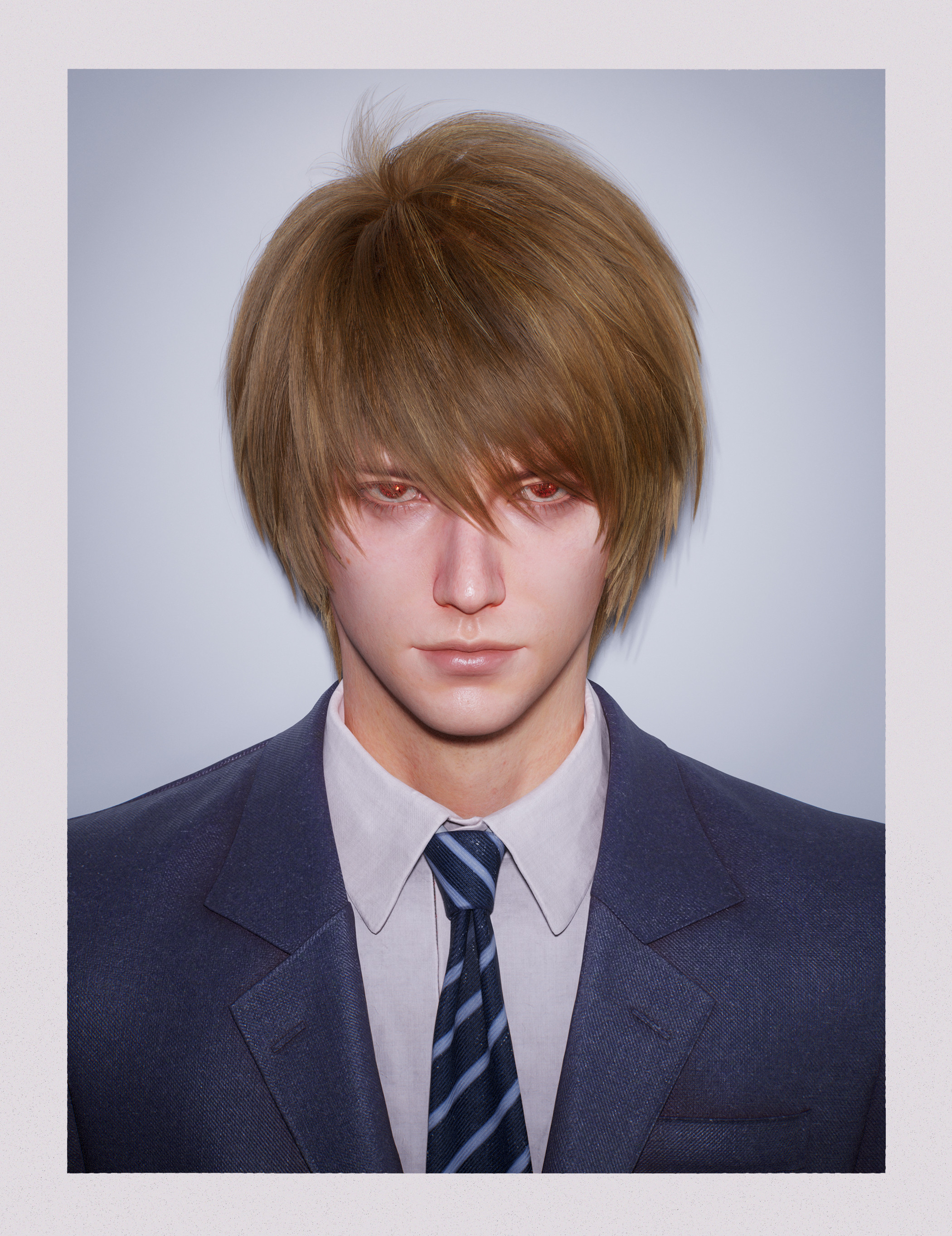
From an artistic standpoint, these elements boil down to very specific criteria: Is there a clear hierarchy in the light and shadow? Is the visual read sharp? Is the rhythm of the folds—their density and spacing—logical? Is the silhouette fluid and aesthetically pleasing? These might seem like minor details, but they are exactly what determines whether a character truly "comes to life" and feels authentic.
Please share with us your Death Note series!
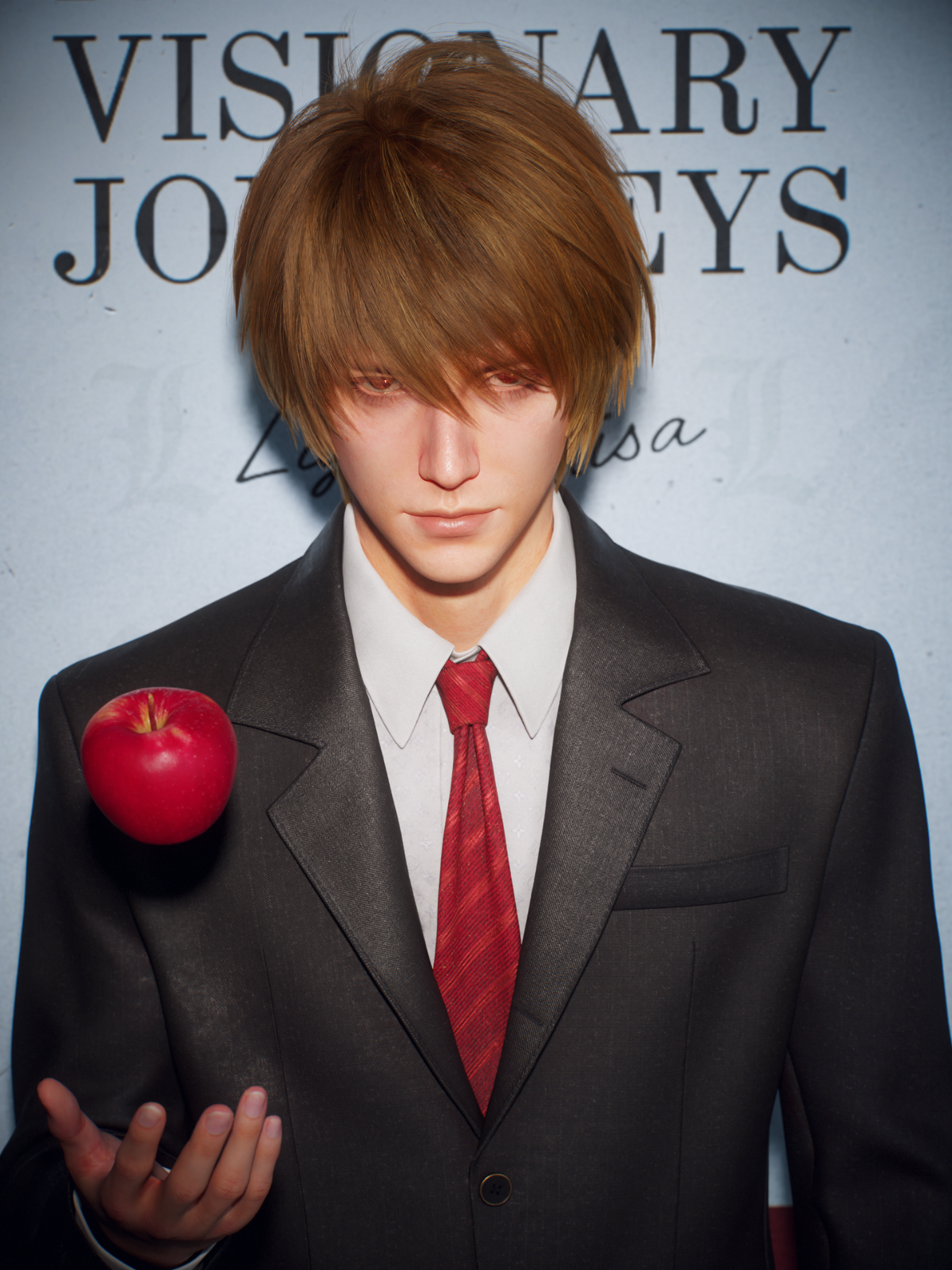
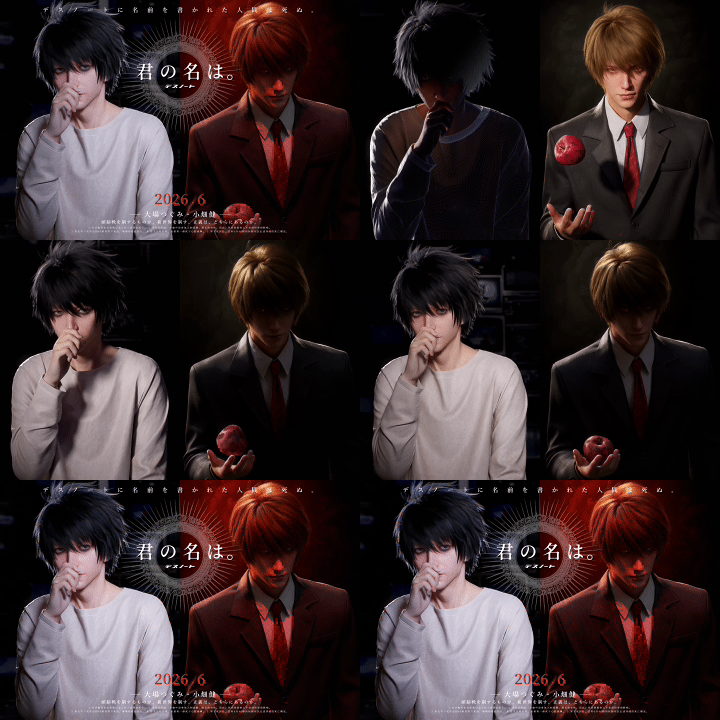
Both Light and L have iconic traits, and to truly capture their essence, you must start from the character's core identity.
In the initial stages, even if I’m already familiar with the characters, I still systematically research their lore—from concept art, manga, and anime screenshots to live-action film settings. I study their height, weight, family background, and story arcs, constantly asking: Which version of this character is the most definitive in the public’s mind? Which version resonates most and is instantly recognizable?
For Light Yagami, I chose the "Black Light" phase—the latter half of the series after L’s death. At this point, Light's power is expanding, and he has fully descended into the true "Kira." He is more mature, but also sharper, more malicious, and radiating a sense of leadership and oppressive ambition.
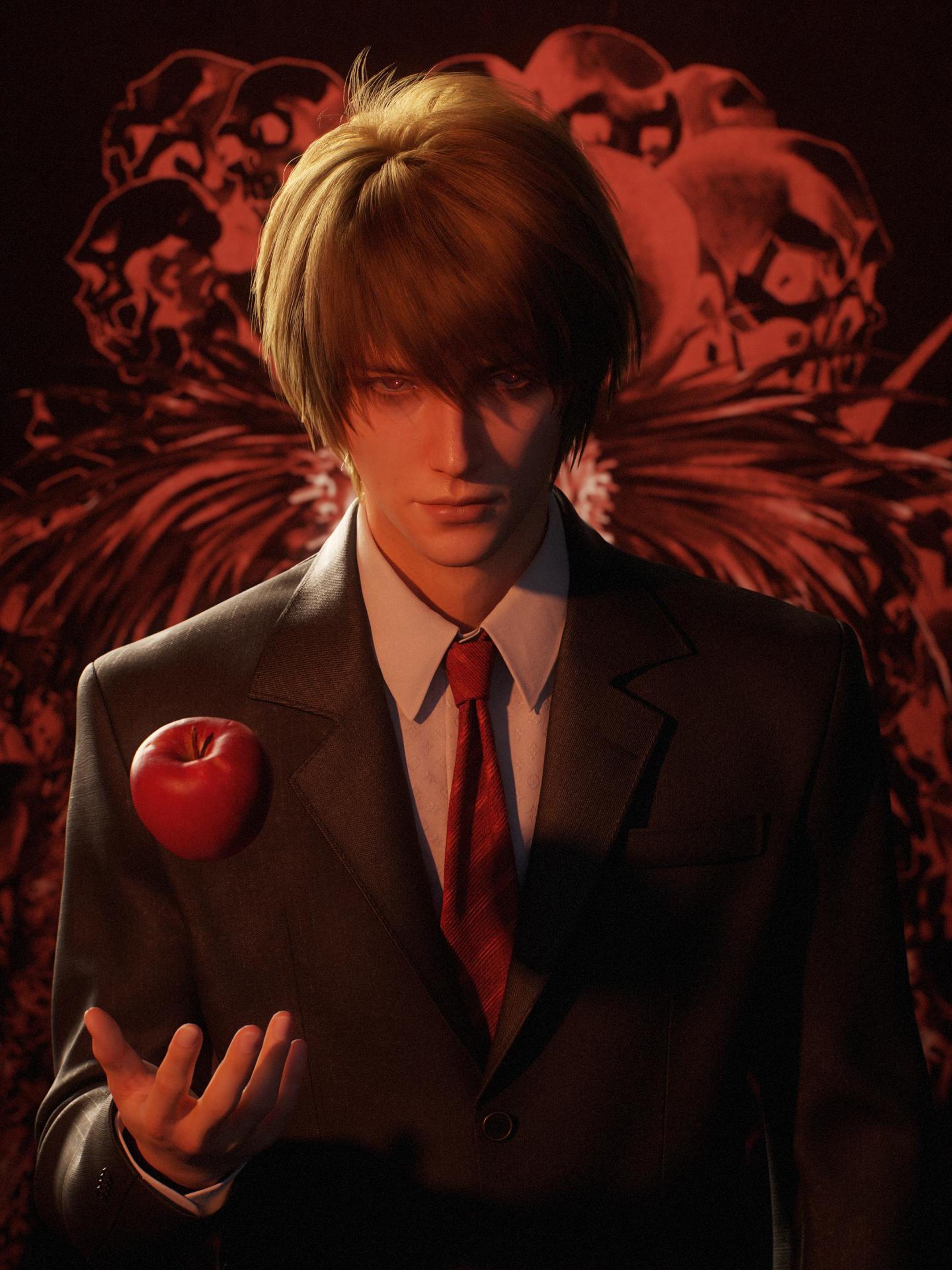
I intentionally reinforced these traits through his attire. While ensuring the suit was well-fitted, I slightly cinched the waist by fastening the buttons to create a more upright, sophisticated silhouette. I also meticulously adjusted the internal lines and local geometric relationships of the collar and tie. By creating sharper positive and negative shapes, I amplified his "cutting-edge" and aggressive aura.
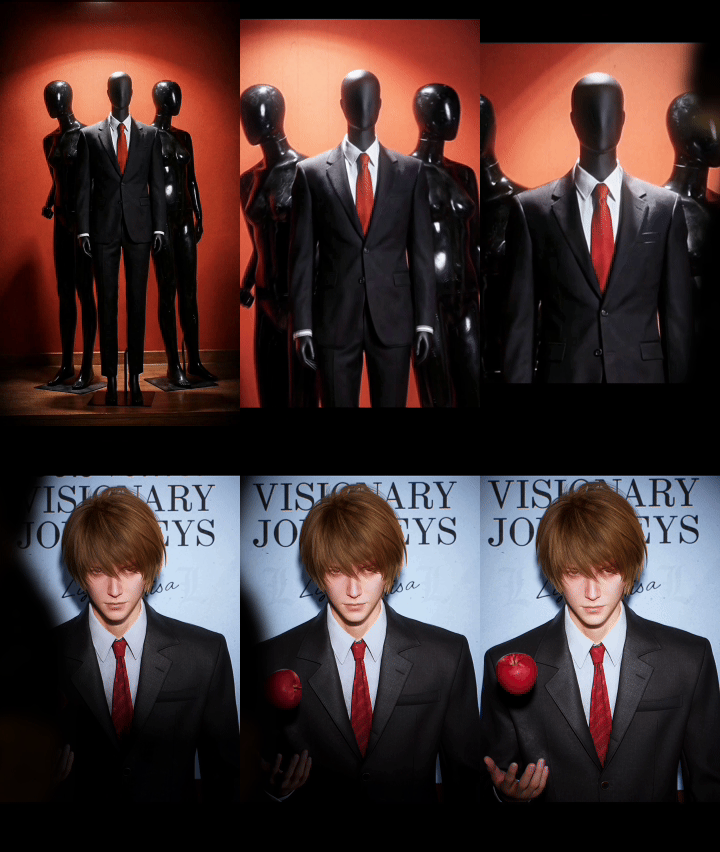
Finally, for the fabric details, Light is a character who embodies a certain "princely" elegance; he cares deeply about his appearance. Since Death Note is set in a modern world, I leaned into tiling textures and high-definition normal maps—incorporating recognizable luxury elements like fabric weaves or LV-style patterns to signal "prestige." I also used subtle variations in Roughness and Metallicity to create contrast against the base fabric. These sparse but controlled specular highlights and vertical silk textures make the material look richer and more authentic.
In contrast, L’s clothing follows a completely different logic.
His outfit is essentially a plain white long-sleeved T-shirt. Compared to Light’s structured tailoring, L’s pattern design is much simpler. In fact, by using the default base patterns from Marvelous Designer and making some adjustments with the Pattern Match tools, I was able to achieve a solid foundation.
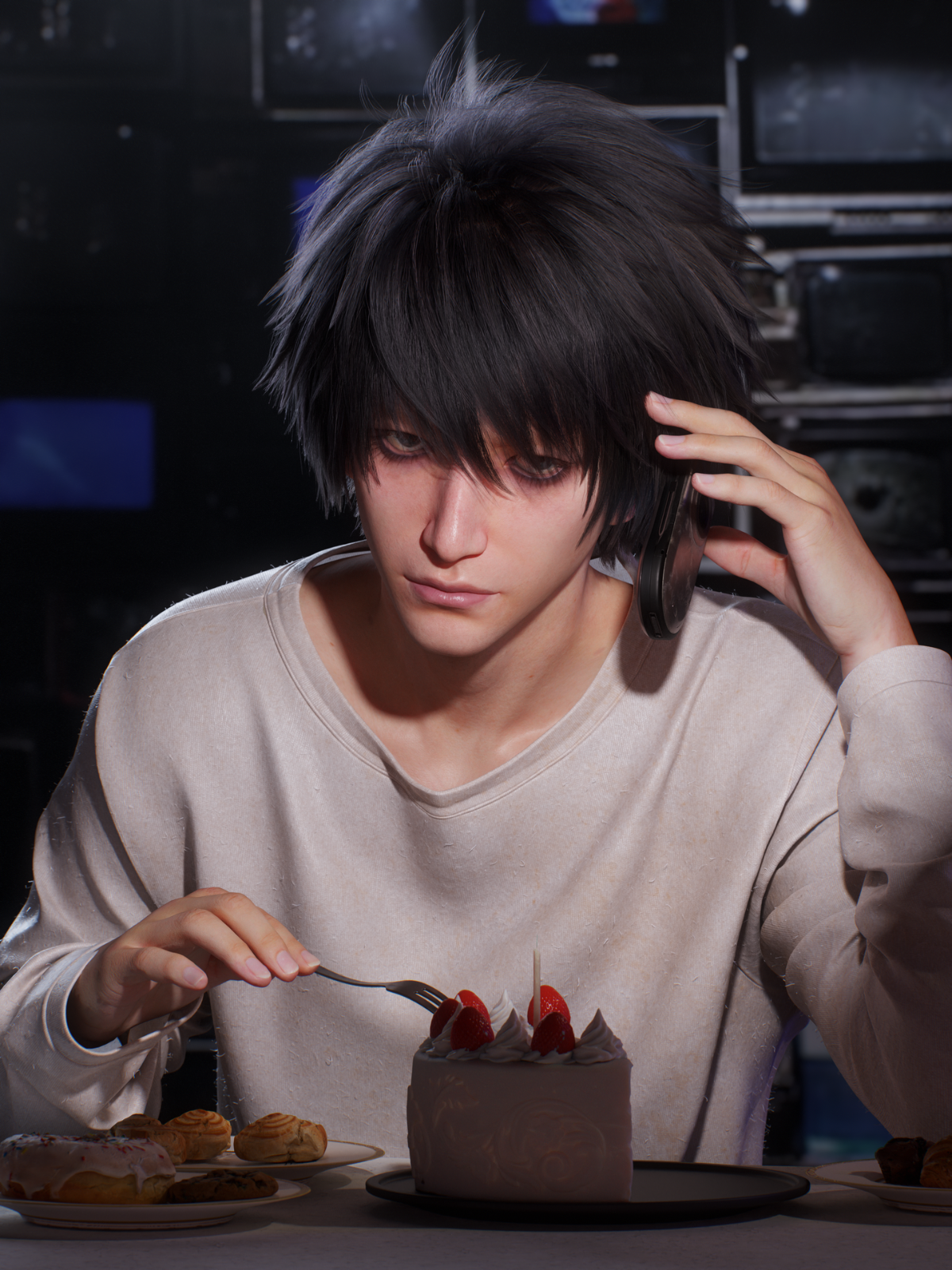
For L, the challenge wasn't "complexity of style" but fabric simulation accuracy. The folds only look "right" and sit on the body correctly if the physical properties are dialed in. Since a white T-shirt is so basic, I had to think about how to add detail within that simplicity. I referenced film stills and used a combination of internal lines and the seamline feature in Marvelous Designer to replicate the subtle puckering and edge variations seen in the live-action costumes.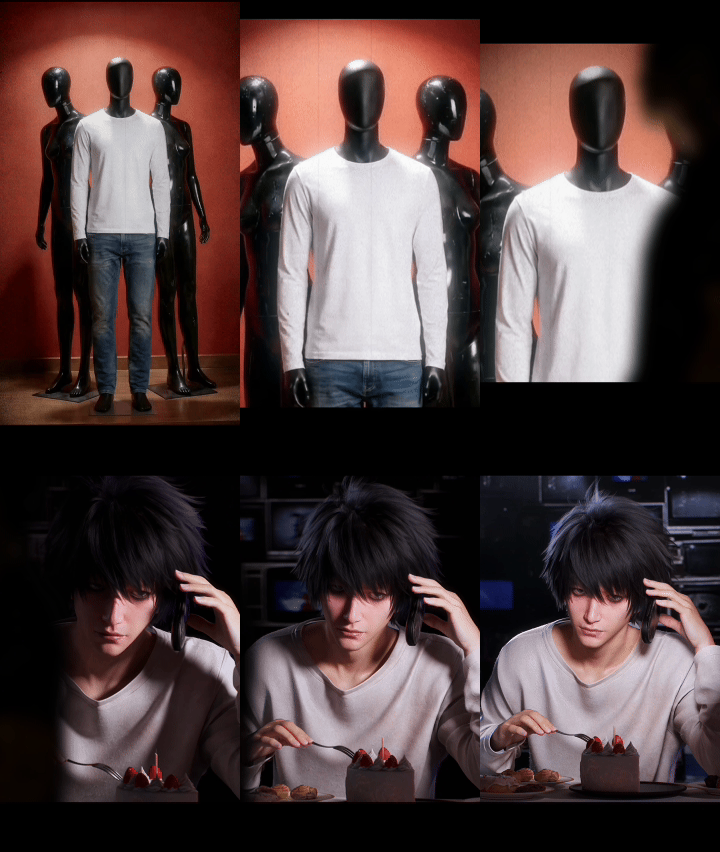 Furthermore, L’s personality dictated the final look. While he might seem eccentric or even "unhinged," he is actually quite fastidious about cleanliness, and his butler, Watari, ensures he always has fresh clothes. Therefore, I opted for a cleaner look with fewer micro-folds, keeping the patterns and fabric intact. I made the fit slightly oversized to reflect L’s relaxed, effortless, and natural state—one that is casual but never "sloppy."
How did you utilize Marvelous Designer in your Howl's Moving Castle fan art?
For the initial prep, I always start by gathering references to understand the world-build. I prioritize finding real-world prototypes and historical references for the clothing. Only after that do I look at "secondary" references, such as high-quality cosplay photography.
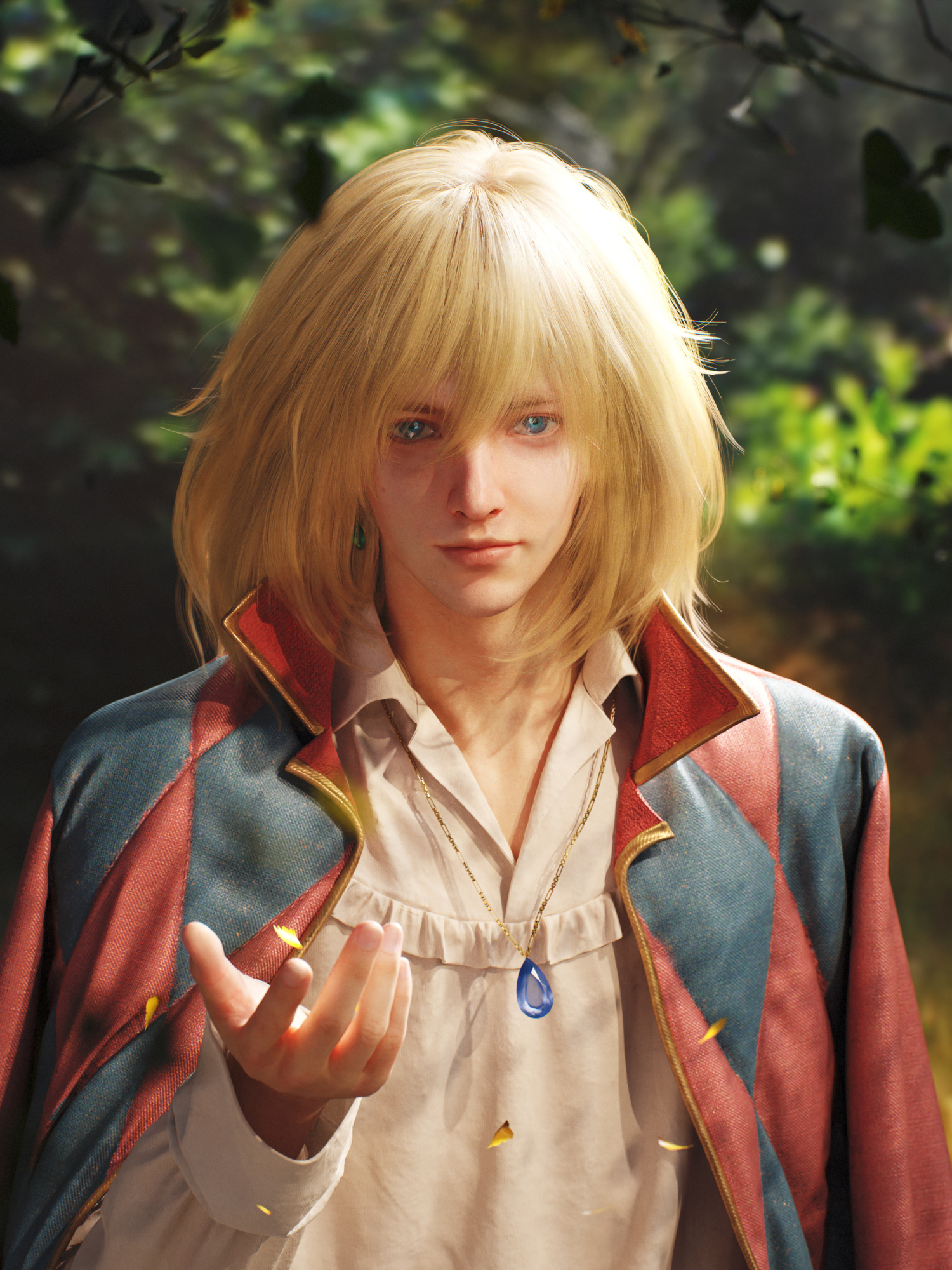
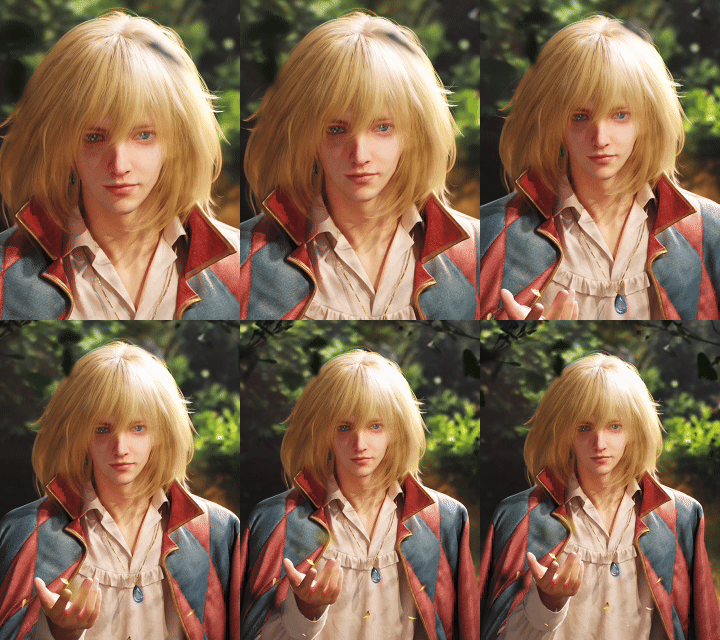
Once I’ve gathered enough context, my next thought is: Can I derive the design from standard garment patterns? For instance, Howl’s inner shirt is essentially an extension of a basic T-shirt or button-down template, while his heavy patchwork coat follows the logic of a jacket or a puffer coat.
When starting from these base patterns, the most critical first step is ensuring that the shoulder lines, neckline, and overall volume align perfectly with the character’s physique and intended vibe. If this foundational layer is solid, the subsequent refining process becomes much more efficient and yields far better results.
After achieving a clean, natural look in a static pose, I apply animation morphs to the base avatar. This allows the clothing to react to movement, generating authentic fold logic and a sense of dynamic flow that only Marvelous Designer’s simulation can provide.
Building on that, I fine-tune the Air Pressure of specific patterns and incorporate the Wind Controller. This adds that signature "billowing in the wind" effect, capturing the ethereal and airy quality that is so central to Howl’s character.
In your current workflow, what role does Marvelous Designer play? In your opinion, what is its most irreplaceable advantage when it comes to enhancing a character's "sense of realism"?
I believe the greatest value of using Marvelous Designer lies in its ability to deliver authentic fabric simulations while allowing me to maintain full control over pattern structures and garment details. It also makes it incredibly easy to manage, adjust, and optimize cloth behavior across different poses and body types. Compared to traditional manual sculpting, Marvelous Designer is far more controllable, reproducible, and iterative.
Its most irreplaceable advantage is that the software is built entirely around the logic of real-world tailoring. Essentially, if you have a solid grasp of garment construction, pattern cutting, and how clothes are actually worn, you can leverage Marvelous Designer’s extensive support for various fabric types and its physics-based simulation to create almost any type of attire imaginable.
More importantly, the folds generated in Marvelous Designer aren’t just "visual representations" of wrinkles—they actually embody the transmission of physical force and tension. This includes micro-details like stitching patterns and the subtle tension-driven puckering they create. Marvrlous Designer’s ability to render these minute physical responses is something I value immensely.
How much of the original simulation detail do you typically retain? What percentage of the work is moved into other 3D software for secondary refinement?
Generally, I retain about 80% to 90% of the original cloth simulation details. Once I’ve planned out key elements like pocket structures, prominent stitching, and seam lines through the patterns in Marvelous Designer, I move into ZBrush for further refinement.
During this stage, my priority is optimizing the garment thickness while adding deeper structural details and finer "secondary folds"—such as memory creases. At this point, I also adjust the overall silhouette and proportions to ensure the final result perfectly aligns with the character's persona and aesthetic.
In the final texturing phase within Substance Painter, I continue to layer on even finer stitching and surface details. This part of the process is highly controllable and reversible, making the overall workflow much more flexible. It allows me to make precise adjustments based on specific creative needs.
Broadly speaking, I strive to ensure that every step is layered and as non-destructive as possible. From the initial block-out in Marvelous Designer to using Layers in ZBrush for modifications, and finally applying various wear-and-tear or stitching layers in Substance Painter, I keep all information in a state where it can be easily recalled or tweaked.
The goal of this approach is to ensure that if a detail feels off at any stage, or if the character's look needs a late-game adjustment, I can roll back and modify efficiently without having to start over from scratch.
For beginners who aspire to create high-level realistic garments like yours, what advice do you have? Are there any common "pitfalls" they should avoid?
I believe the most important thing is to make the most of foundational tutorials and build a rock-solid grasp of garment construction and human anatomy.
Start by perfecting the base patterns on the character's avatar. Ensure these basic items fit correctly, look plausible, and follow a logical structure before adding any complex details. A common pitfall for beginners is trying to tackle overly intricate outfits right away, or attempting to finish all the details in a single stage. In reality, creating digital clothing is very much like painting—the most effective way is to advance each stage in parallel rather than cramming everything into one step.
In other words, you should move through the hierarchy of silhouette, primary forms, structure, secondary relationships, and final details in distinct phases. Address the core issues of your current stage before moving to the next. This approach is actually more efficient and allows you to stay focused on what truly matters at each level.
Lastly, if possible, try to supplement your "soft skills." Understand how fabric is actually tailored and how the specific garment or asset you are creating functions in the real world. Only when you truly comprehend the underlying logic will your work gain that extra layer of authenticity and become truly convincing to the audience.
By Simon_ltw
이 작업은 Animation, Avatar, Pattern, Rendering, Simulation, Anime 등의 기술로 제작되었습니다.
Marvelous Designer로 이와 같은 3D 의상·캐릭터 작업을 직접 만들어볼 수 있습니다.