Finding Beauty within Repair - AI / Kimia's work for MDCC Vol.3
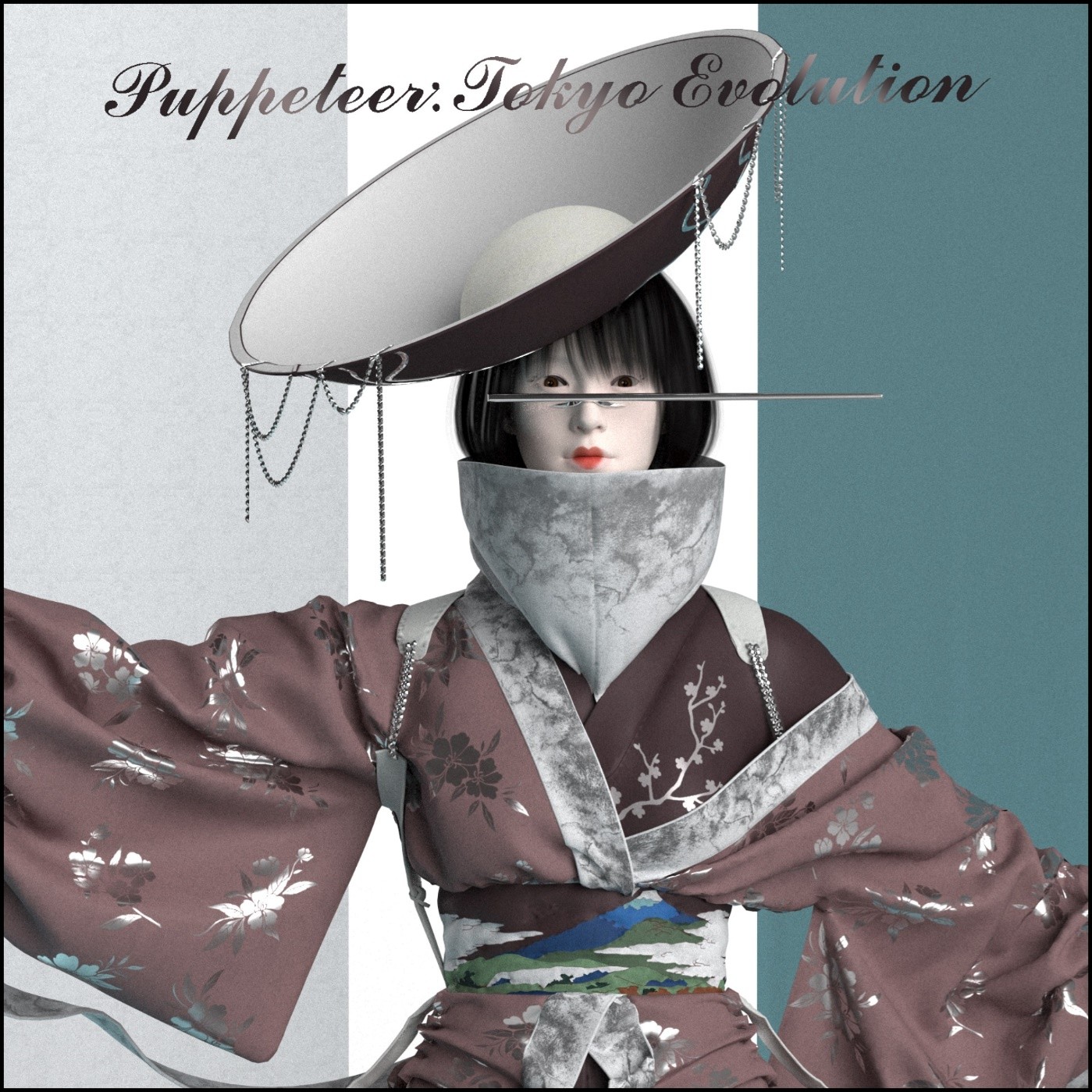
Iranian designer AI / Kimia discusses her journey on creating her entry for the Marvelous Designer Creator’s Contest 2025 Vol.3, titled "Puppeteer: Tokyo Evolution," serving as a case study in blending cultural philosophy with technical precision and winning the Community Choice award.
By applying the Japanese concept of Kintsugi—the art of finding beauty in repair—Kimia explores through tradition and imagination, strength, and rebirth within the creation of digital garment.

Artist Introduction: please tell us about yourself.
Hello world,
My name is Kimia, and I am from Iran. I can’t say that I am fully a digital fashion designer yet—but I am a designer, and I am actively finding my path toward that point.
My creative journey began in architecture, where I learned to think in terms of structure, balance, an. My creative journey began in architecture, a discipline that taught me how to think in terms of structure, balance, and spatial logic. Over time, I realized that alongside this structural approach, I am deeply drawn to storytelling, emotion, and meaning in design.
Participating in the Marvelous Designer Creator’s Contest was both challenging and deeply rewarding. My main motivation for joining was to move beyond purely technical execution and focus on concept, symbolism, and personal expression. This contest gave me the freedom to experiment while still working within a professional framework.
Through this experience, I learned that digital fashion can function as a powerful narrative medium rather than simply a visual outcome. I also learned to trust the design process, embrace imperfections, and allow the garment to evolve organically—mirroring my own growth as a designer.
We’d like to hear more about the art direction in your Creator’s contest 2025 Vol.3. What was the visual style you were aiming for?
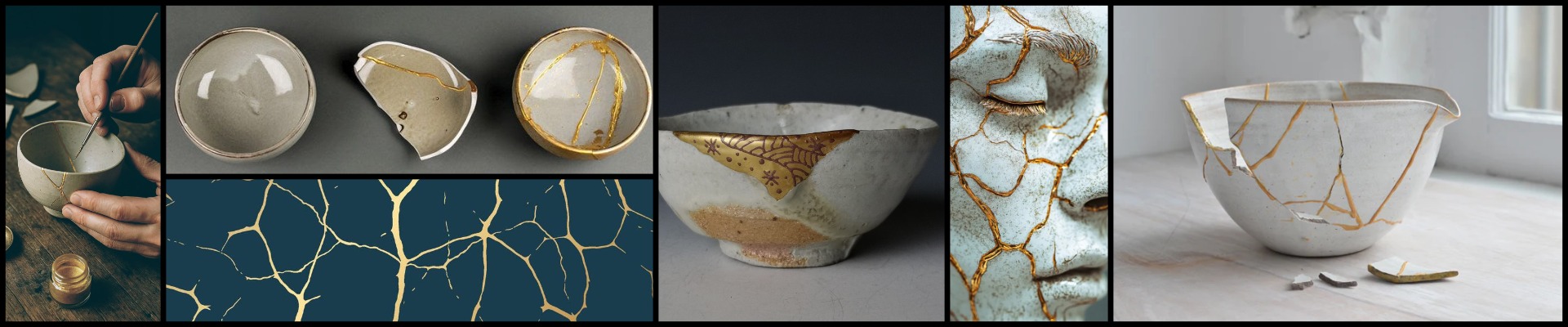
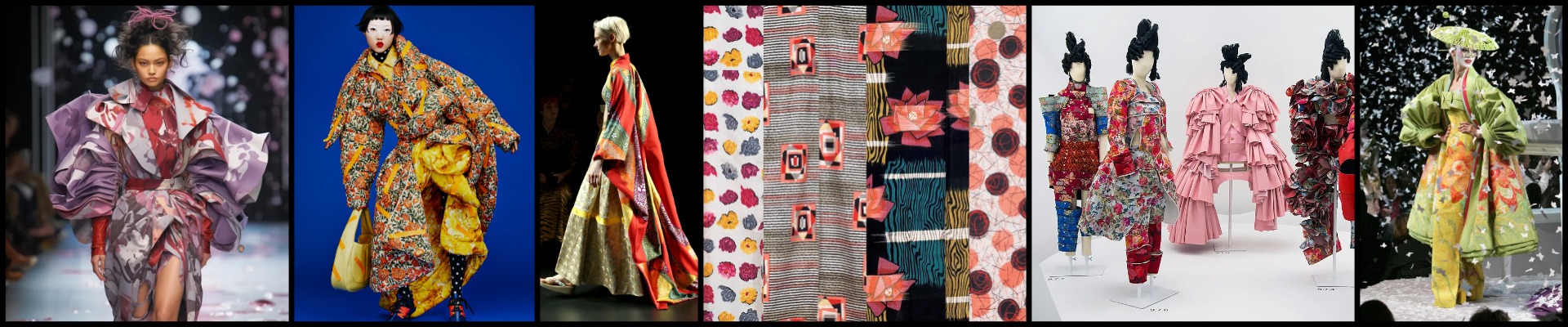
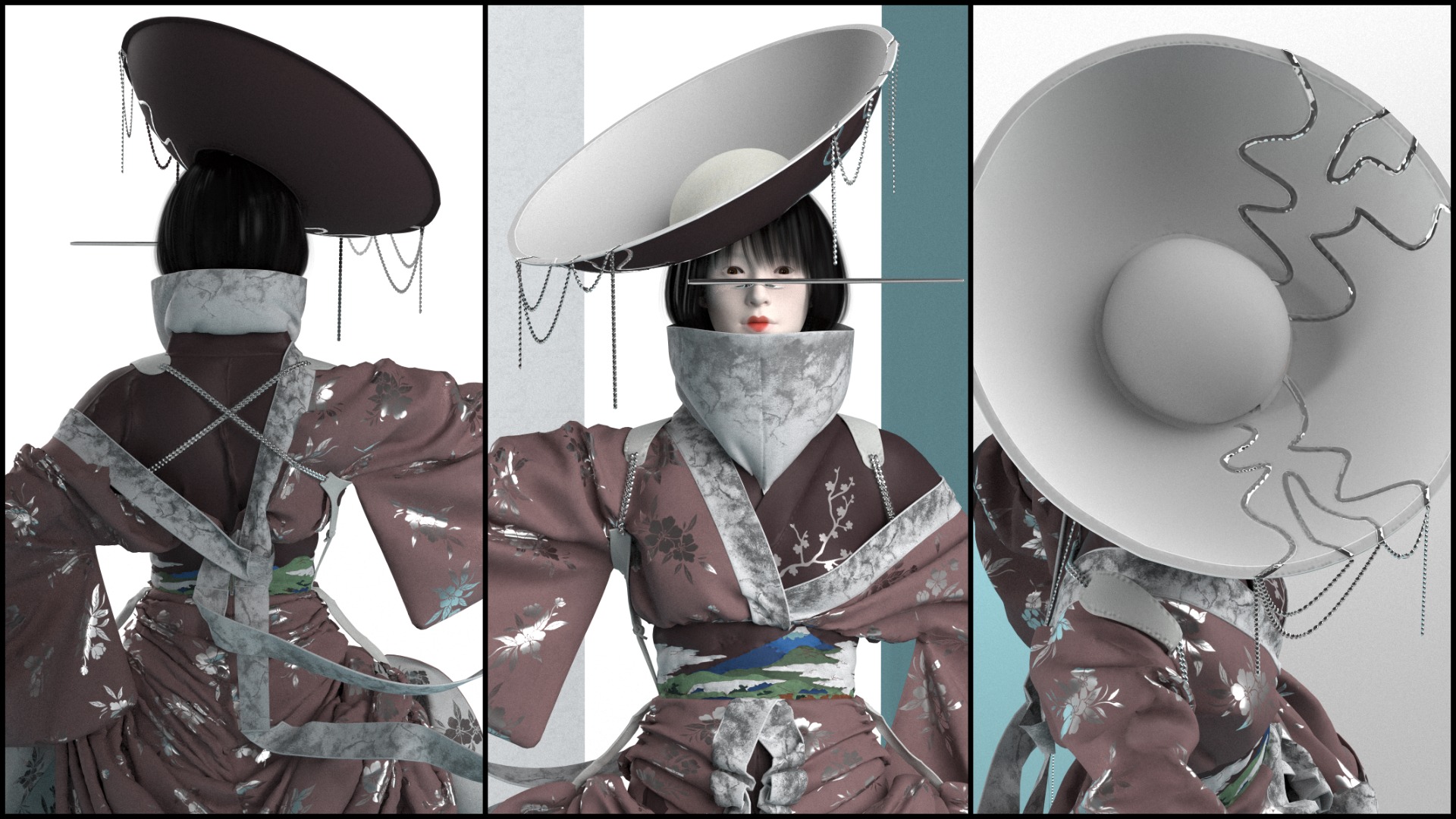
In Puppeteer: Tokyo Evolution, my goal was to create a visual language that exists between eras, cultures, and emotional states. The core inspiration comes from Kintsugi, the Japanese philosophy of embracing fracture and repair as part of an object’s beauty and strength.
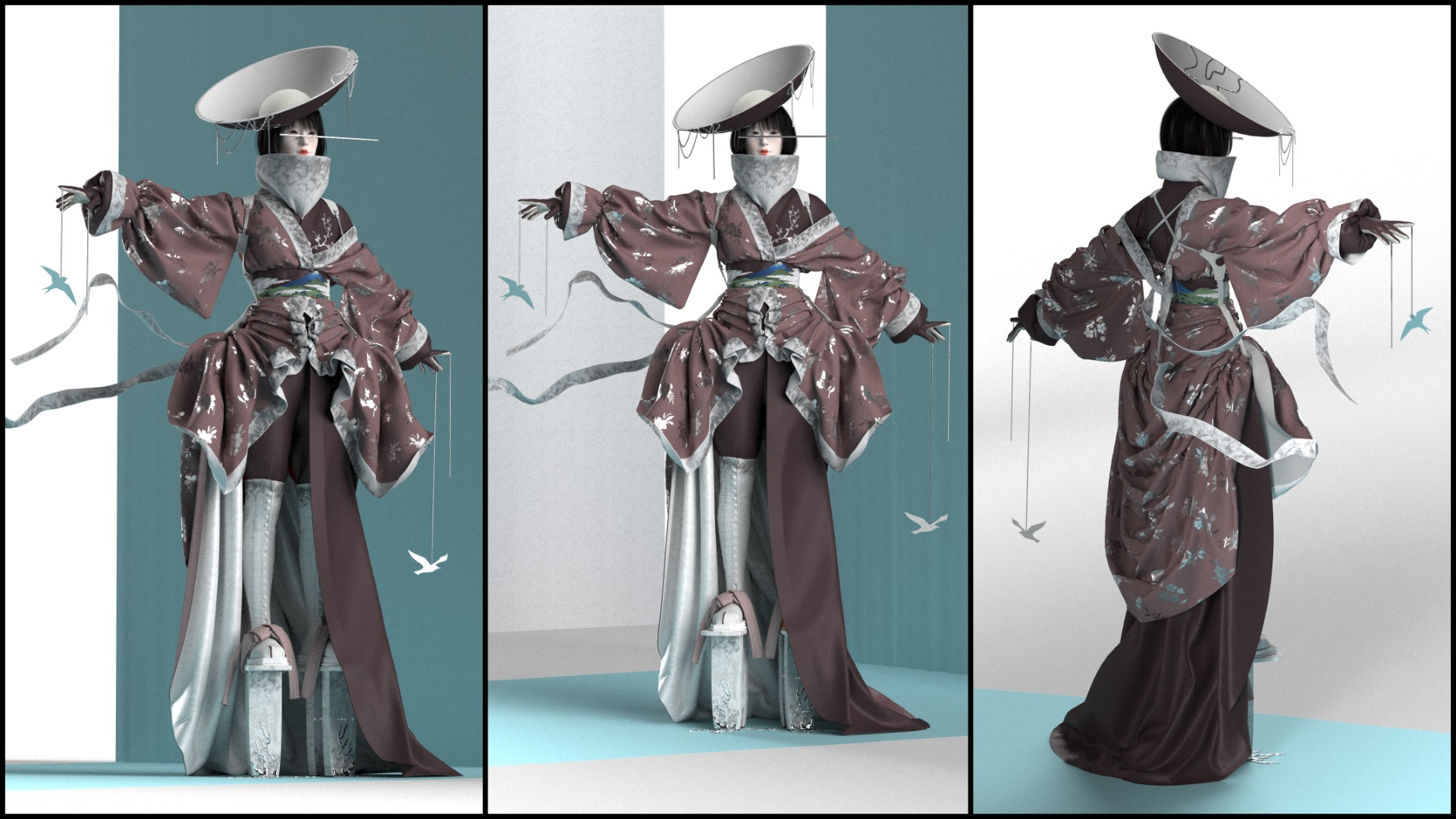
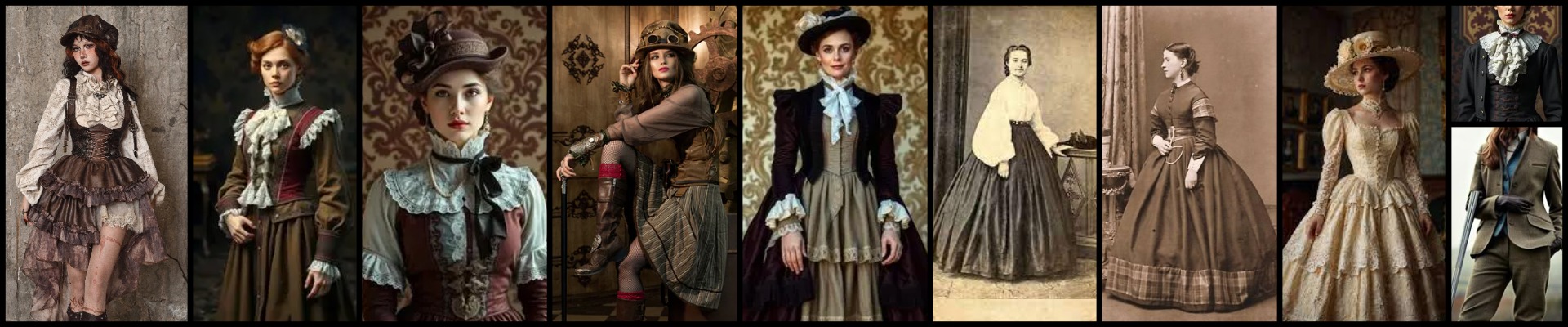
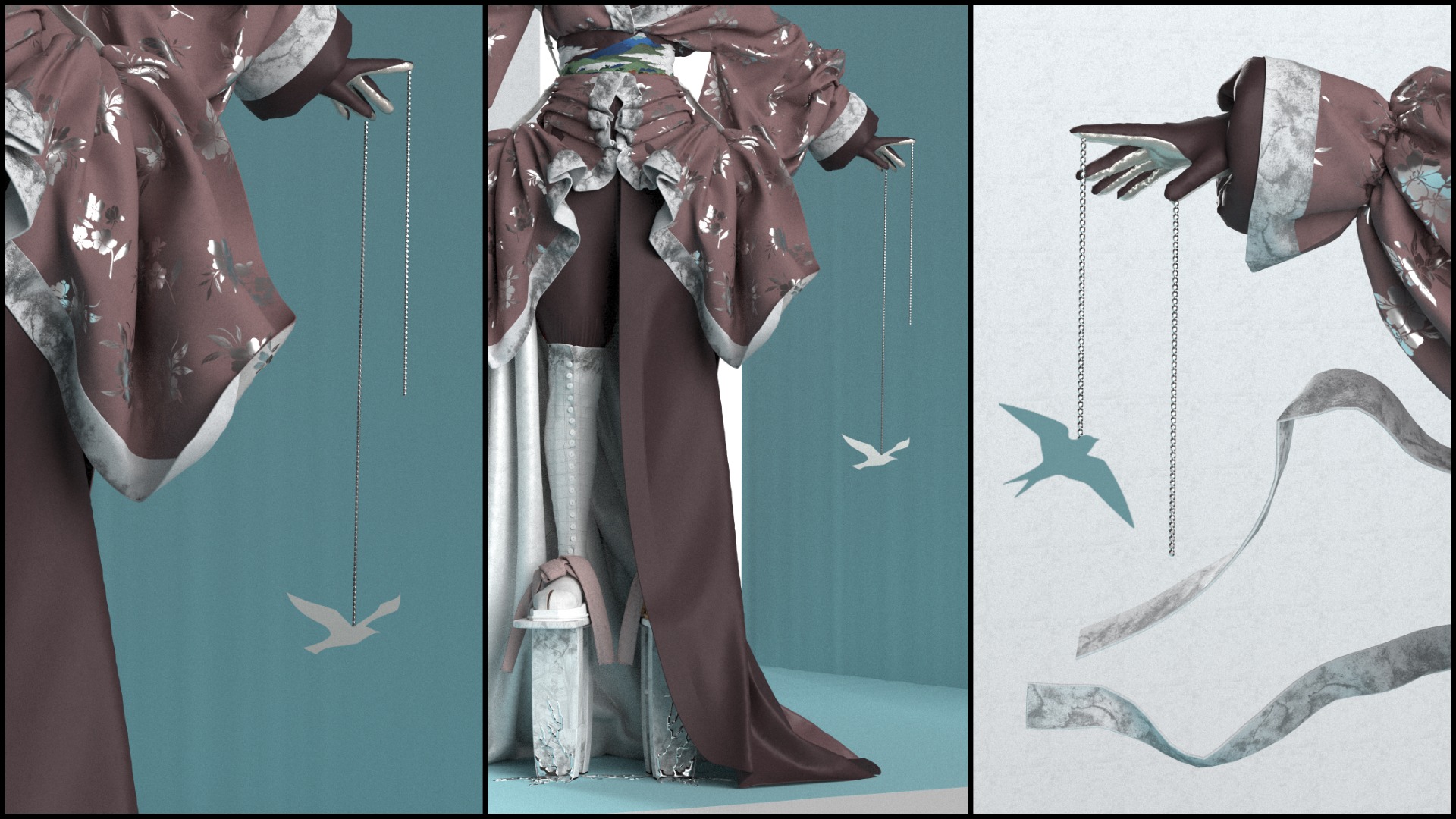
Visually, I wanted the garment to feel ceremonial yet rebellious. Traditional Japanese kimono elements were deconstructed and reinterpreted through an avant-garde lens, with subtle influences from Victorian silhouettes. Voluminous sleeves, a rigid sculptural collar, and layered fabrics create a tension between softness and control, while the lifted skirt symbolically suggests liberation.
The parasol-like hat adorned with delicate chains conveys a sense of balance between fragility and strength. The puppeteer and bird motifs represent the relationship between guidance and freedom. The divided white and blue background symbolizes sky and flight, transforming the scene into a poetic moment of transition and rebirth.
Would you be able to give us a quick overview of the different tools you use in your pipeline with a focus on Marvelous Designer?
Have you encountered any challenges and how have you overcome them?
Marvelous Designer played a central role in my workflow and served as the foundation of the entire project. I began by building the base silhouette and patterns directly in Marvelous Designer, with a strong focus on proportions, fabric behavior, weight, and layering.
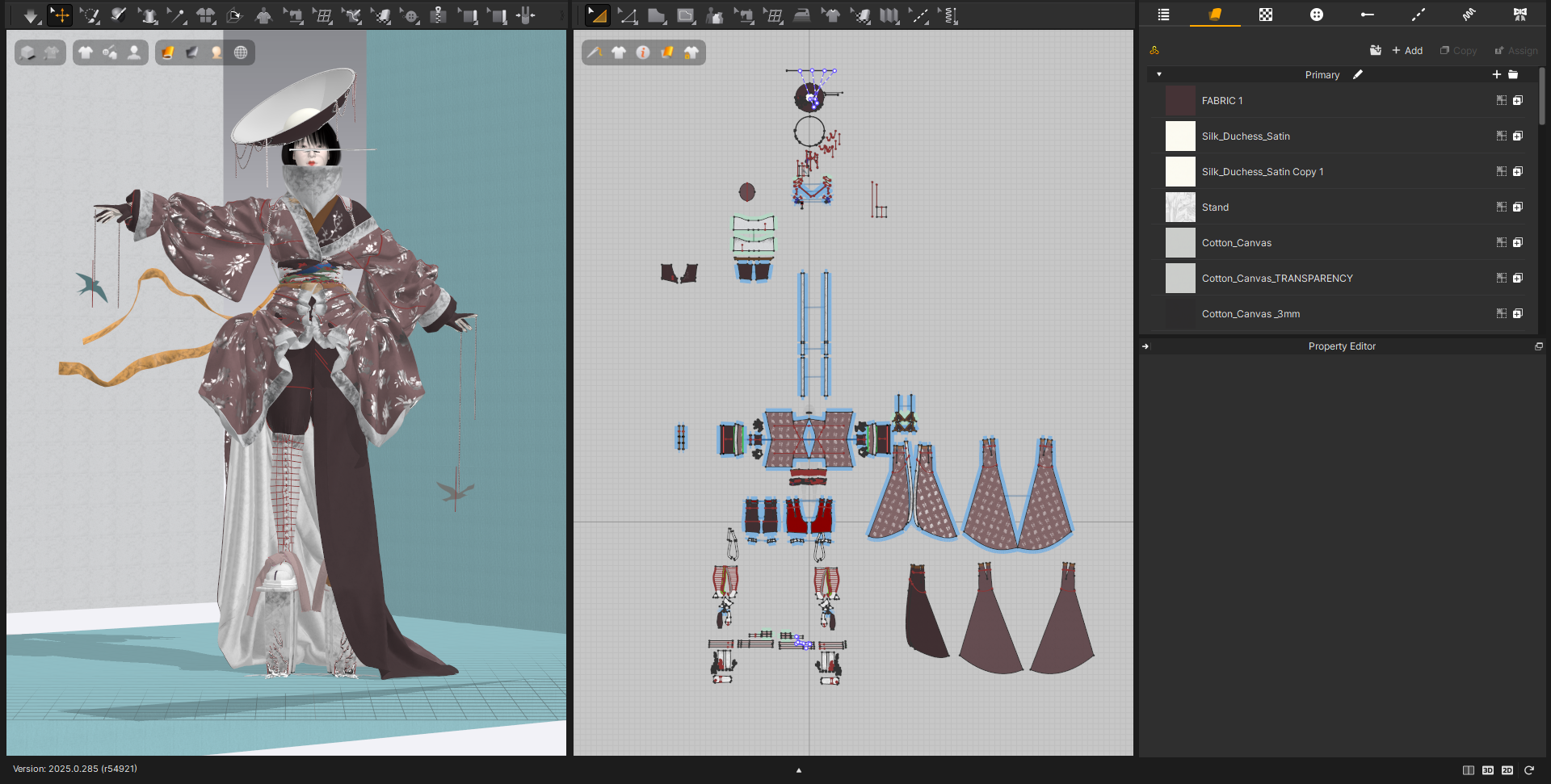
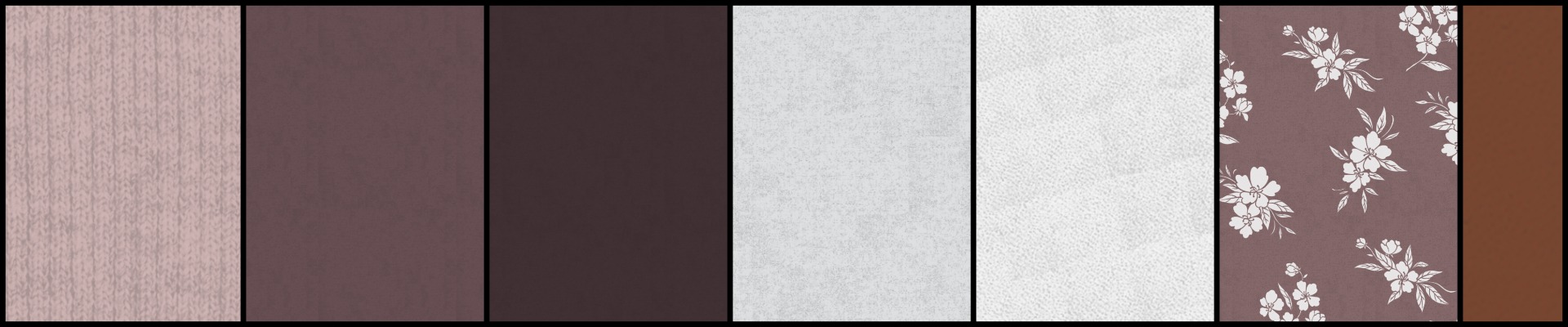
The kimono structure, sleeves, and layered skirt were developed using traditional pattern logic, which I intentionally disrupted by adjusting tensions, shortening panels, and lifting sections of the garment to create a more expressive and unconventional form.
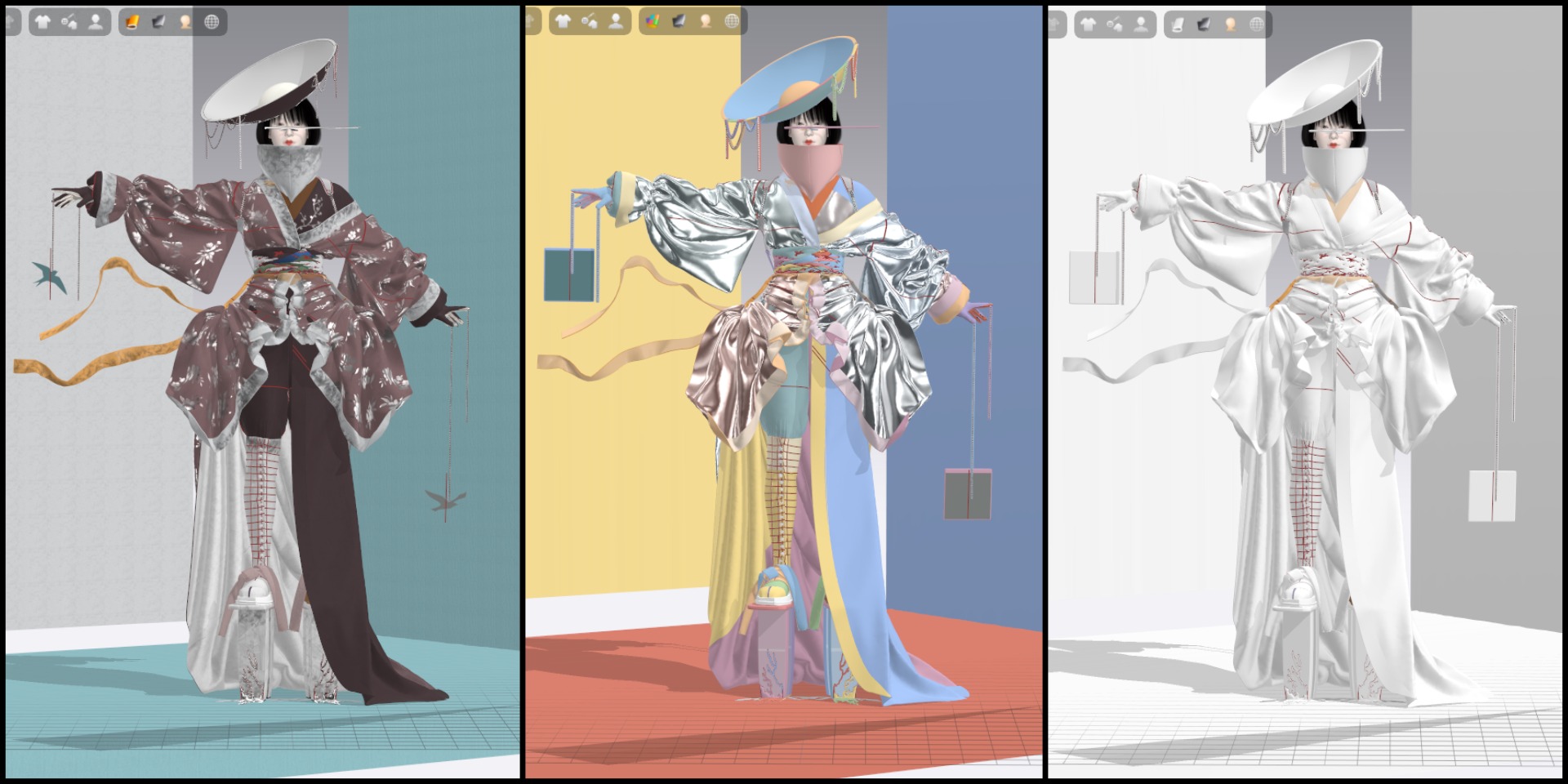
One of the main challenges was maintaining visual clarity while working with highly layered and voluminous elements. I addressed this by breaking the process into clear stages, refining each component individually, and continuously evaluating balance and cohesion so the final garment felt dynamic rather than static.
Are there any tips and tricks with Marvelous Designer that you can share with the community?
My main advice is to approach Marvelous Designer as a creative design space rather than only a simulation tool. Allow the fabric to guide you.
Experiment with internal lines, tension, and early-stage imperfections—they often lead to the most interesting results. I also recommend reviewing the garment from multiple angles and considering movement early in the process, as these aspects often reveal possibilities that static views cannot.
See also
Creator's Contest 2025 Vol. 3 Fantasy Archives: Puppeteer (Tokyo Evolution) Project and Steps by AI / Kimia
이 작업은 CONNECT, Contest, Texture, Pattern, Tradition, Kimono 등의 기술로 제작되었습니다.
Marvelous Designer로 이와 같은 3D 의상·캐릭터 작업을 직접 만들어볼 수 있습니다.