Interview with Kimia Bagherzadeh Homaei, Winner of Creator's Contest 2025 Vol. 2 TOKYO CONTINUUM
Introducing our exclusive interview with Kimia Bagherzadeh Homaei, winner of TOKYO CONTINUUM! ✨
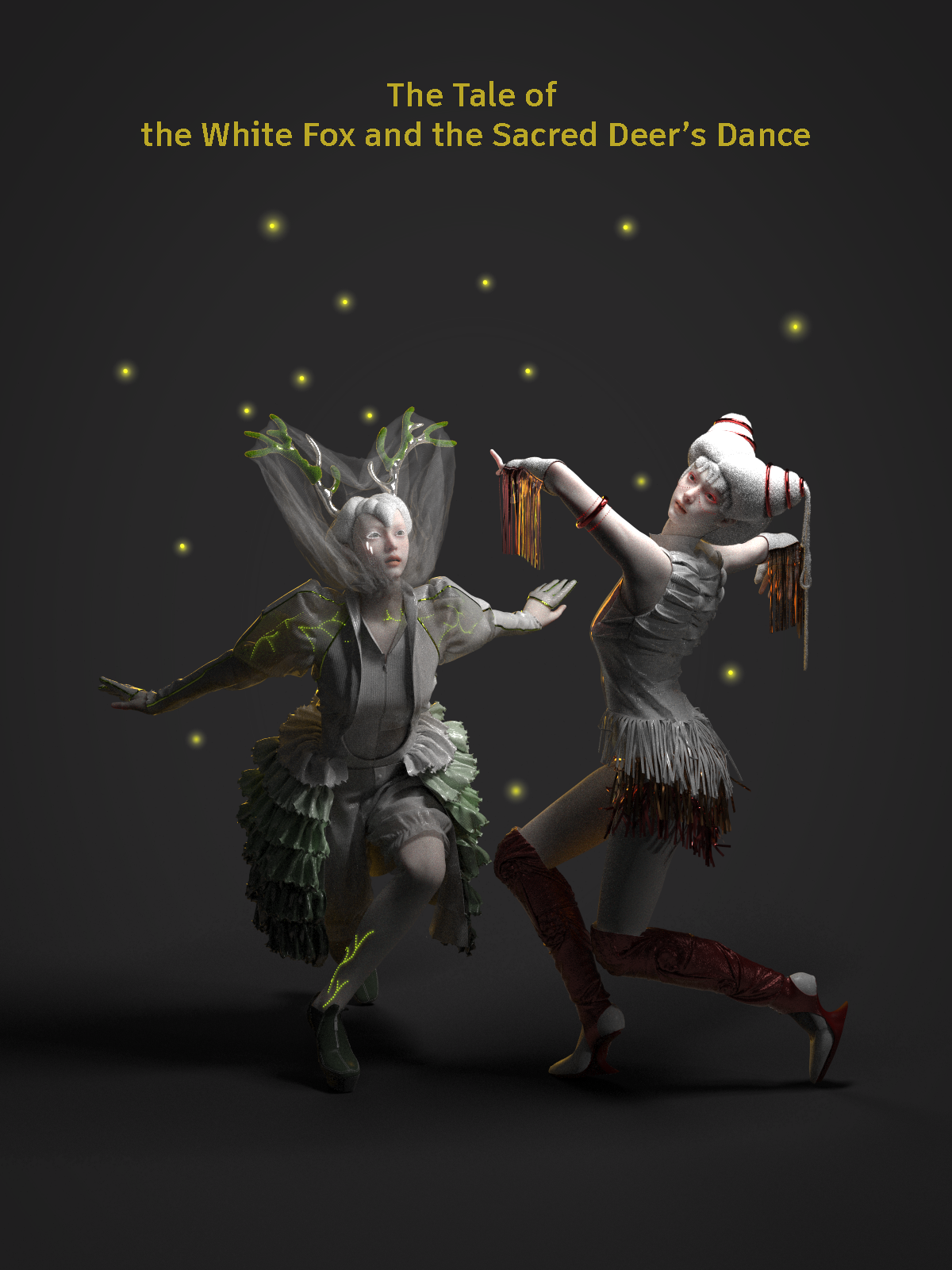
Her "Tokyo Continuum" collection tells the story of Japan's fox and deer spirits, brought to life through a beautiful collision of architecture, technology, and fashion.
Artist Introduction: please tell us about yourself.
Hello everyone! I'm Kimia, a digital fashion designer from Iran with an architect's eye for structure and a storyteller's heart. When I first discovered Marvelous Designer two years ago, it felt like finding the perfect creative partner - one that understood my need for both precision and poetry in design.
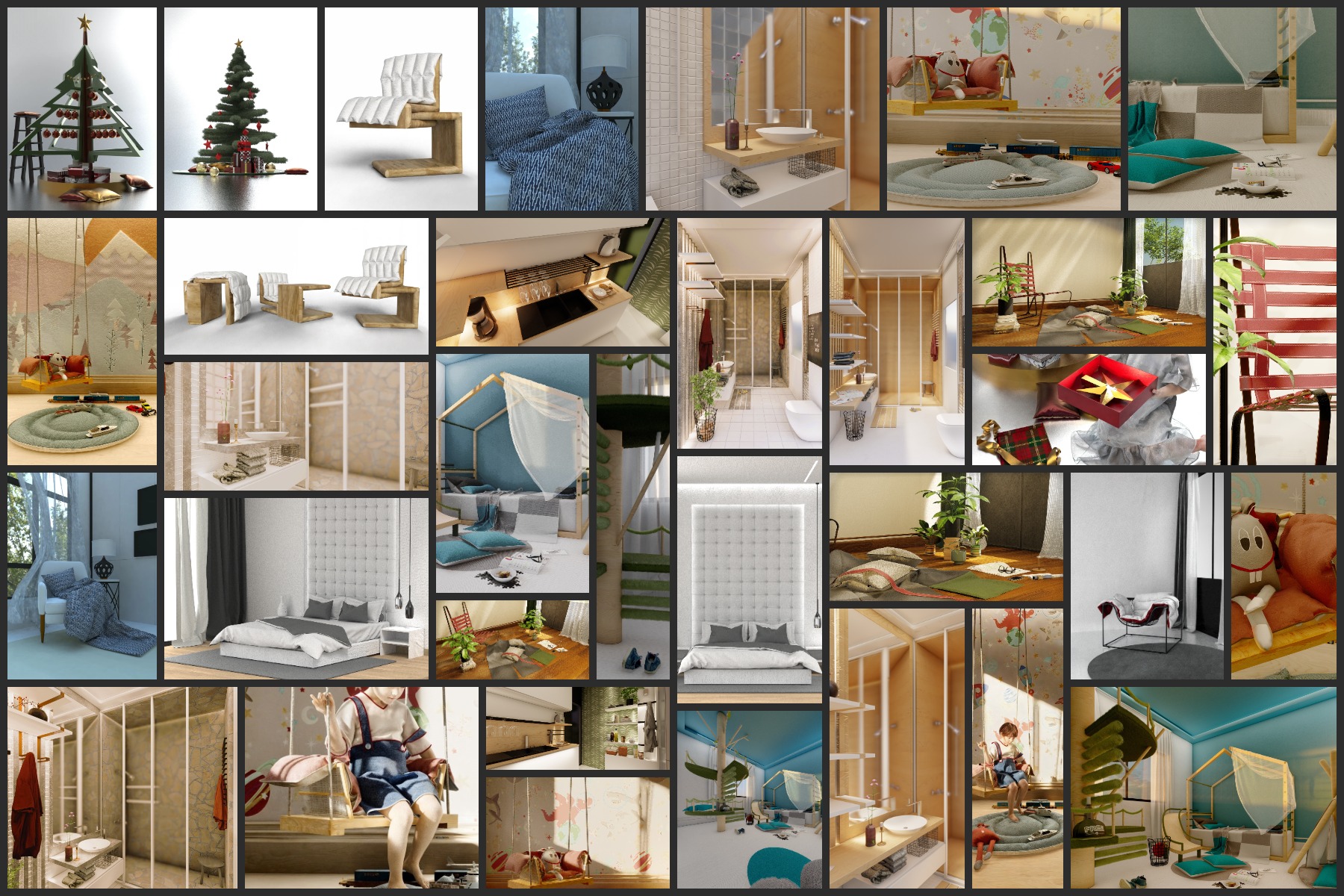
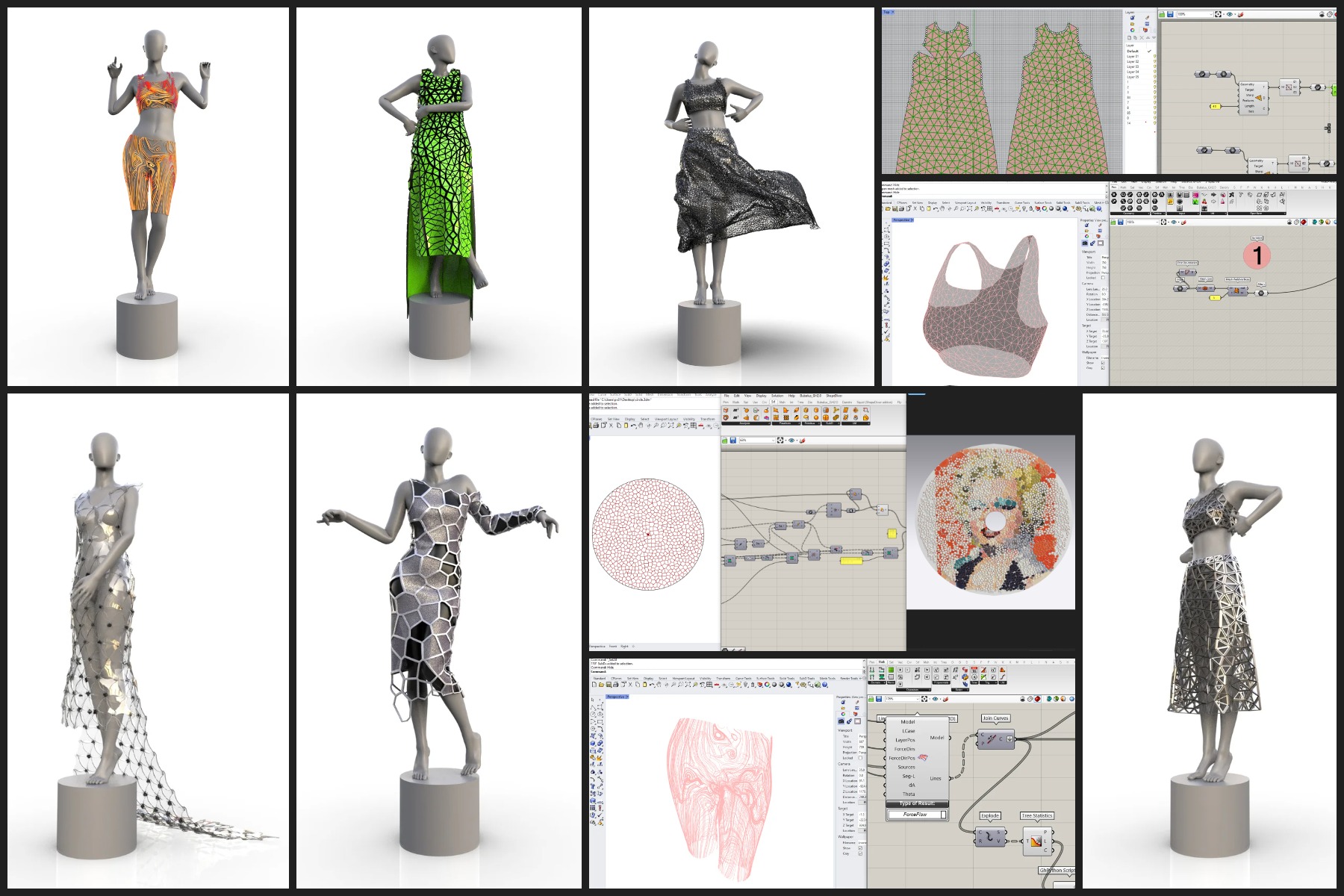
My architectural background gives me a unique perspective. Where some see just fabric and seams, I see tension points and load-bearing curves. Marvelous Designer became my bridge between worlds, letting me apply architectural principles to flowing garments while still keeping that magical sense of movement and life. I've had particular fun connecting it to Rhino and Grasshopper - there's something thrilling about seeing parametric patterns transform into wearable art, then adding that final touch of personality through EveryWear's animations.
Why This Contest Called to Me >>>
I entered because I wanted to prove fashion could be more than clothing - it could be wearable mythology. My "Tokyo Continuum" collection tells the story of Japan's fox and deer spirits through every intentional wrinkle and fold. The origami-like structures? That's my architectural side speaking. The way the fabrics flow and interact? That's where Marvelous Designer's magic shines.
What This Journey Taught Me >>>
The most compelling designs live in the tension between opposites - structure and fluidity, tradition and innovation
Technical tools (like my beloved Rhino integrations) work best when they serve the story, not the other way around
There's incredible power in garments that don't just cover bodies, but spark imaginations
Winning has been humbling, but what excites me most is knowing this is just the beginning. I can't wait to keep exploring how many other stories might come to life through this beautiful collision of architecture, technology and fashion.
We’d like to hear more about the art direction in your Creator’s contest 2025 Vol.2. What was the visual style you were aiming for?
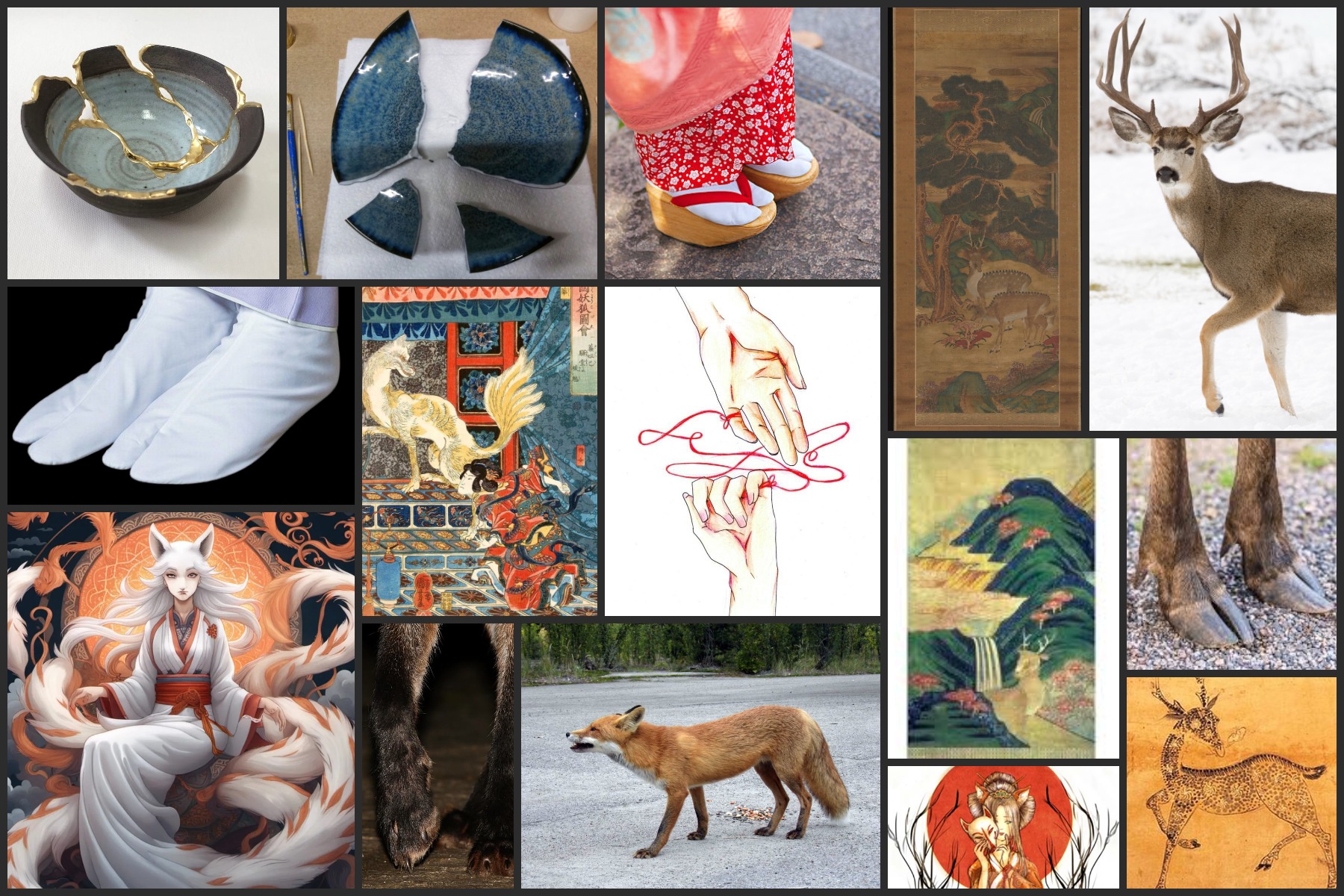
For this contest, I envisioned a theatrical fashion moment where ancient Japanese folklore collides with contemporary street style - a visual dialogue between tradition and rebellion. At its heart lies the dance between two mythical spirits: the cunning Kitsune (fox) and graceful Shika (deer), reimagined through a modern fashion lens that celebrates their contradictions.
The Fox Character (Kitsune) >>> became a study in deceptive beauty:
Sharp, defensive poses with angular body language
A fiery red-and-white ensemble featuring:
Razor-sharp stiletto heels with peony motifs carved into their surfaces
Nine trailing fabric strips representing the fox's mythical tails
Origami-like folded elements creating aggressive silhouettes
Metallic gold kintsugi seams highlighting intentional "flaws"
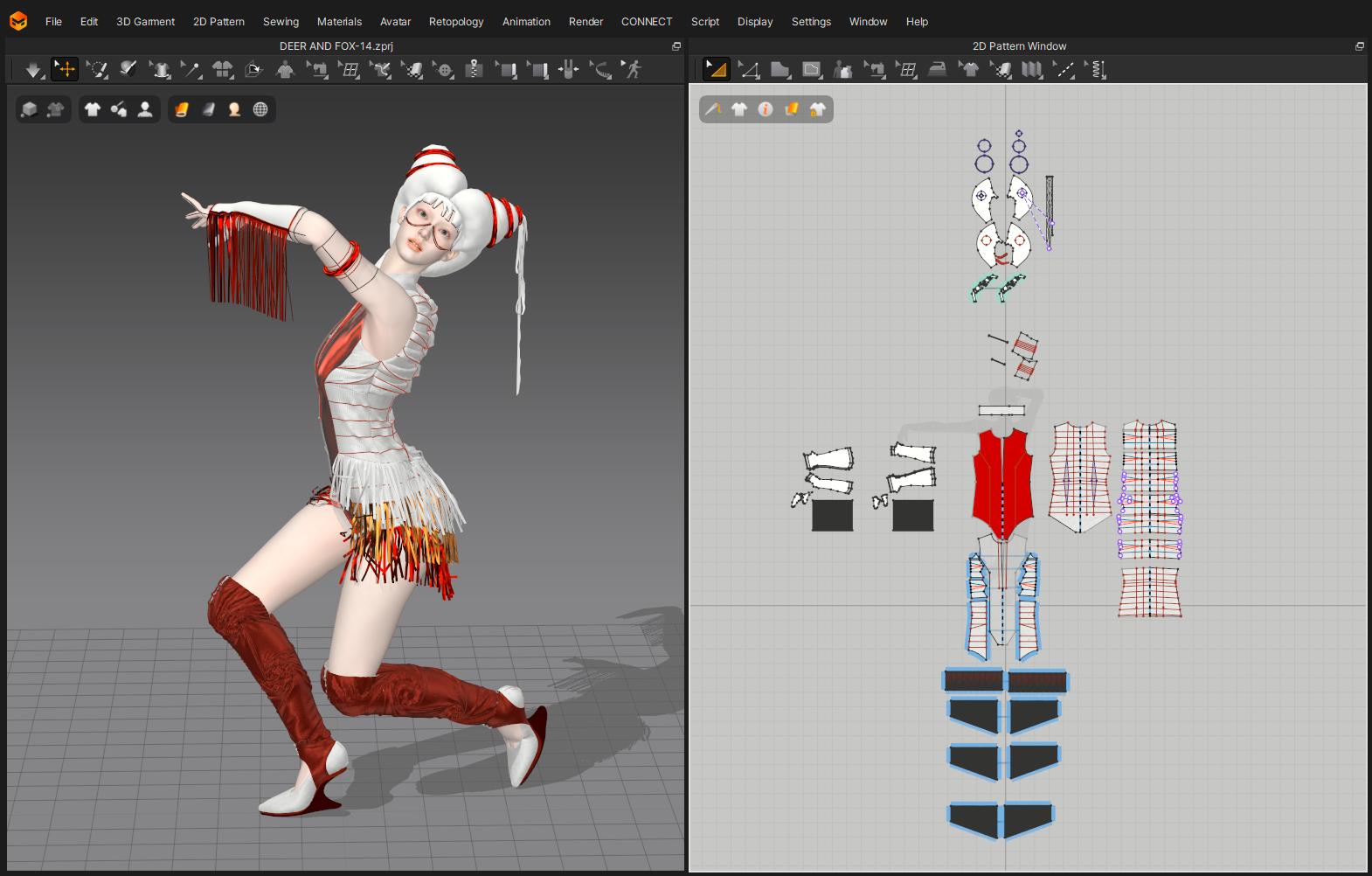
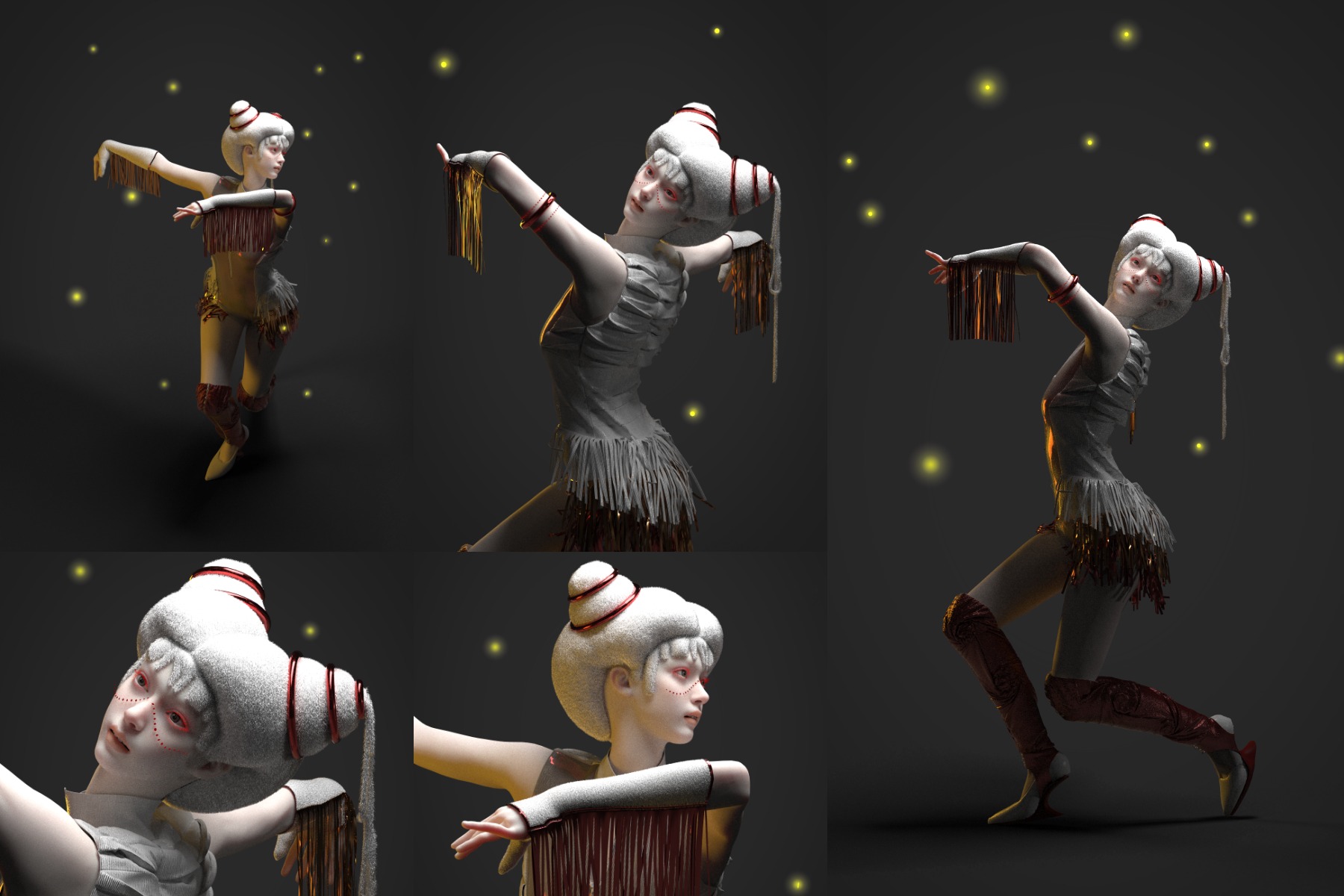
The Deer Spirit (Shika) >>> embodies vulnerable strength:
Softer but assertive stances contrasting the fox's angles
An ethereal white-and-green palette with:
Delicate, translucent fabrics veiling the face
A single glowing tear emphasizing hidden purity
Hoof-like platform shoes with curved, organic shapes
Floral embroidery rooted in natural motifs
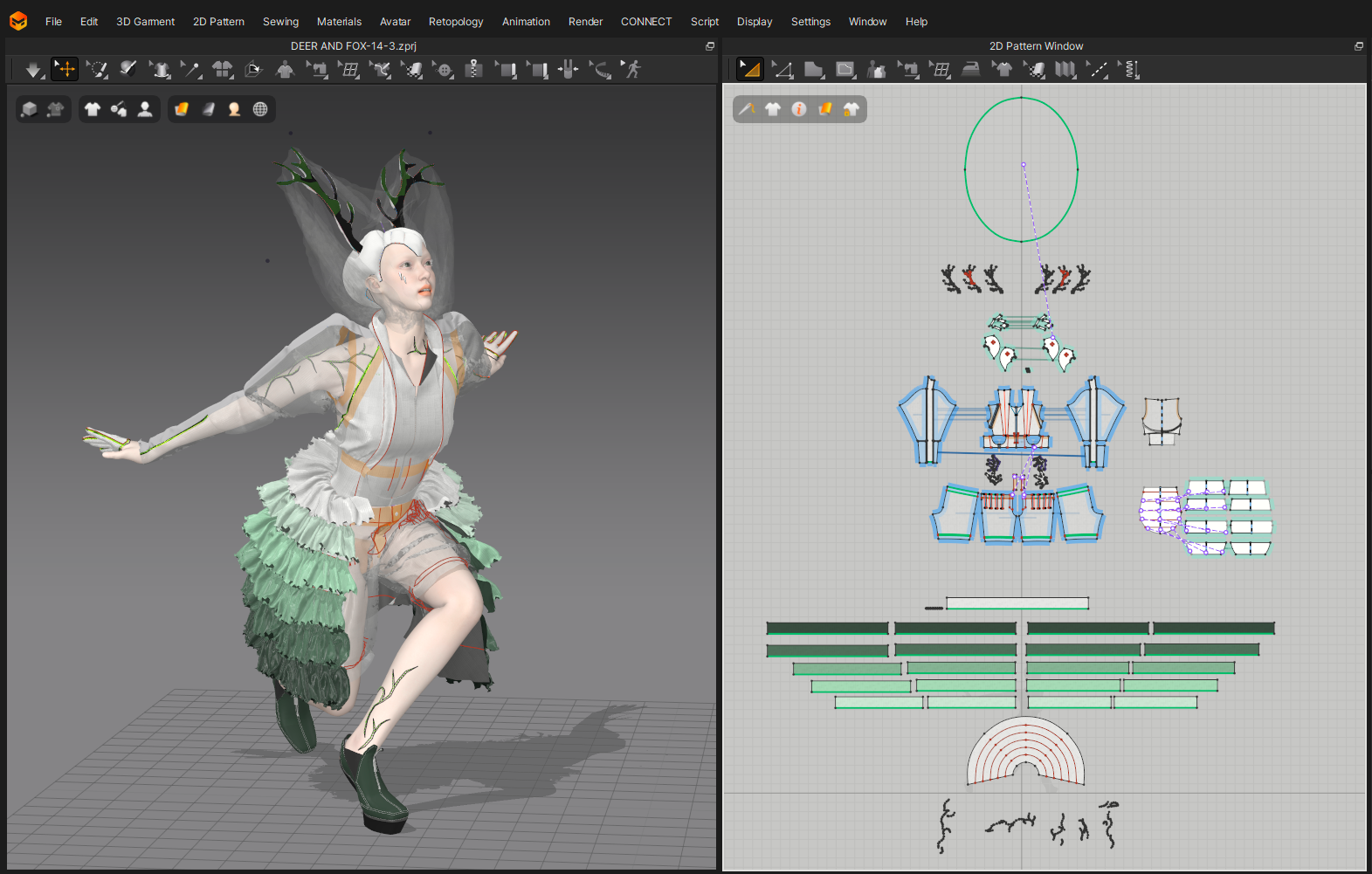
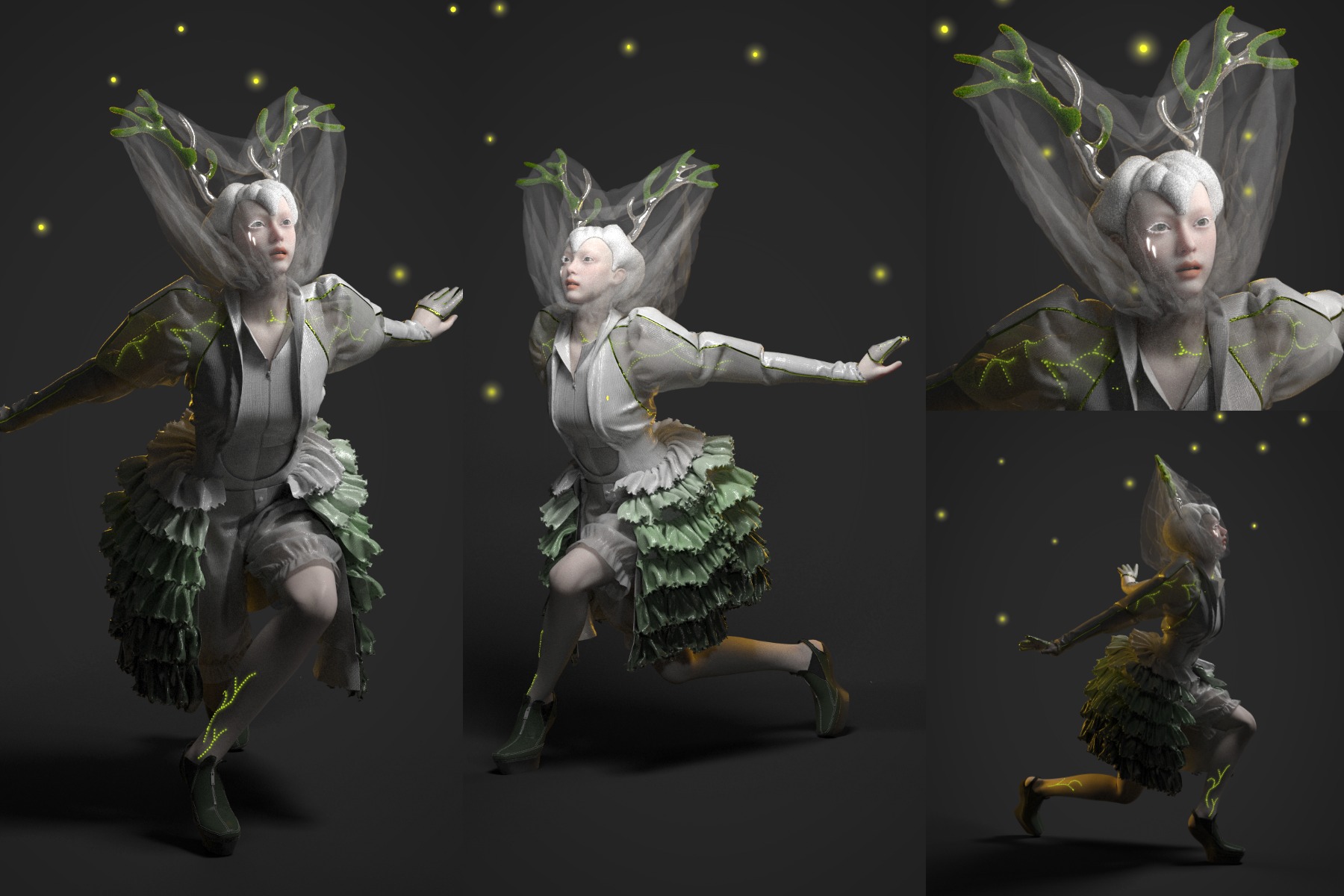
Their Shared Stage >>> blends these opposing energies:
The forest emerges through layered textures - bark-like pleats, petal-strewn fabrics
Harajuku influences appear in unexpected places: deconstructed obi sashes, streetwear-inspired layering
Every movement becomes part of their dance - the fox's sharp gestures meeting the deer's fluid motions
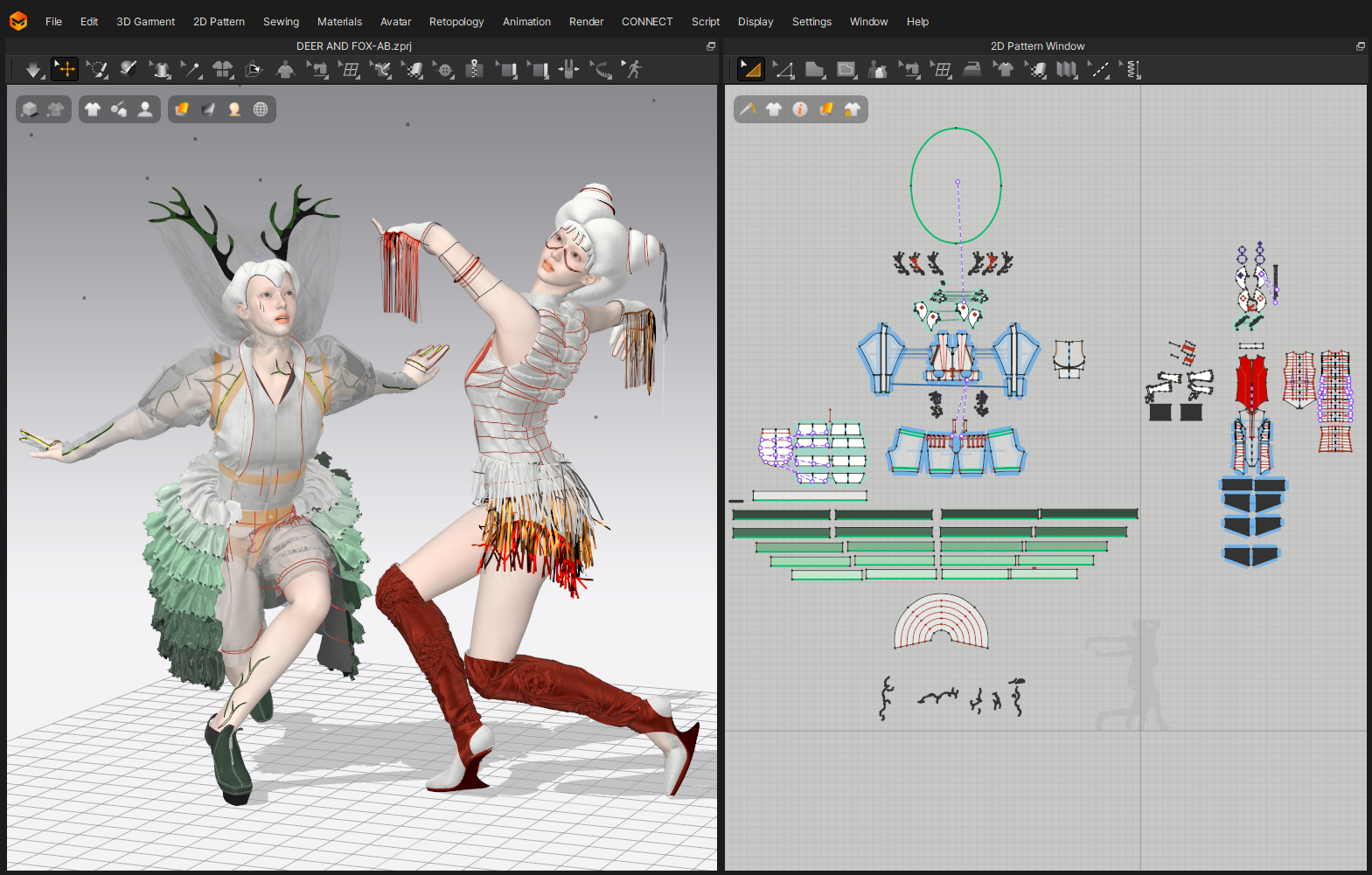
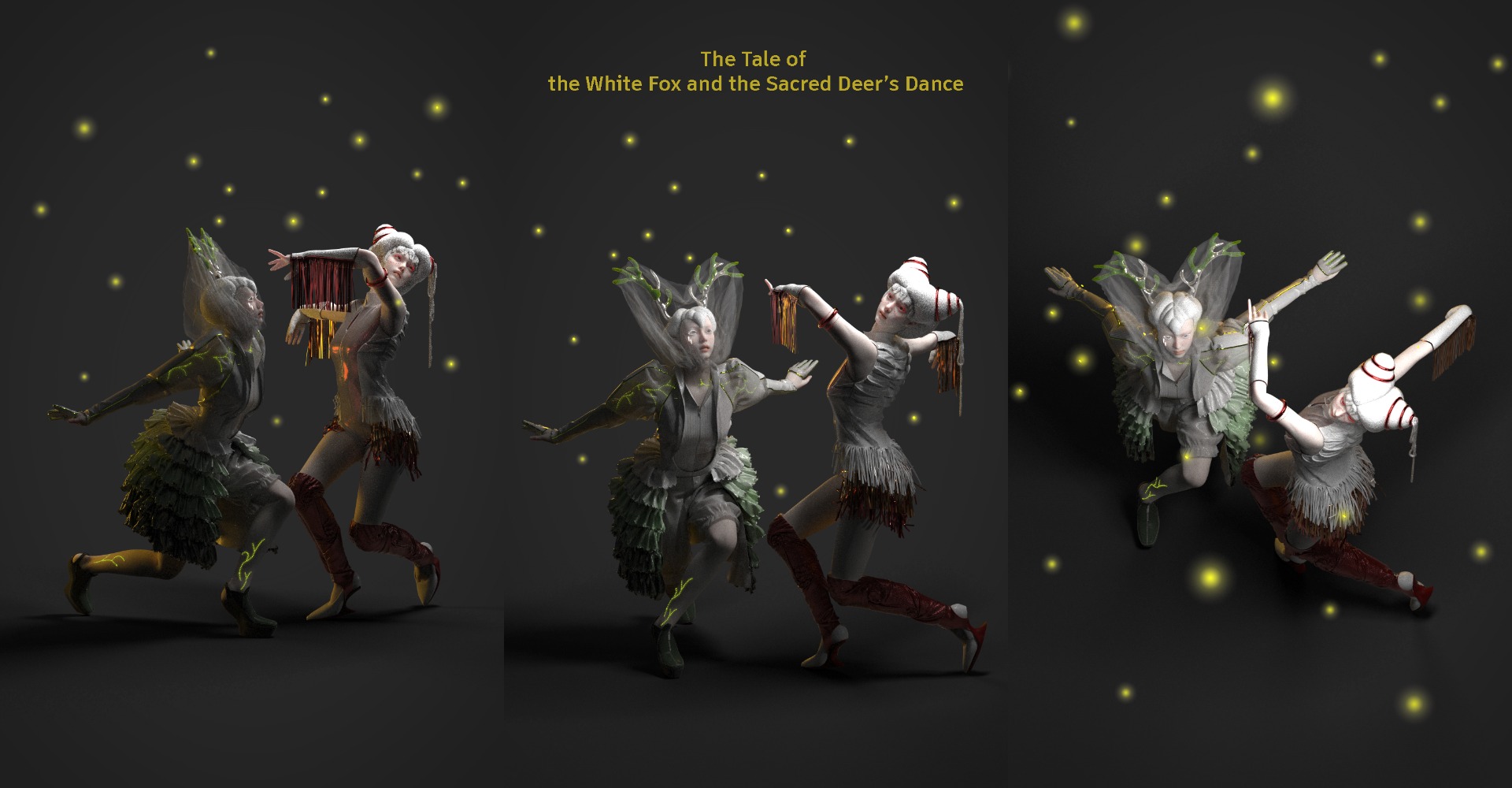
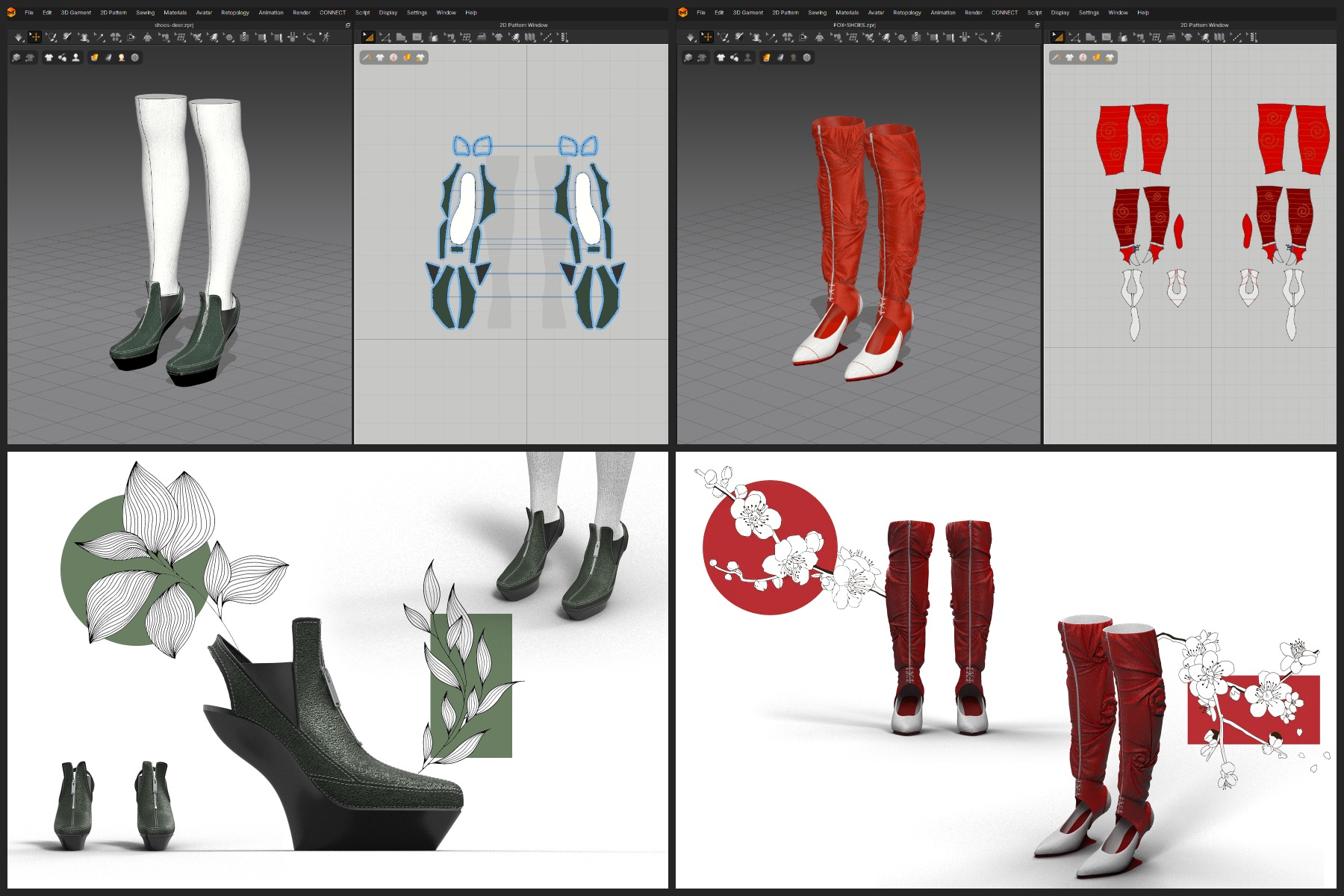
This isn't just clothing; it's wearable theater where:
Cultural symbols become contemporary fashion statements, Every design choice reveals character psychology, Traditional crafts (kintsugi/origami) dialogue with digital techniques and Nature and urban aesthetics perform together.
The ultimate visual paradox? Creating harmony from opposition - where the fox's calculated seduction and the deer's quiet strength find balance in motion, proving that the most compelling beauty often lives in tension between opposites.
Would you be able to give us a quick overview of the different tools you use in your pipeline with a focus on Marvelous Designer? Have you encountered any challenges and how have you overcome them?
You know, when I first started this project, I had this vivid image in my mind of how these mythical characters should move and interact through fashion. Bringing that vision to life became this fascinating journey between traditional craftsmanship and digital innovation.
It all began with my sketchbook - there's something irreplaceable about putting pencil to paper when working out initial concepts. Those rough drawings of the fox and deer spirits were my North Star throughout the process. But to really visualize the designs, I turned to AI tools, feeding detailed descriptions into Copilot to generate concept art that captured the mystical quality I was after. Krea.ai then helped transform those static images into moving references, which was incredibly helpful for understanding how fabrics might flow.
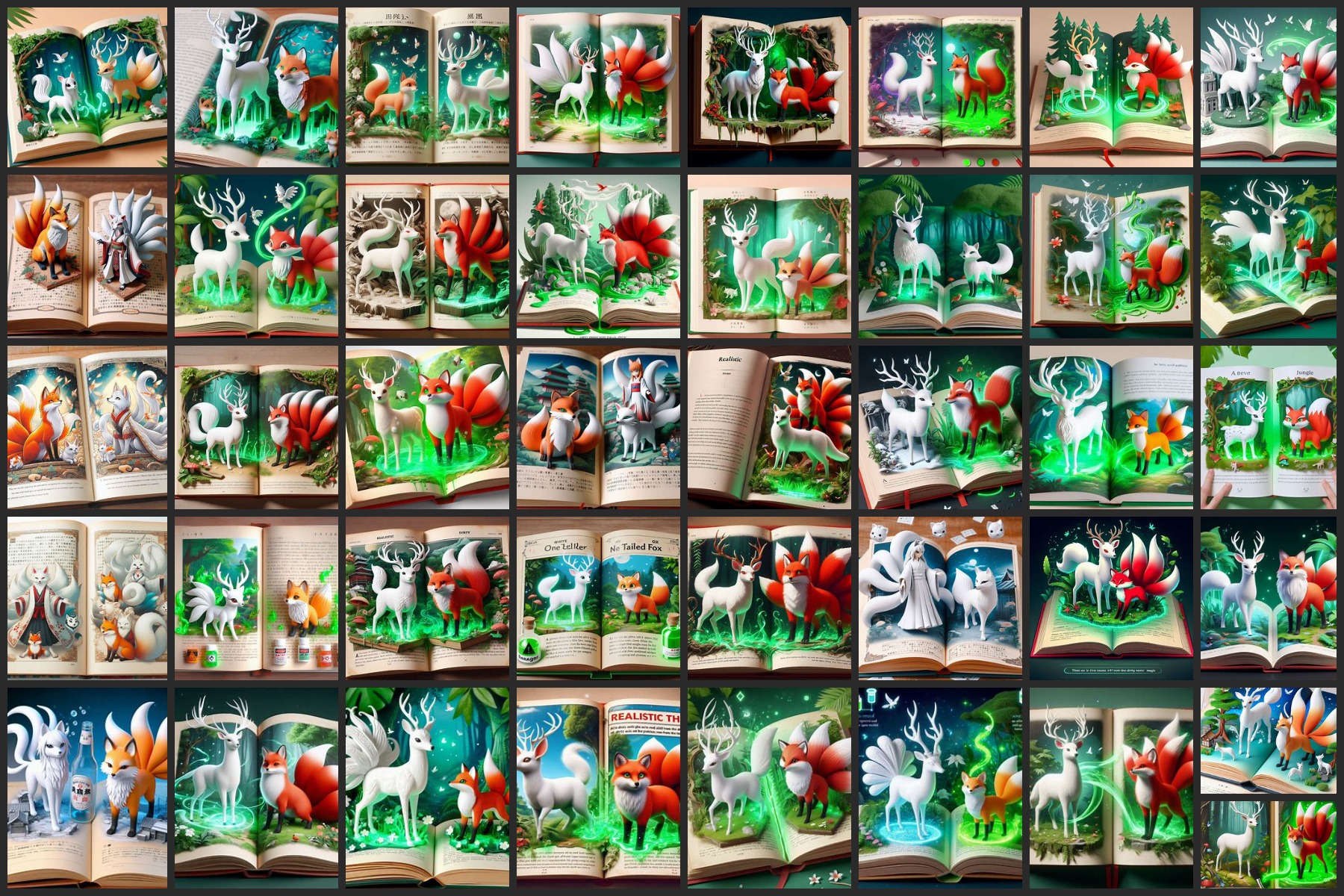
Now, the real magic happened in Marvelous Designer. I remember spending days perfecting the patterns - the fox's angular, origami-inspired elements needed such precise measurements, while the deer's flowing layers required a completely different approach.
The biggest "aha" moment came when working with EveryWear. We had these dramatic pose changes where normally the clothing would go completely wild, but by carefully mapping the bone attachments and creating flexible zones, I managed to keep everything looking natural. It was like teaching the garments how to move with the characters.
For materials and rendering, I lived in CLO3D - must have created about twenty different fabric variations before landing on the perfect ones. Those kintsugi gold seams on the fox's outfit? Each one needed special attention to catch the light just right. And the deer's translucent veil went through so many iterations to get that balance between coverage and delicacy.
The final animations through KLING AI were actually the easiest part, which surprised me! After all that technical work, seeing the characters come to life with their fabrics moving naturally felt like magic. It's funny - what started as separate elements (the sharp fox, the soft deer) ended up feeling like one cohesive dance when everything came together.
Are there any tips and tricks with Marvelous Designer that you can share with the community?
One of Marvelous Designer's greatest strengths is how beautifully it plays with other software. Here's what I've discovered through experimentation:
Seamless Parametric Workflow >>>
Many designers don't realize how well MD integrates with parametric tools. My favorite pipeline:
Generate base patterns in Rhino/Grasshopper
Apply parametric adjustments (like graded sizing or organic curves)
Export as 2D PDF files
Import directly into Marvelous Designer as editable patterns
Yes, there's some cleanup needed (I always check stitch lines and pivot points), but the ability to create algorithmically-generated patterns that still work with MD's physics engine is game-changing. I used this exact method for the origami elements in my contest piece - the precision from Grasshopper combined with MD's natural drape created perfect structured-yet-organic folds.
EveryWear Pro Tip >>>
Most people use EveryWear just for stabilization, but it's also fantastic for:
Creating "memory" in fabrics (like wrinkled areas that persist through movements)
Setting up custom flex zones for mixed-material garments
Unexpected Uses >>>
Beyond fashion, I've had success with:
Architectural tensile structures
Furniture upholstery simulations
Even abstract art installations with floating fabrics
이 작업은 CONNECT, EveryWear, characterdesign, Pattern, Texture, Trim 등의 기술로 제작되었습니다.
Marvelous Designer로 이와 같은 3D 의상·캐릭터 작업을 직접 만들어볼 수 있습니다.