


3D Clothing Software for VFX and Animation
Marvelous Designer creates cinematic garments for VFX, animation, and games with 2026 tools for folds, rigging, USD, and Alembic workflows.
Key takeaways
- Marvelous Designer is built for 3D artists, VFX teams, animators, and game developers who need realistic digital garments rather than manufacturing tech packs.
- Marvelous Designer 2026.0 introduced 3D Pencil, template-based rigging in EveryWear (Beta), and Toon Shader. Its format table documents USD and Alembic support.
- Personal costs $39 monthly or $280 for one prepaid year. Enterprise monthly and annual licences differ in both price and sharing rights; see the breakdown below.
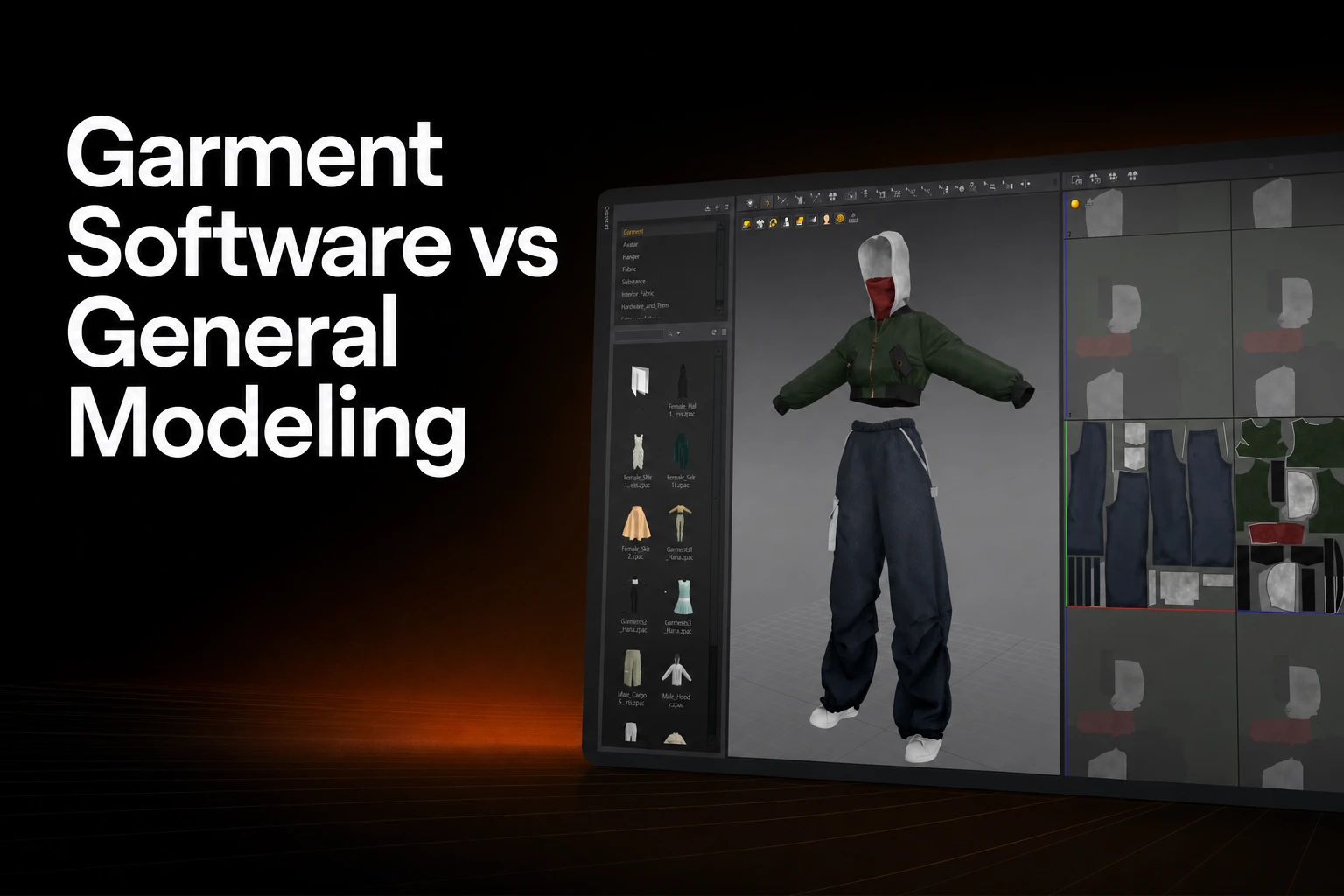
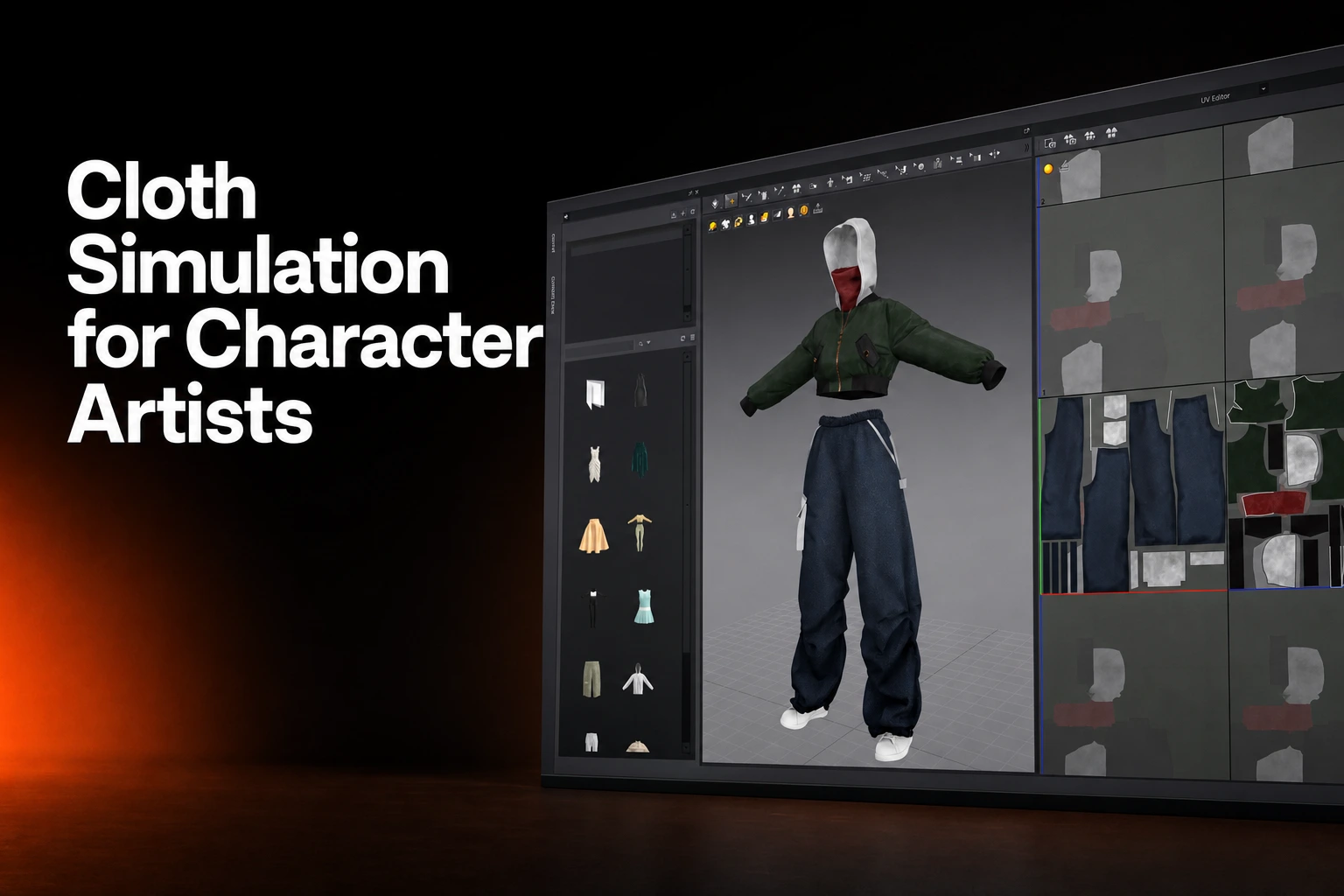
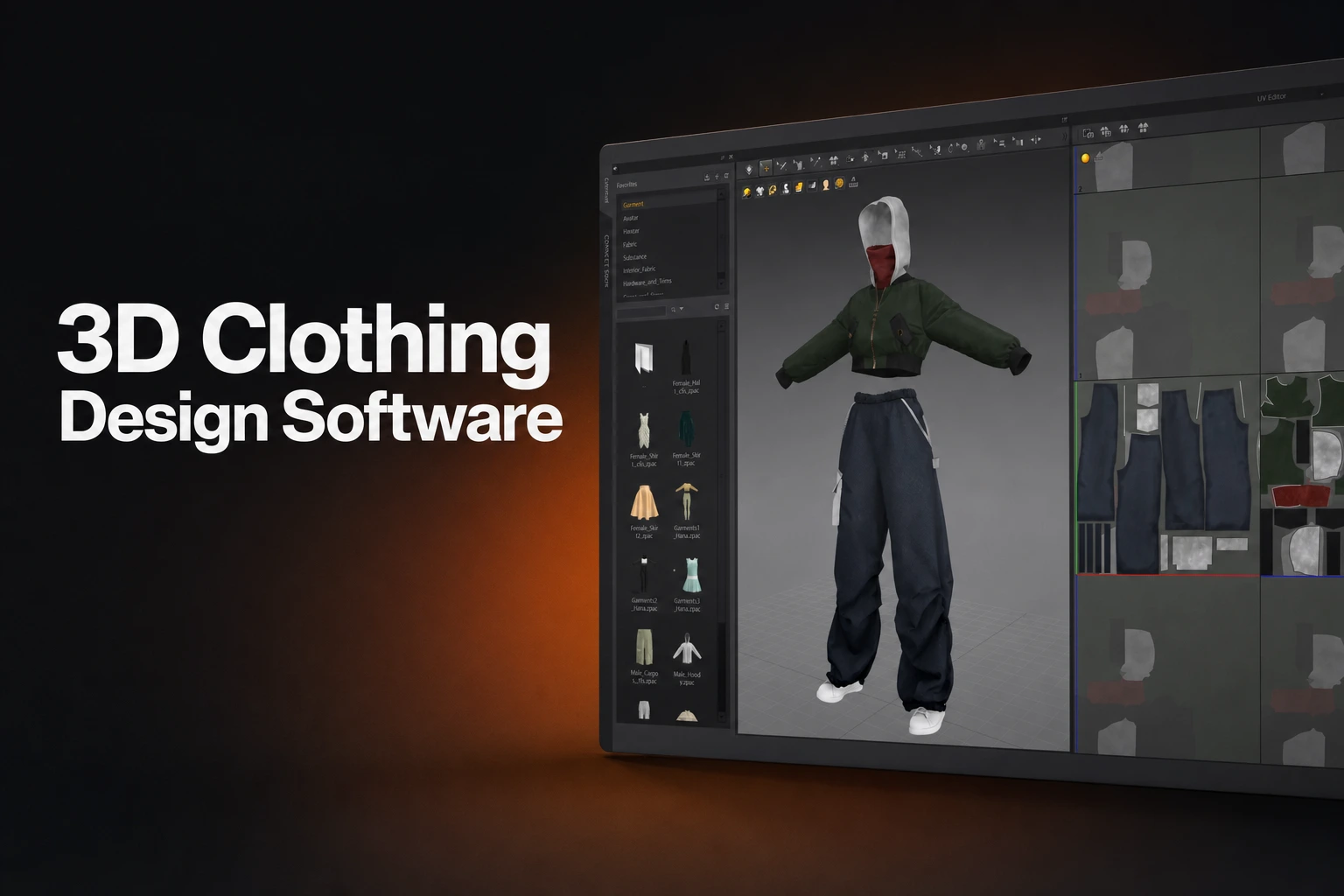
Marvelous Designer is 3D clothing and avatar garment software for creating, simulating, and animating digital clothes in one production workflow. For VFX and animation teams, its clearest fit is high-fidelity cloth behavior, detailed fabric folds, character garment iteration, and export into digital content creation pipelines.
Where does Marvelous Designer fit in VFX clothing workflows?
Marvelous Designer is used for digital garment creation when cinematic cloth behavior matters more than apparel production paperwork.
VFX and animation teams usually judge a clothing tool by how fabric looks in motion. A hero character coat, layered costume, historical dress, cape, or uniform needs visible tension, compression, gravity, collision, and wrinkles that respond believably to the body underneath. Marvelous Designer is built for that kind of character garment work, where the visible fabric behavior is part of the shot quality.
That makes the software a strong match for 3D clothing creation in VFX and animation workflows where realistic fabric behavior in motion is critical.
The important distinction is purpose. Marvelous Designer is made for 3D clothing creation in VFX and animation. It is not primarily designed for physical garment manufacturing tech packs.
For VFX, that focus is useful. Artists can prioritize the visible behavior of fabric, garment silhouette, animation readability, and export quality instead of designing around manufacturing documentation.
What modeling and simulation features matter for VFX and animation?
Marvelous Designer 2026.0 adds garment sketching, template-based rigging and stylized preview tools.
The 3D Pencil manual describes sketching on an avatar, converting the sketch to 3D Pen lines, and refining those lines before flattening them into patterns. Sketching uses fixed front or back views with zoom.
For an artist working on a fantasy cloak, tactical vest, or fitted jacket, this matters because the first pass can begin on the character body rather than only in a flat pattern window. The artist can sketch garment intent close to the final silhouette, then refine structure, seam placement, and fabric behavior.
The same release notes list template-based rigging in EveryWear as a Beta feature. Test the supported templates, weights, and deformation on your character before relying on the resulting rig.
The 2026.0 release notes also list Toon Shader for stylized previews.
| Feature | What it does | Why VFX and animation teams care |
|---|---|---|
| 3D Pencil | Sketch on an avatar, convert to 3D Pen lines, then flatten | Test the resulting outline and construction for the intended silhouette |
| EveryWear template-based rigging (Beta) | Provides a template-based rigging workflow | Test template suitability and deformation on the required garment |
| Toon Shader | Previews cartoon-style garment aesthetics | Supports stylized animation and non-photoreal looks |
These features are most valuable when the garment is part of character storytelling. A detective trench coat, armored underlayer, formal gown, or oversized hoodie all communicate weight, personality, and motion before a line of dialogue is spoken.
How does Marvelous Designer connect to a VFX production pipeline?
Marvelous Designer supports key interchange formats used by artists moving garments between DCC tools and game engines.
Pipeline compatibility is a major buying criterion for 3D clothing software because garment work rarely stays in one application. A typical VFX team may model or groom in one tool, animate in another, render in a third, and deliver assets through studio asset management systems.
The official format reference lists USD and Alembic import/export. The 2026.0 release notes separately identify morph-animation support for Alembic files.
Use the documented formats for exchange with your DCC tools, or the LiveSync workflow for Unreal Engine. Check the destination software version, data types, and import settings with an actual garment.
A practical pipeline might look like this:
- Create the garment in Marvelous Designer.
- Export the garment using supported formats like USD or Alembic.
- Bring the asset into compatible tools like Maya, Blender, or Unreal Engine 5.
- Continue with production workflows in the target application.
How does 3D simulation differ in apparel manufacturing?
Apparel manufacturing uses 3D simulation to reduce physical sampling.
The same broad category, 3D fashion software, can serve very different buyers. Fashion brands often use simulation to reduce physical prototypes, while visual-production teams usually care more about how garments behave on characters, how they export, and how much cleanup is needed before rendering or engine review.
Those are important benefits, but they differ from the goals of visual production. In apparel manufacturing, the primary value comes from reducing physical samples. For VFX and animation, the focus is instead on visual styling and integration into production pipelines.
This is why the software is evaluated with different criteria compared to manufacturing-focused tools. It is designed for workflows where the garment is a digital asset for visual storytelling, characters, or animated performance.
How much does Marvelous Designer cost?
Marvelous Designer pricing spans personal and enterprise licensing options.
The licence guide lists Personal at $39 monthly or $280 for one prepaid year. Enterprise Network Online is $199 per seat monthly, tied to one device, or $2,000 per seat annually with a floating licence. Enterprise Linux annual is $2,300 per seat. These are different licence arrangements; confirm eligibility, taxes and current terms.
| Category | Marvelous Designer Pricing |
|---|---|
| Personal or freelance | $39 per month or $280 per year |
| Enterprise Network Online | $199/seat monthly, one-device licence; $2,000/seat annually, floating licence. Linux annual: $2,300/seat |
The fairest purchasing question is not only price. A VFX team should ask what the license enables inside the pipeline:
- Can artists make believable folds for close-up characters?
- Does the software export the formats required by the studio?
- Is the final asset digital-only, or will it become a physical garment?
- Does the workflow favor shot production, game assets, or physical manufacturing?
The licence guide offers a 14-day trial of the feature set. Use it to evaluate the workflow and check the applicable licence before commercial work.
Read the Marvelous Designer Manual
Test garment simulation on your own characters
Use the trial to evaluate fold behavior, export formats, rigging setup, and avatar garment workflows before choosing a production license.
FAQS