Special Feature: The Visual Visionaries of the K-pop Universe, VFX Studio "ORB HAUS"
"You Asked, ORB HAUS Answered!"
Thank you for the explosive response to our pre-event! We were blown away by the incredible energy you showed for K-VFX and ORB HAUS.
As a thank you, we’ve compiled firsthand insights from experts at the forefront of the industry based on your feedback. Dive in now to explore the never-before-seen stories behind our VFX work and the one-of-a-kind vision that defines ORB HAUS.
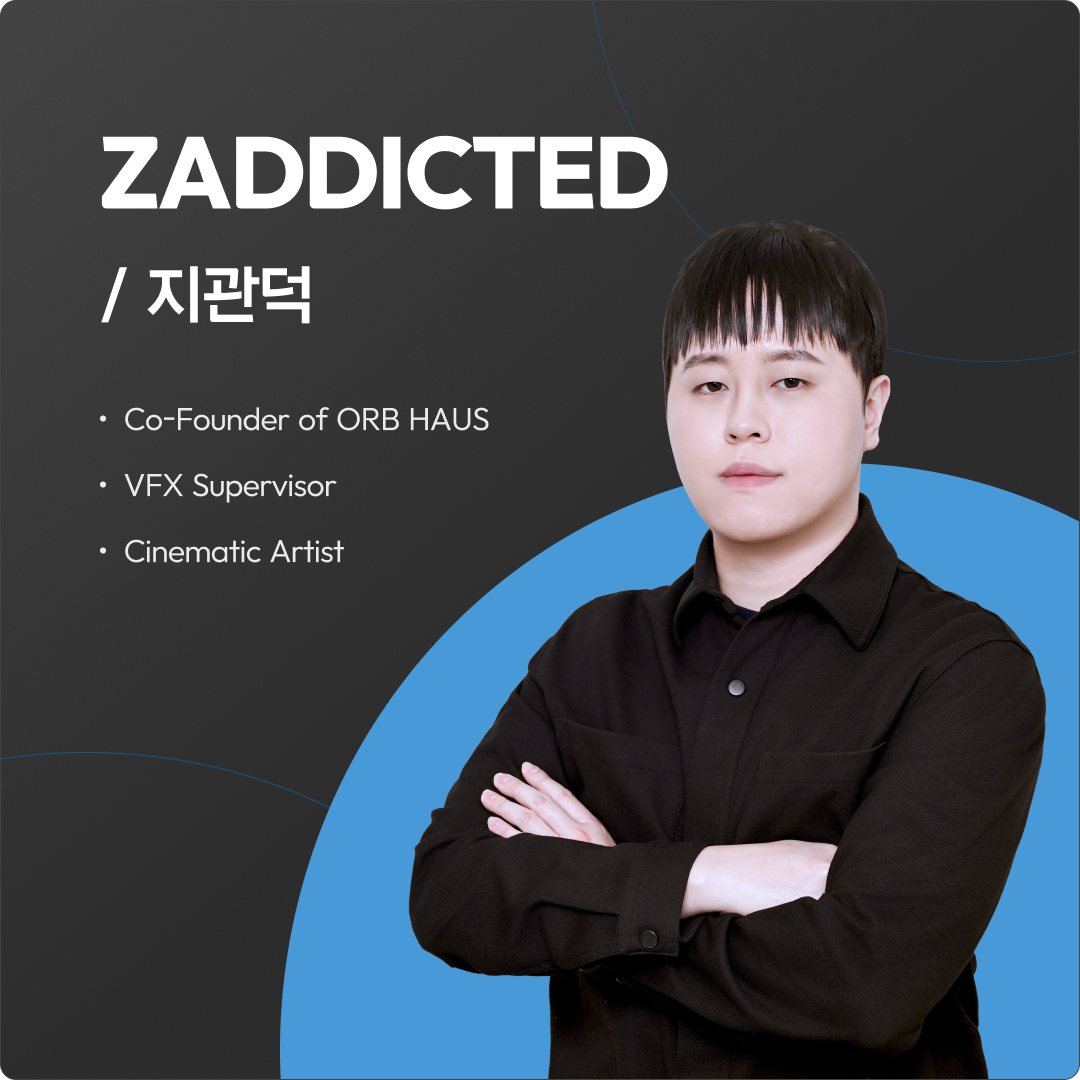
INTERVIEWEE
Q. What is the core philosophy of ORB HAUS, and how do you position yourselves within the K-pop scene?
ORB HAUS is a global creative studio and a VFX/CG-powered "Art-Tech" company that brings imagination to life. We have been setting new standards for K-VFX by architecting the music videos and narrative universes of top-tier artists such as Stray Kids, aespa, and SEVENTEEN.
Our mission is simple yet profound: “Spread peace through art and tech.”
Guided by this vision, we blur the boundaries between gaming and music content to design immersive artist universes, constantly pioneering new possibilities for the future of entertainment.
1. The Role of a CG/VFX Studio
Q. Compared to traditional VFX in films or gaming, what are the specific responsibilities of a CG/VFX studio within the realm of K-pop music videos and performance videos?
CG/VFX is the craft of visually manifesting worlds and phenomena that do not exist in the physical realm. It encompasses everything from full 3D environments and character compositing to surreal natural phenomena layered into backgrounds, floating structures, and sprawling futuristic cityscapes—extending even to interactive spaces and objects that react dynamically to the artists' movements.
Through CG/VFX, we bring phenomena and environments to life that would be impossible to realize in the physical world, all while maintaining a profound sense of realism. While we spectacularly expand the visible frame, we also meticulously design the subtle details that the audience might not consciously notice—ultimately ensuring that the scene feels undeniably real and persuasive.
In K-pop music videos, however, these roles must be executed within a significantly compressed timeframe.
This is because we are tasked with simultaneously showcasing the performance, the unique identities of multiple members, complex stage structures, and the overarching worldview—all with maximum visual impact within a very short runtime. Consequently, CG/VFX has evolved beyond a mere backdrop; it functions as a critical mechanism that actively expands the stage. We design stage structures that are physically impossible to build and utilize lighting and simulations to amplify the kinetic energy of the performance, maximizing the scale of the space. This is not simply about adding visual ornaments; it is about doubling the power of the performance and heightening the overall immersion of the scene.
Furthermore, these digital assets often extend into album art or concert stage design. We even integrate our work directly with stage lighting, projectors, and LED screens for live concert productions. By feeding pre-produced CG/VFX previews onto the set in sync with the stage timing, we ensure the performance and visuals are perfectly aligned. This approach allows us to secure a higher level of on-set realism and production value starting right from the shooting phase.
Q. Key Projects: Could you share some of your recent collaborations with major artists—such as Stray Kids, I-DLE, aespa, and SEVENTEEN—and tell us which project stands out as the most memorable? What were the reasons behind its significance?
Two projects from my recent work stand out as particularly memorable. The first is the Stray Kids 'Ceremony' music video and album trailer, which we worked on last summer.
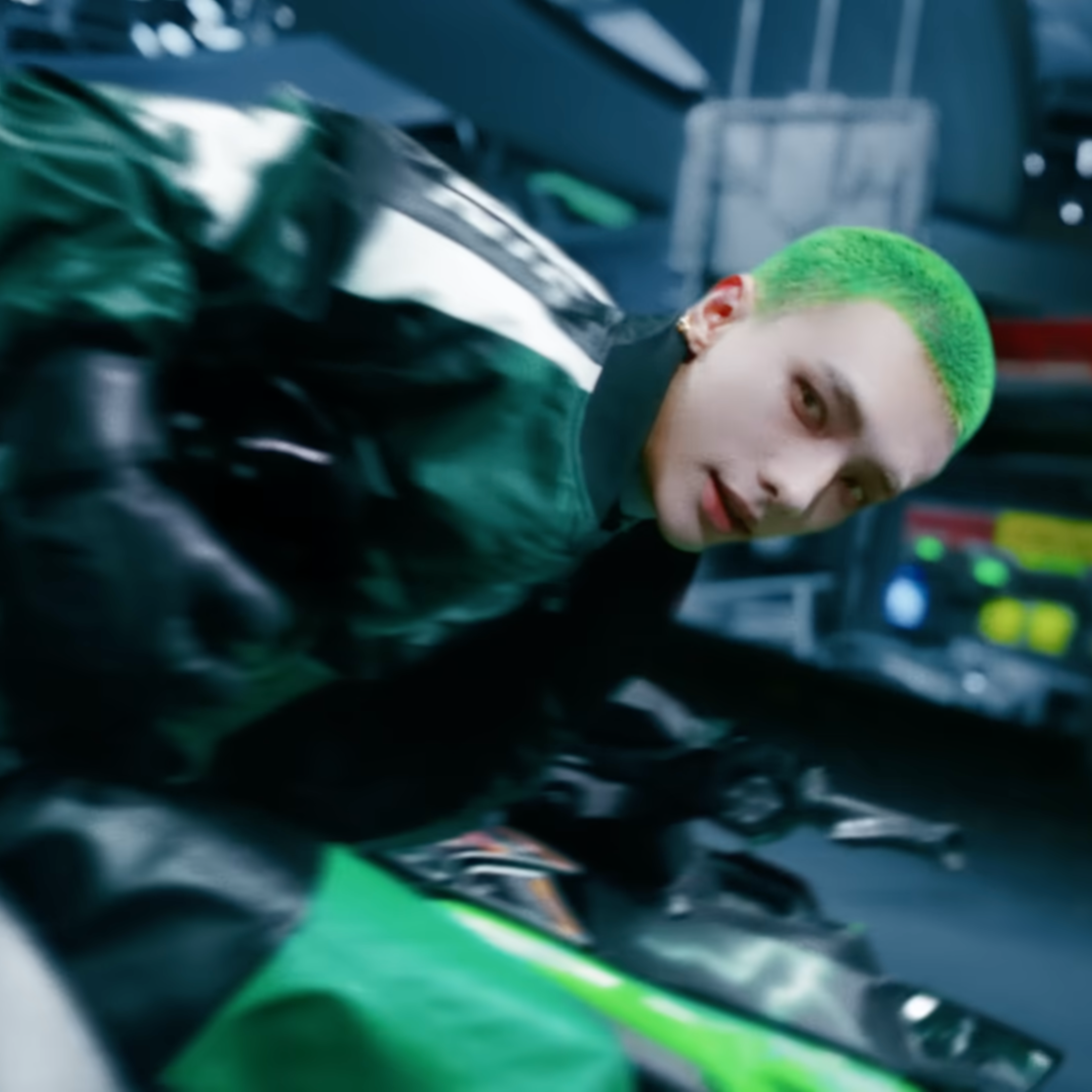
For a long time, I have deeply admired Director Seong Won-mo of DIGIPEDI, a true legend in the K-pop production scene. In fact, I remember attending his lectures when I was just starting my career in CG/VFX. Being able to collaborate on this project was a significant milestone for me. The concept was to visualize futuristic sports set in the year 2081—a creative play on Stray Kids' debut year, 2018. It was a project where we were tasked with architecting a whole new vision of the future through VFX.
As a supervisor, I collaborated closely with our CG artists to meticulously study the 'look and feel' and the specific motion dynamics of each sport. We drew inspiration from various real-life sporting events and commercials to ensure a sense of authenticity amidst the futuristic setting.
In particular, the 'Future F1 Motorball Race' sequence was built entirely within Unreal Engine 5. This allowed us to explore the potential for executing massive, large-scale CG/VFX scenes even within the music video genre, providing a solid foundation of research that we can now apply to our upcoming projects.
Having previously worked on the VFX for Stray Kids' debut-year music video 'I am YOU' in 2018, revisiting them for this latest project was a profound experience. It was a moment where I could truly feel the staggering growth of both the group and the K-pop industry as a whole.
Another project that stands out is the 'HAPPY BURSTDAY' album highlight medley, created to celebrate SEVENTEEN’s 10th anniversary in 2025. This was a comprehensive project where we handled everything from initial concept and direction to final production.
This project presented a massive challenge for us. We had to create over six minutes of full 360-degree CGI visuals. Because 360-degree video requires a resolution of 8K or higher, the physical rendering time and data volume were several times greater than any of our previous projects.
Because traditional 3D workflows would have presented immense difficulties for a project of this magnitude, we utilized Unreal Engine for 13 of the 16 virtual spaces to take advantage of its real-time rendering capabilities. Marvelous Designer was also a cornerstone of our production pipeline.
Working on such a vast scale within Unreal Engine meant navigating countless unforeseen errors and technical glitches—similar to the challenges faced in game development. However, the deep technical know-how we built during the SEVENTEEN project became the foundation for our own original Virtual Idol IP, which we realized through a combination of Unreal Engine and 360-degree video. We continue to actively leverage these advanced technologies in our ongoing projects today.
2. Why the K-pop Industry is Prioritizing VFX
Q. Distinctive Features of K-VFX: Unlike traditional VFX found in North American films, what would you say are the unique 'visual grammar,' 'color palettes,' and 'sense of speed' characteristic of K-pop?
In the world of K-pop, a music video is far more than just video content. It is the single most critical branding tool—a format that functions as a short film, a high-end commercial, and a piece of digital art all at once.
Within a single music video, we must seamlessly integrate the artist's identity, worldview, concept, current trends, storytelling, and performance. Recently, it has become increasingly vital for us to actually set visual trends rather than just follow them. This demand requires a much more potent level of imagination and a sophisticated visual language.
CG/VFX in K-pop functions as a visual amplifier that magnifies this explosive energy. We meticulously design effects—particles, dust, smoke, flames, sparks, and fine airborne elements—frame by frame, almost as if we are 'embroidering' them into the scene.
In the industry, we often refer to this process as 'increasing the visual density' of the frame.
K-pop is an industry where trends move at breakneck speed. Since so many teams are already delivering top-tier visuals, we must engage in relentless research and experimentation to produce something even newer and fresher.
In my view, the ability to rapidly absorb trends and distill that intense energy into a high-density, compressed format is the core of K-VFX’s unique visual grammar. It is precisely how K-pop continues to evolve and push boundaries.
Q. In the future K-pop production landscape, how do you expect the role of CG studios to evolve as "creative partners"?
In the past, CG/VFX teams were primarily responsible for the technical execution of a concept already set by a director. Today, however, we are seeing a rapid shift toward a structure where the "world" is designed from the very beginning, with technology serving as the foundation for the creative vision.
The most significant change I’ve felt while working on K-pop music videos is that the CG/VFX team is no longer just an outsourcing unit that completes a given image. Instead, we are now proactive stakeholders involved in the initial phase of defining "what kind of world we will create" together.
We are increasingly seeing cases where we design the entire project from A to Z—determining which environments are technically feasible and how far a particular direction can be expanded. To support this, we continuously research and experiment with new technologies, such as real-time game engine-based world-building, advanced simulations, and AI-driven tools.
When this deep technical expertise is fused with a creative mindset, a CG studio evolves beyond a mere production house into a partner that designs visual strategies.
In a virtual environment, almost any visual can be implemented with total freedom. Because we are a team capable of designing beyond physical constraints, I expect CG studios to transcend their role as simple execution units to become creative partners who co-architect the artist’s visual identity and overarching worldview.
3. Entering the K-pop VFX Industry: Career and Reality
Q. Entry Paths: What is the most crucial preparation for someone majoring in film or animation to enter the K-pop VFX field?
If you are a film or animation major, building a broad foundation in film history, animation, and even basic science is unexpectedly crucial. Our work involves translating real-world phenomena into a cinematic and "believable" visual experience, which requires a high level of observation and research.
For instance, when building a digital city, you must consider the relative scale of characters versus buildings, whether the urban layout is regular or irregular, the specific intervals at which traffic lights flicker, and how the environment shifts according to the weather. If you can observe and depict these details accurately, technical proficiency in tools like Unreal Engine or a sense for motion graphics can be developed much more naturally afterward.
For those who did not major in film or animation, I recommend gaining a head start by mastering tools such as Cinema 4D, Blender, Marvelous Designer, and Unreal Engine.
Furthermore, we are increasingly utilizing software like Houdini, which was previously reserved almost exclusively for feature films. Proficiency in such specialized programs is a massive advantage; it allows you to execute high-complexity VFX, making you an "irreplaceable" talent in the production pipeline.
Q. Required Skills: Beyond technical tool proficiency, what is the role of 'musical sensitivity' and what other core competencies are required?
While my previous answer focused on the technical path to entering the VFX field, understanding a K-pop artist’s music and performance requires a specific "musical intuition."
At its core, this involves a deep understanding of rhythm and tempo to ensure that the graphics you create do not feel disconnected from the visual flow. Every element—even the motion of a single dust particle, should feel like it is reacting in sync with the music, creating a cohesive synergy with the choreography, spatial design, and lighting. Given that K-pop music is now a global collaboration involving producers, choreographers, and musicians from all over the world, it is incredibly helpful to have broad exposure to diverse musical genres and cultures, both domestic and international.
Furthermore, because you are responsible for a critical stage of a music video—an art form shaped by countless hands from initial planning and filming to final delivery and release—you must approach each project with a strong sense of responsibility and patience.
4. Technical Stack, Portfolio Strategy, and Advice
Q. Core Tools: What are the primary software programs utilized at ORB HAUS and how is real-time rendering technology driving innovation in the K-pop production scene?
Recently, we have been leveraging Marvelous Designer to implement 'Digital Doubles'—the photorealistic digital replication of real individuals, a technique traditionally reserved for feature films.
This allows us to execute surreal movements and actions in large-scale wide shots that would be nearly impossible to capture through live-action filming. In this process, designing and simulating CG costumes that perfectly mirror the artist's actual attire has become essential.
Furthermore, we utilize tools like Houdini and Embergen to create high-density simulation effects, such as massive explosions, fog, and collapsing structures and then consolidate these assets within Unreal Engine for real-time rendering.
While our focus was initially on CG/VFX for music videos, our continuous R&D in Unreal Engine enabled us to produce 'Immersive 360 Video XR' media for SEVENTEEN’s 10th-anniversary album in 2025. By leveraging these cutting-edge technologies, we are striving to present the next evolution of the K-pop fan experience, moving beyond the traditional music video format.
Q. Portfolio Composition Tips: What is that "extra edge"that a new or experienced artist must demonstrate in their portfolio to work with ORB HAUS?
It comes down to the meticulousness required to bring even a single scene to a high level of completion. We look at how effectively an artist utilizes novel themes or objects that others haven't yet attempted. Most importantly, we look for those who go beyond simply presenting "stylish" visual art to show that they have crafted their work with deep consideration for the viewer’s perspective and emotional response.
Q. During the VFX production process, when do you experience the most intense moments of self-doubt, and how do you manage to overcome them?
In line with what you asked, I recently went through a period of deep professional skepticism regarding my own experience. There was a moment when I felt as if my entire career was being invalidated, seeing AI generate "plausible" images and videos in less than an hour, results that would have taken me all night to meticulously detail.
However, I eventually came to a realization: current AI is essentially a tool for "assembling" what already exists in the world into something believable; it cannot create a truly "new feeling" or an original emotional resonance from scratch. This realization gave me the faith that AI is simply a new medium and tool that we can grow alongside. It became a turning point for me to research how to forge new creative "links" in our workflow and explore how these technologies can elevate our craft to the next level.

Key Filmography of Zaddicted
2023 - 2024
XG - GRL GVNG (Official Music Video) / XG - 'HESONOO’ The NEW DNA
(여자)아이들((G)I-DLE) - 'Super Lady' Official Music Video
LE SSERAFIM (르세라핌) 'EASY (English ver.)' Official Visualizer
aespa 에스파 'Armageddon' Launch Code
ENHYPEN (엔하이픈) 'Brought The Heat Back' Official MV
2025 - 2026
SEVENTEEN (세븐틴) 5th Album ‘𝐇𝐀𝐏𝐏𝐘 𝐁𝐔𝐑𝐒𝐓𝐃𝐀𝐘’ Highlight Medley (8D Audio)
Stray Kids "KARMA" Trailer / Stray Kids (스트레이 키즈) "CEREMONY" M/V
SMTM12 / TEAM ZICO X Crush ‘Yin and Yang’
Marvelous Designer 활용
BTS (방탄소년단) 'MIC Drop (Steve Aoki Remix)' Official MV
BTS (防弾少年団) 'MIC Drop -Japanese ver.-' Official MV
SEVENTEEN (세븐틴) 5th Album ‘𝐇𝐀𝐏𝐏𝐘 𝐁𝐔𝐑𝐒𝐓𝐃𝐀𝐘’ Highlight Medley (8D Audio)
이 작업은 Simulation, motiongraphic, vfx, UnrealEngine, Cinema4D, Houdini 등의 기술로 제작되었습니다.
Marvelous Designer로 이와 같은 3D 의상·캐릭터 작업을 직접 만들어볼 수 있습니다.