FAITH & HONOUR: BARBAROSSA
FAITH & HONOUR: BARBAROSSA, a historically authentic Adventure RPG set, complete characters' outfits with Marvelous Designer. Check out the whole pipeline they adopted.
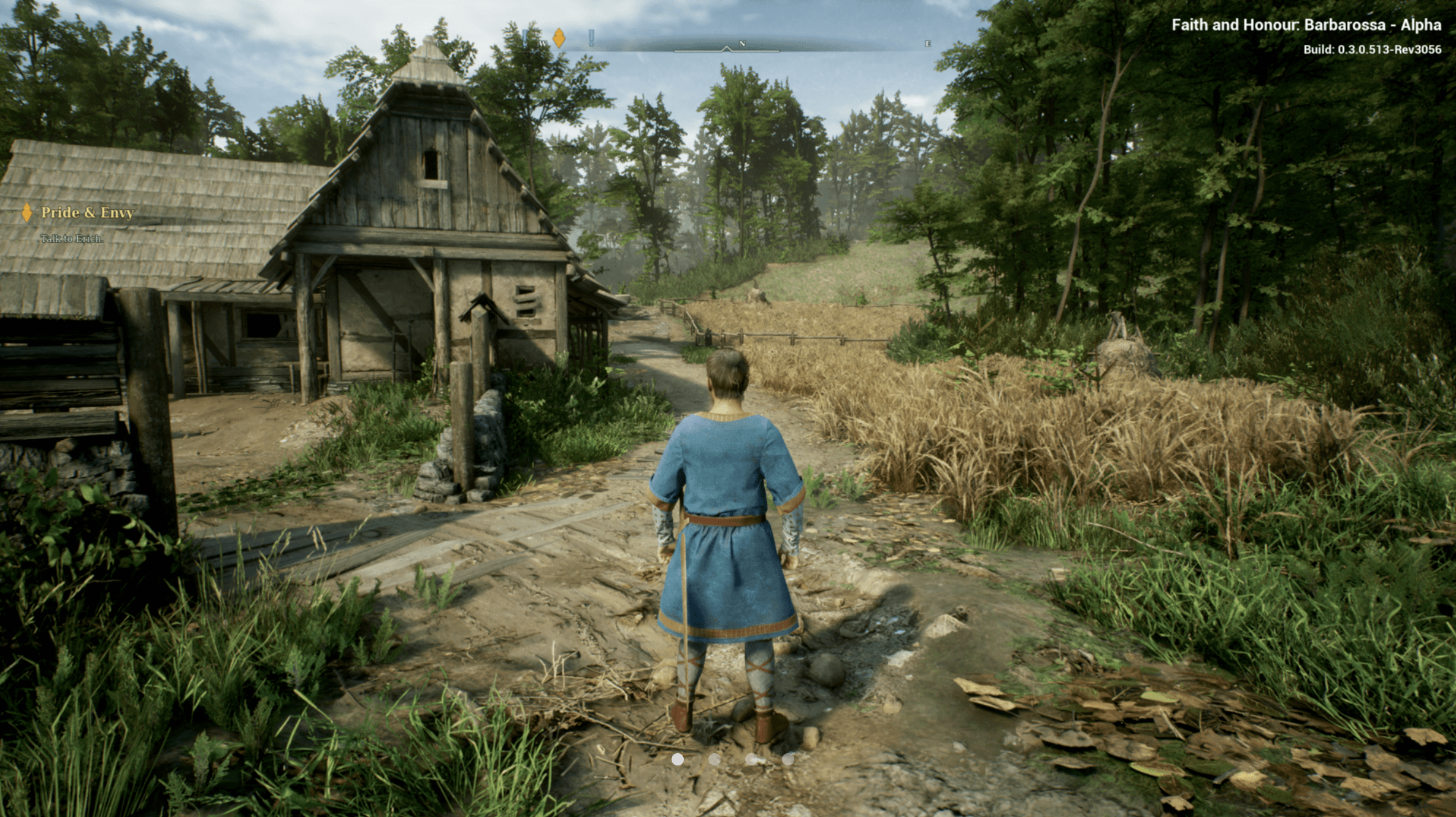
Interview with Encurio GmbH
1. Could you introduce your team and recent project - FAITH & HONOUR: BARBAROSSA?
Encurio GmbH was founded in 1995 as a marketing company and begun developing video games in 2013. Our studio is located in Cologne, Germany. Our first game, Valnir Rok, was released in 2017.
Currently we are working on our new Game called FAITH & HONOUR: BARBAROSSA. It's a historically authentic Adventure RPG set in the 12th century, during the crusade of Frederick I. Barbarossa.
You play as Ulrich, the son of Mathis Reinhardt who was one of Barbarossa’s closest friends until he fell from grace after betraying the emperor. But you know that your father wasn’t a traitor to the Holy Roman Empire and through joining Barbarossa’s crusade you try to find out what really happened while your father was in the emperor’s service.
2. How is Marvelous Designer integrated into your pipeline?
Since our current project is very ambitious, and we need to make many historically authentic garments, Marvelous Designer has been and is essential to our character art pipeline.
I got an internship as a character artist at Encurio in 2018. Since then, I have been struggling with the internal work pipeline. I took CGMA's "Cloth Simulation for Games" course with Laura Gallagher in mid 2020 to have a decent foundation with Marvelous Designer and also a better understanding of my craft. Laura has now built her own learning platform to teach Character Artists the necessary knowledge. For anyone who wants to learn Marvelous Designer for working in the game industry, I can only recommend https://outgang.studio. Our Character Pipeline is very similar to Laura's recommended CharacterArt Pipeline. The idea behind Laura Gallaghers workflow is to use a virtual reconstruction technique, that is used in the real life fashion industry.
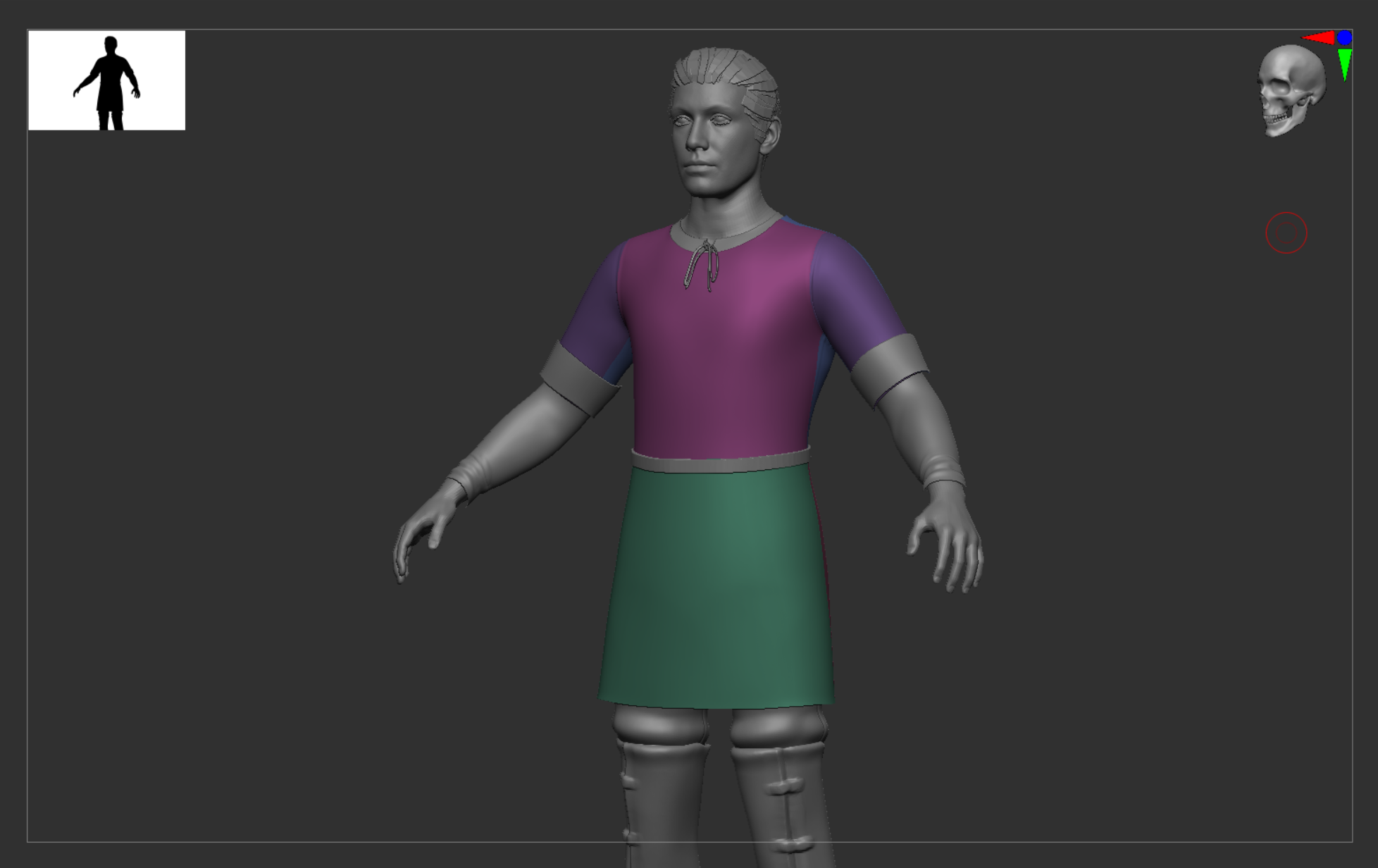
You start in ZBrush and sketch the garment with Dynamesh, so it perfectly fits the body like in your references. Afterwards, you split the garment in multiple polygroups, where you would have seams. Then you ZRemesh the garment and can export the mesh for the next step.
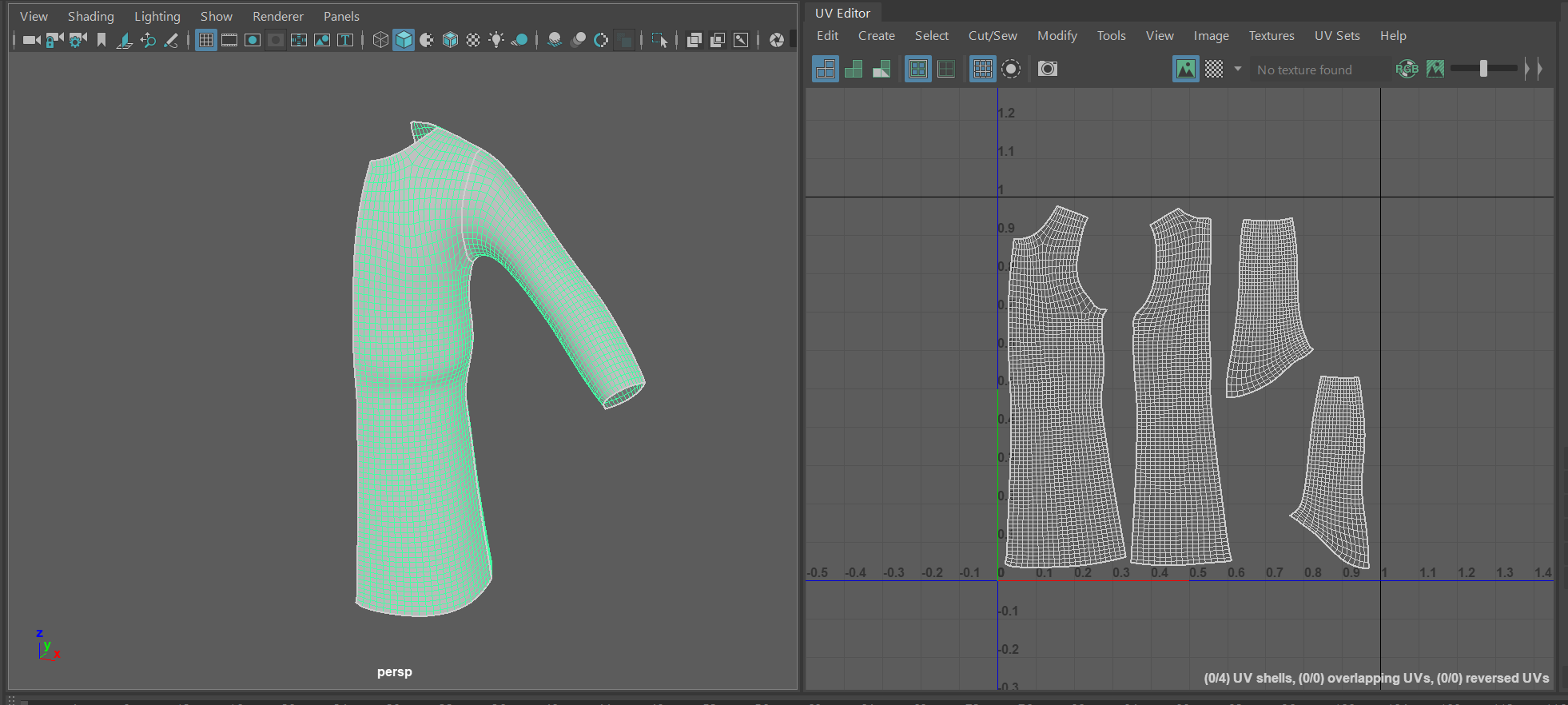
After import, you just UV the mesh inside maya to get a 2D layout, which will later be our pattern. This mesh can now be exported once again and is ready to be imported into marvelous as our new garment.
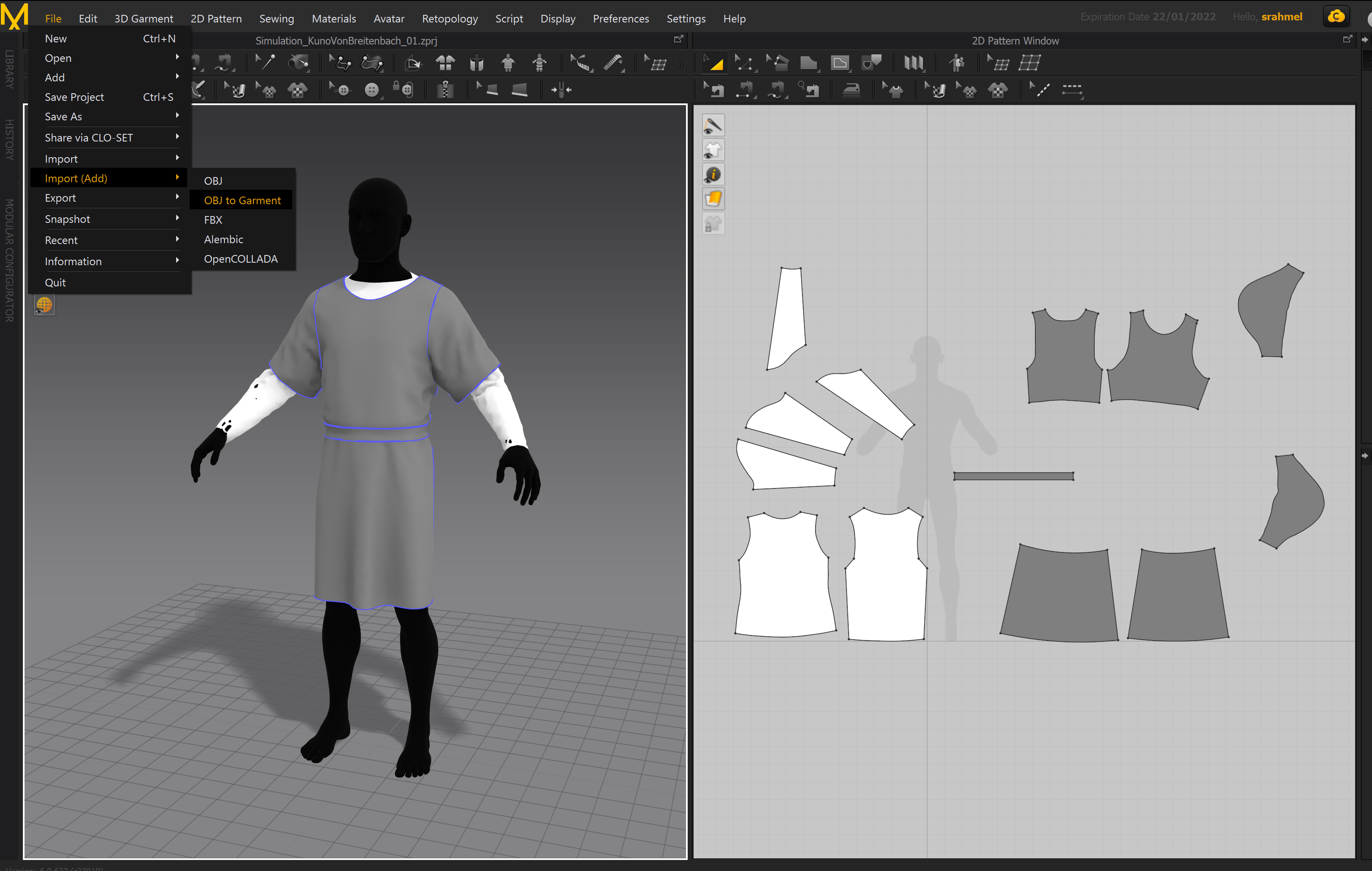
We can import our mesh from obj to a garment and enable "Trace 2D Patterns from UV Map". This will create the patterns from our UVs. This is the stage, where we need to iterate a lot to have a "perfect" fit for our garment. We adjust the Sketch in ZBrush, adjust the UVs ... export, import "OBJ to Garment" .... and repeat. It`s much easier to fix fitting issues on the Sketch than in Marvelous.
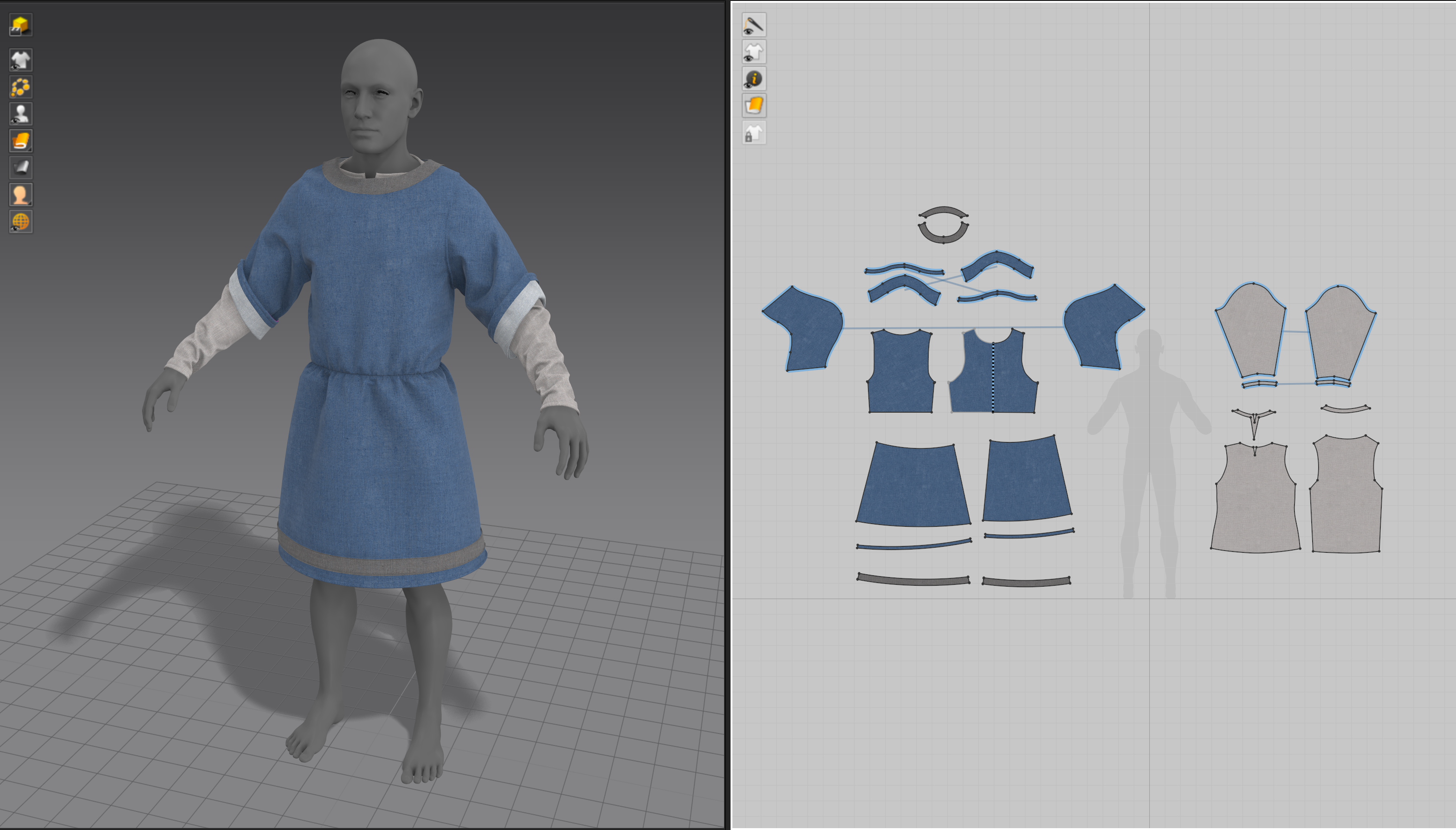
When the garment is fitting, we can continue to work on the details. We crank up the particle distance, add borders and trims and work on the material/folds properties. After the final simulation, we merge some panels, where we don't want to have space inbetween and change the mesh type from Triangle to Quadrangulated for the final export.
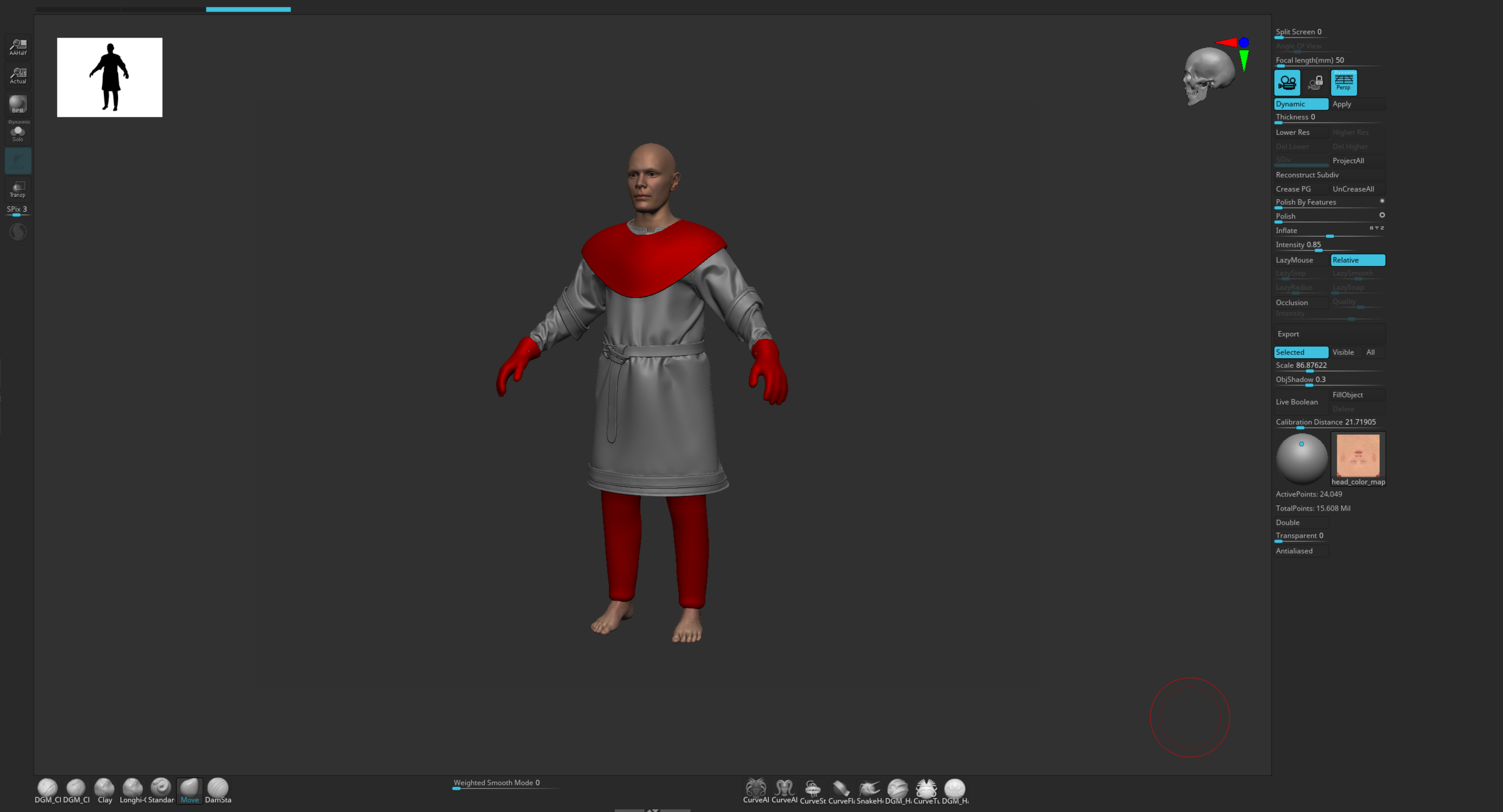
Back in ZBrush we load our Garment into our "Modular Character Template" file to check and see, if the garment fits into our modular character system. Here we adjust the shape and add accessories and details. Afterwards we continue with the usual well known retopo process. I like to export the mesh as alembic (.abc) without decimating and import the mesh as alembic in Maya as GPU Cache. Saving tons of time and issues I had in the past with the decimating process. Viewport stays blazing fast, even with millions of polygons inside maya.
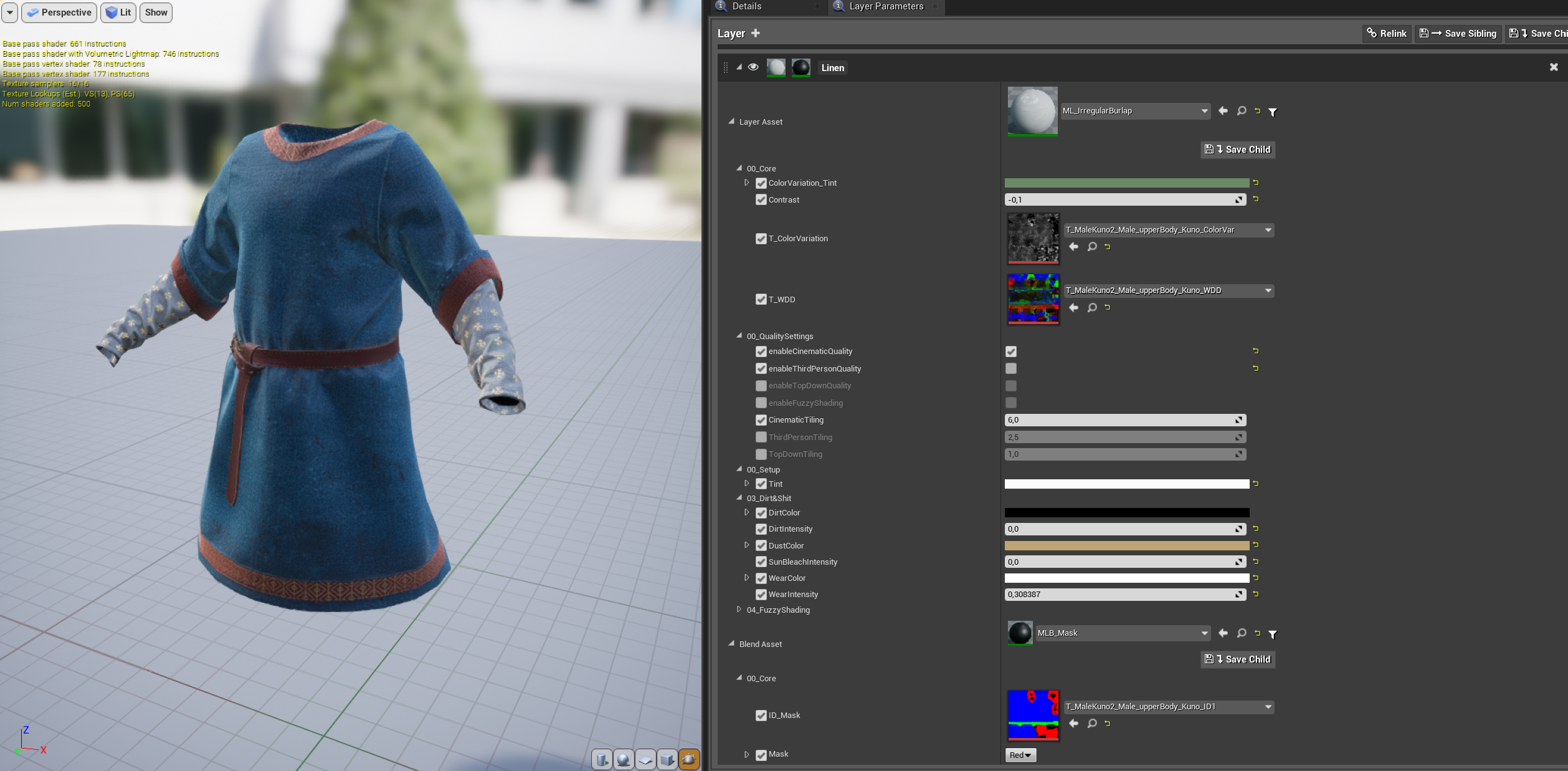
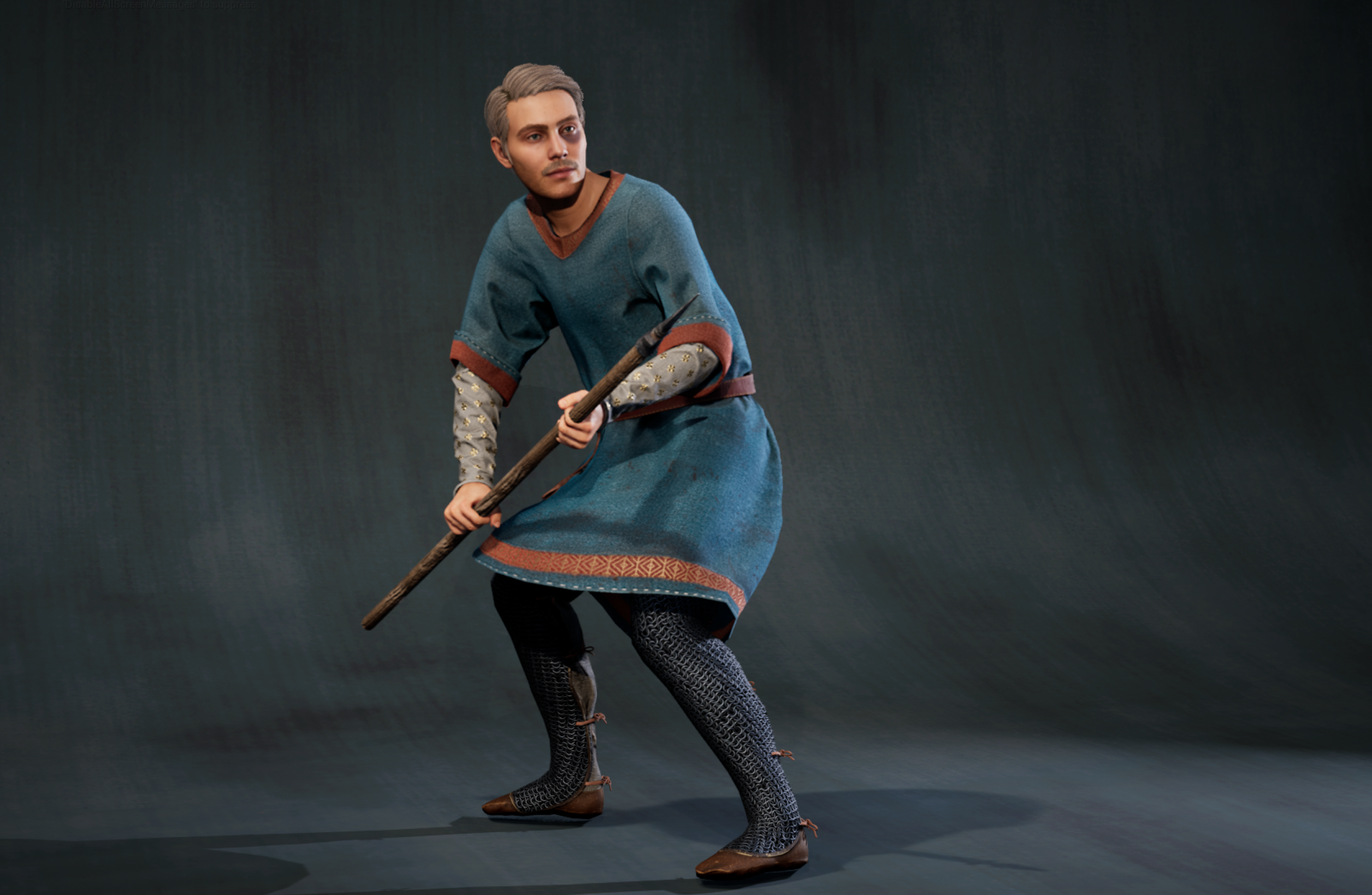
We are texturing the garments with a "Material Based Approach" just like in Paragon. Texturing with Substance, Baking with Marmoset Toolbag (https://www.youtube.com/watch?v=nVes6OUyzdw). This allows us to reuse a lot of assets and have a lot of customization option.
3. What is Marvelous Designer’s strong point to use?
A way better structured and intuitive workflow, which results in high-quality assets/clothes. Another obvious point is the realistic folds and the very good reusability of garments across projects. Just pushing and pulling the garment during the simulation creates a completely different model from the same patterns. Personally I wouldn't want to work with any other tool than Marvelous Designer.
by ENCURIO
Link to ENCURIO official website
Link to FAITH & HONOUR: BARBAROSSA official website
Link to Facebook
Link to Instagram
이 작업은 ZBrush, Maya, Substance, Marmoset, Game, Pattern 등의 기술로 제작되었습니다.
Marvelous Designer로 이와 같은 3D 의상·캐릭터 작업을 직접 만들어볼 수 있습니다.