Achieving Rich Dance Expressions through Pattern-Based Modeling and Cloth Simulation: CYCLONE GRAPHICS' Marvelous Designer Practice in "Wandance"
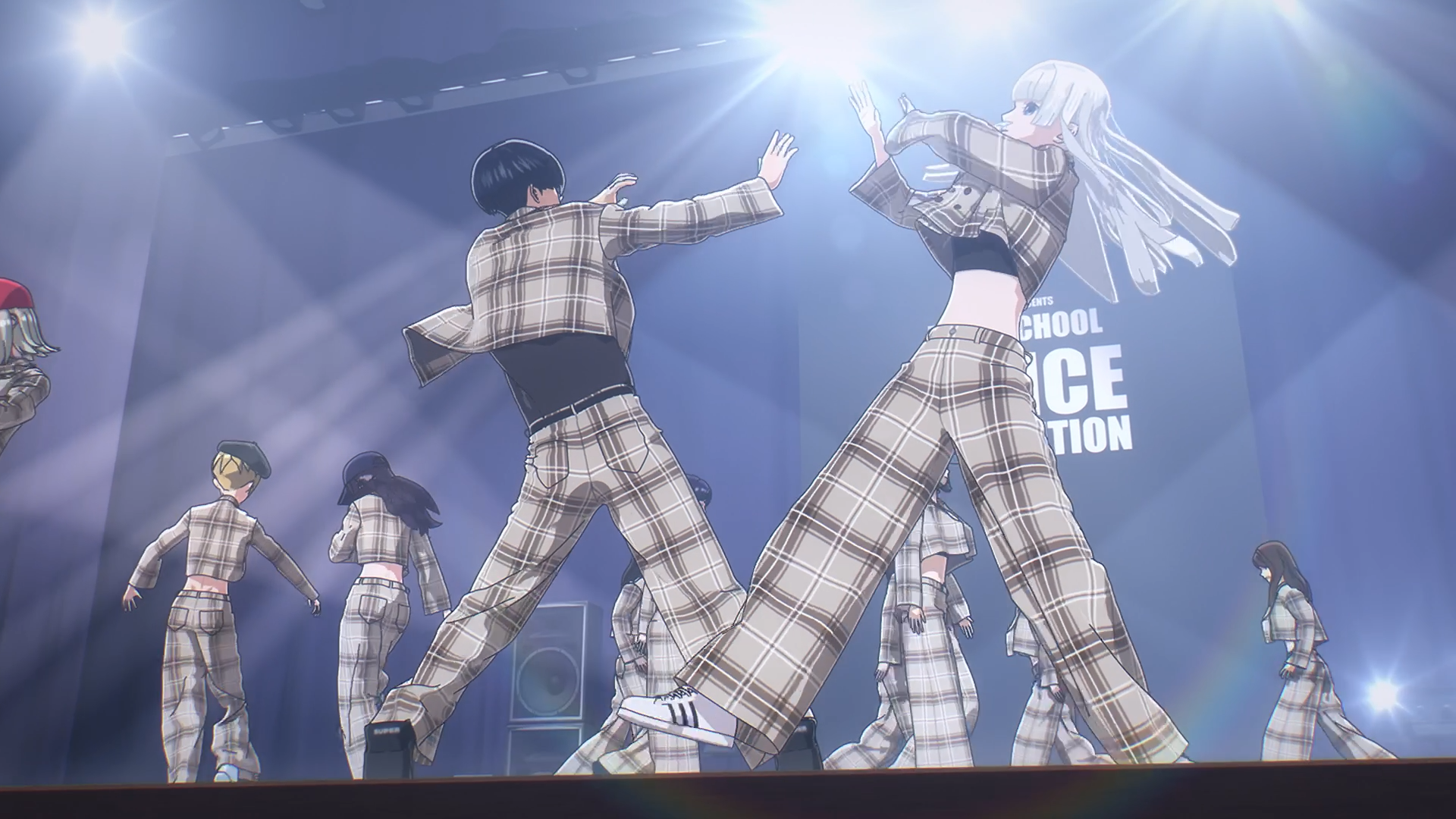
The anime Wandance, which began broadcasting in October 2025, is an ambitious project that tackles the unique subject of street dance. The animation studio behind it, CYCLONE GRAPHICS, states that adopting Marvelous Designer was "inevitable" to balance the intense movements of the dancers with the realistic portrayal of the "loose," diverse wardrobe variations characteristic of streetwear.
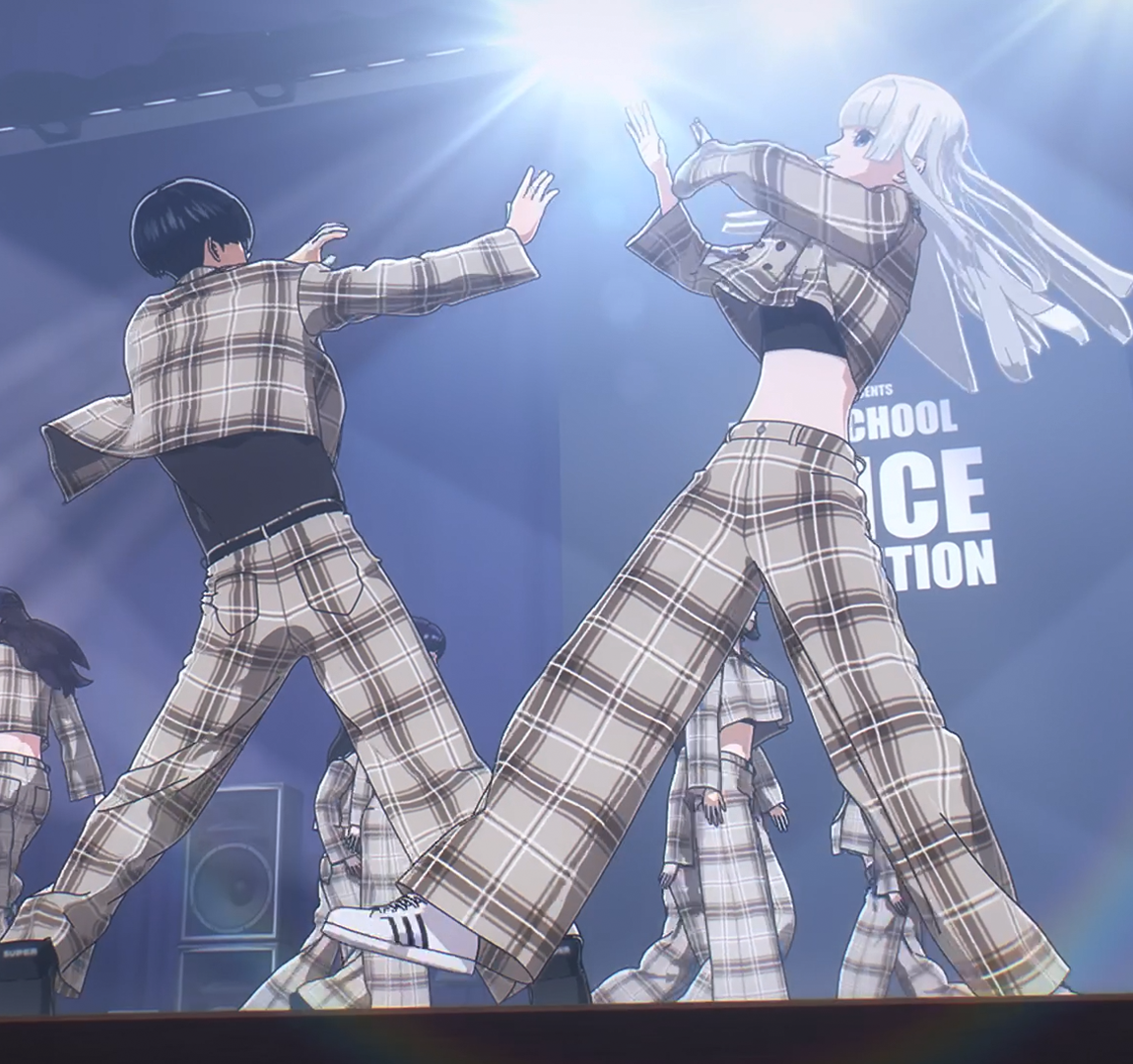
Through high-speed and accurate physical simulations, they achieved an "overwhelming number of designs" and "accurate clothing behavior" that were impossible with conventional methods, resulting in a groundbreaking reduction in production hours. This article delves into the behind-the-scenes of their technical challenges: their unique adjustments using Blender to adapt the realistic wrinkle data derived from Marvelous Designer into an "anime-style look," and their production approach of pursuing the perfect dynamic silhouette based on the philosophy that "the state of being in motion is the completed form of the outfit."
We also asked about the importance of their collaboration with Tenju Co., Ltd., a digital fashion specialist, and how Marvelous Designer will expand the future possibilities of anime production as a whole.
1. Street Dance and Marvelous Designer
[Q]: Wandance is a very unique anime specifically focused on street dance.
What was the reason for adopting Marvelous Designer (MD) for this project?
[A]: MD's high-speed and accurate physical simulations provided the sense of gravity in movements and realistic wrinkle details that 3DCG has traditionally struggled with. In actual use, compared to physical simulations in other 3DCG software, it significantly reduced the amount of post-processing and corrective work.
The biggest challenge in producing Wandance was preparing a diverse range of wardrobe variations that pursued the reality of street fashion, all in parallel with the massive amount of dance animation. In traditional 3DCG production, we would have to model each outfit individually and repeat extensive processes like weight painting and rigging. However, for this project, we created all of these using 3D sewing in MD.
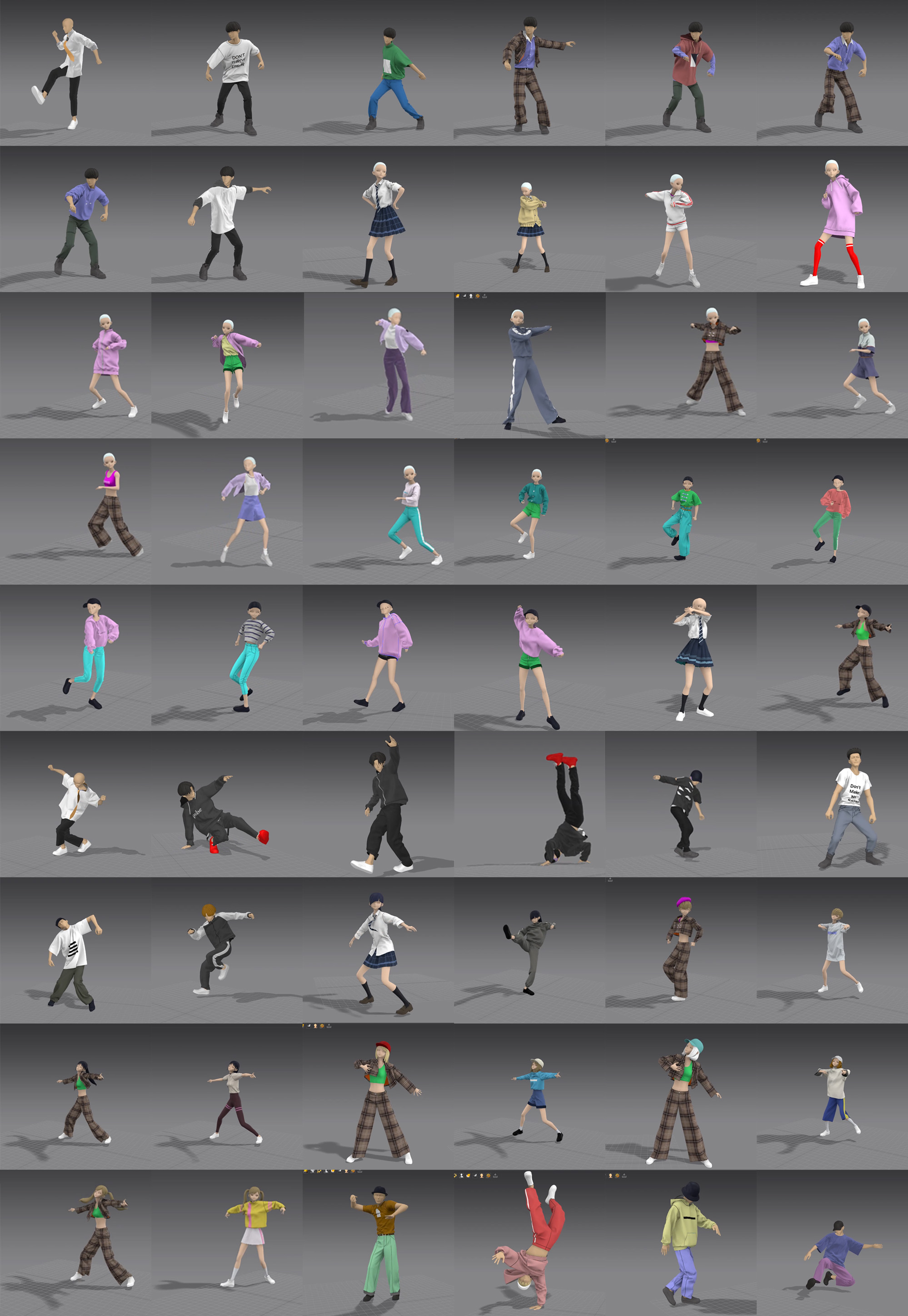
By introducing physical simulations through MD, we achieved accurate clothing behavior linked to the dancers' intense movements without repeating complex manual tasks. I feel this allowed us to balance an overwhelming number of designs—which would have been impossible with traditional methods—with realistic simulations.
Additionally, 3D sewing makes "size adjustment after dressing" easy, which allowed for smooth fine-tuning of the baggy silhouettes typical of hip-hop fashion. Being able to check the silhouette in motion in real-time through the dance simulations was a huge bonus (advantage) in our production.
Looking back now, I am convinced that adopting MD for a project like Wandance was not just a choice, but an "inevitability."
2. Balancing Realism and Anime Expression
[Q]: Marvelous Designer is known for clothing expressions based on realistic physics, but we believe animation requires an "adjusted" look to achieve the desired expression. How did you balance these two? (For example, did you simplify the wrinkles so the simulation results wouldn't look too messy, or make special adjustments to the patterns to fit an anime-style look?)
[A]: The motion capture concept for Wandance is "animation drawn by dancers." We believed that not only the dynamism of the dance, but every single wrinkle in the clothes had to be an expression born from the dancer's movements.
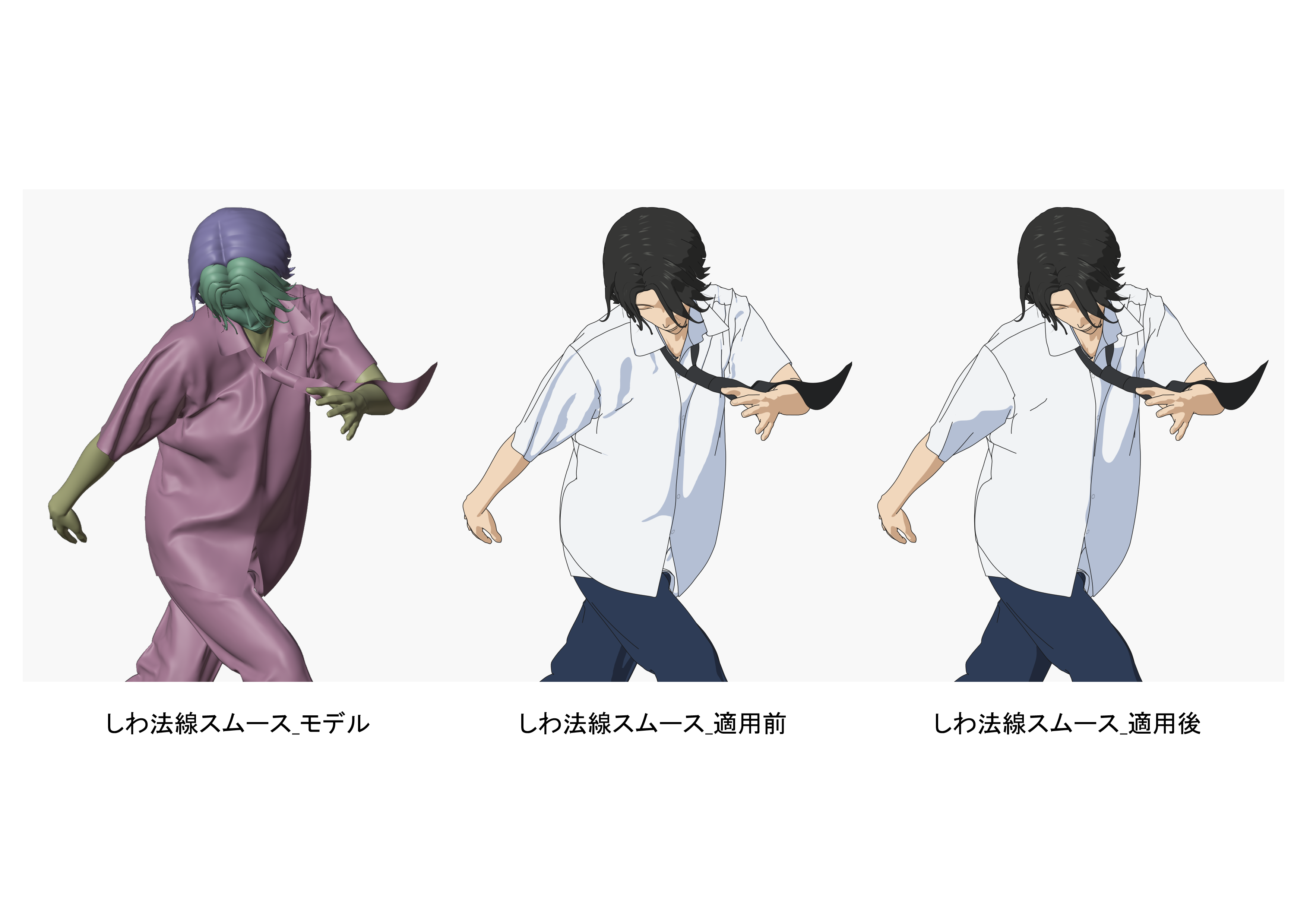
MD reproduces very supple and realistic fabric bending, but as-is, it contains too much information for an anime-style look. Therefore, we deliberately needed to adjust it by "reducing and organizing the number of wrinkles." The key to this look adjustment was Blender, the main tool for this project. Instead of directly using the realistic wrinkle information generated by MD, we utilized Blender's Geometry Nodes. We applied a blur to the original normal information, stored it as an attribute, and then called and controlled it on the Shader Editor side. This allowed us to leverage the realistic behavior derived from MD while translating it into an "anime-style look" that blends perfectly with traditional 2D animation (sakuga).
Another distinctive feature of our MD workflow in Wandance is that all adjustments were based on the "movement during the dance." In standard costume production, there's a tendency to prioritize how it looks in a standing posture (T-pose or A-pose), but we purposely avoided that. From the sagging of the clothes and the length of the hems to the sense of volume, we strictly focused our adjustments on "how it looks while they are dancing."
The goal was to draw the coolest and most beautiful silhouettes during intense dance steps and large actions. The philosophy that "the state of being in motion is the completed form of the outfit" might be considered an inevitable approach for a dance-themed project like this. Rather than simply accepting the simulation results, we constantly chased the perfect silhouette while checking the movements to maximize the dynamic feel of the dance.
3. Controlling Intense Movements (Dance)
[Q]: The characters perform intense dances with high-speed spins and jumps, all while wearing highly difficult outfits like hoodies and layered clothing. What was the biggest challenge when simulating these extreme movements?
[A]: Fortunately, there weren't many outfits that required this level of special care, but the main challenge was "not deviating too far from the character design." Specifically, a hoodie might cover the head during a dance, but it shouldn't stay on the head; a shirt hem might flip up for a moment, but it shouldn't stay flipped up. To prevent major costume collapse after intense movements (even if it was physically accurate), we heavily used pins and tacks.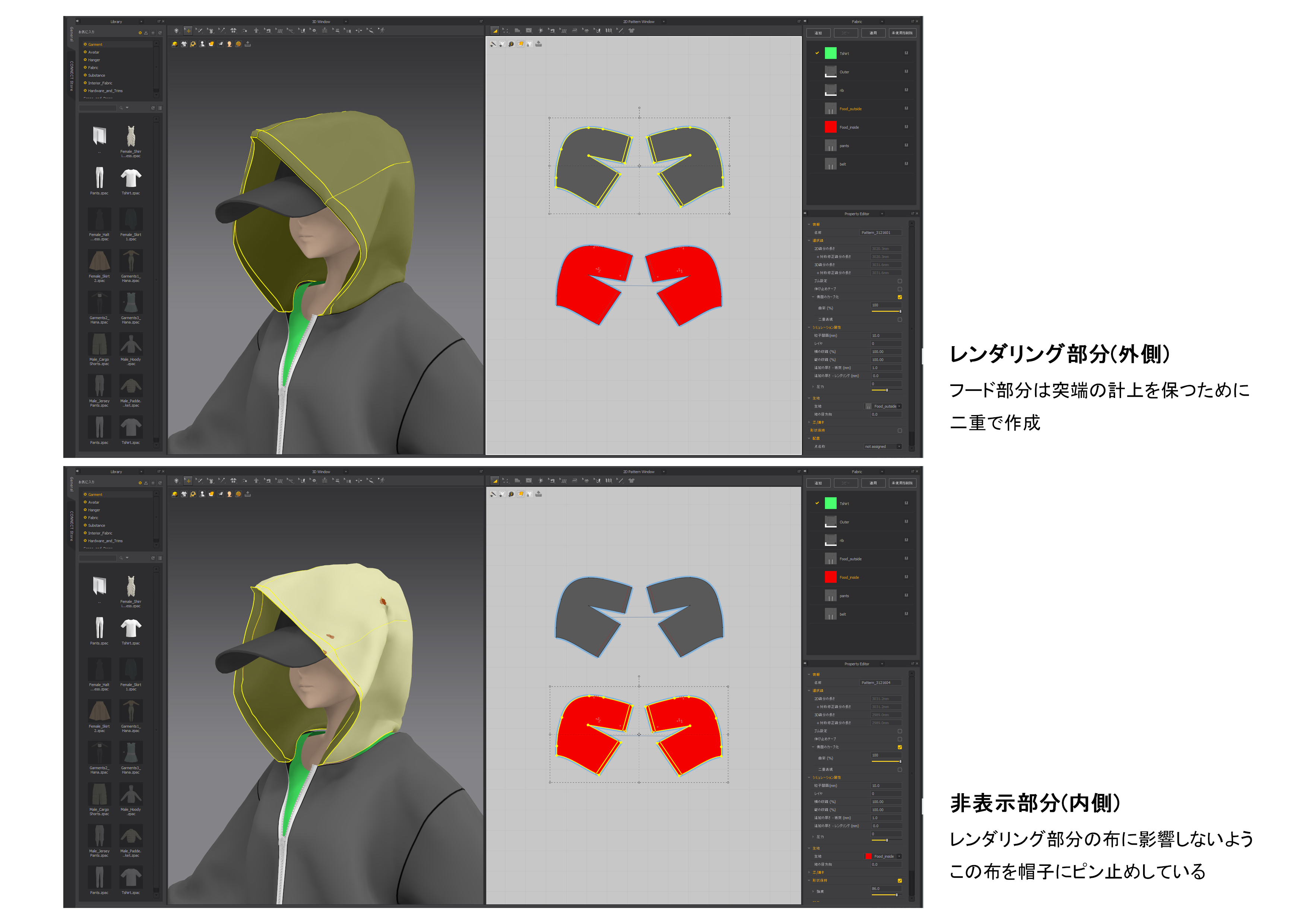
[Additional Question]
[Q]: In street dance, how the clothes sway can be said to be an extension of the dancer's personality. Did you individually adjust the fabric physical properties (weight, friction, thickness, etc.) to reflect the differences in each character's dance style? (e.g., Setting heavier fabrics for aggressive dancers, and lighter fabrics for those with flowing movements.)
[A]: We placed the highest priority on selecting fabrics that matched the character designs (jerseys, sweatshirts, denim, etc.), and we mainly adjusted the movement through the patterns. Because adjusting the diverse and complex parameters of cloth simulations often takes too much time, we were greatly helped by the presets.
4. Collaboration with Tenju Co., Ltd.
[Q]: We heard that for this project, you collaborated with Tenju Co., Ltd., a company with knowledge in digital fashion, to create the clothing patterns. How did this partnership enhance your production process in Marvelous Designer? Also, compared to traditional CG asset exchanges, were there any unique discoveries or workflow advantages in sharing "MD project files" between studios?
[A]: Actually, the biggest hurdle in integrating Marvelous Designer into our workflow was the concept of "sewing (patterns)." Since we had previously built clothes entirely from modeling, we never imagined we would need knowledge of actual dressmaking and patterns.
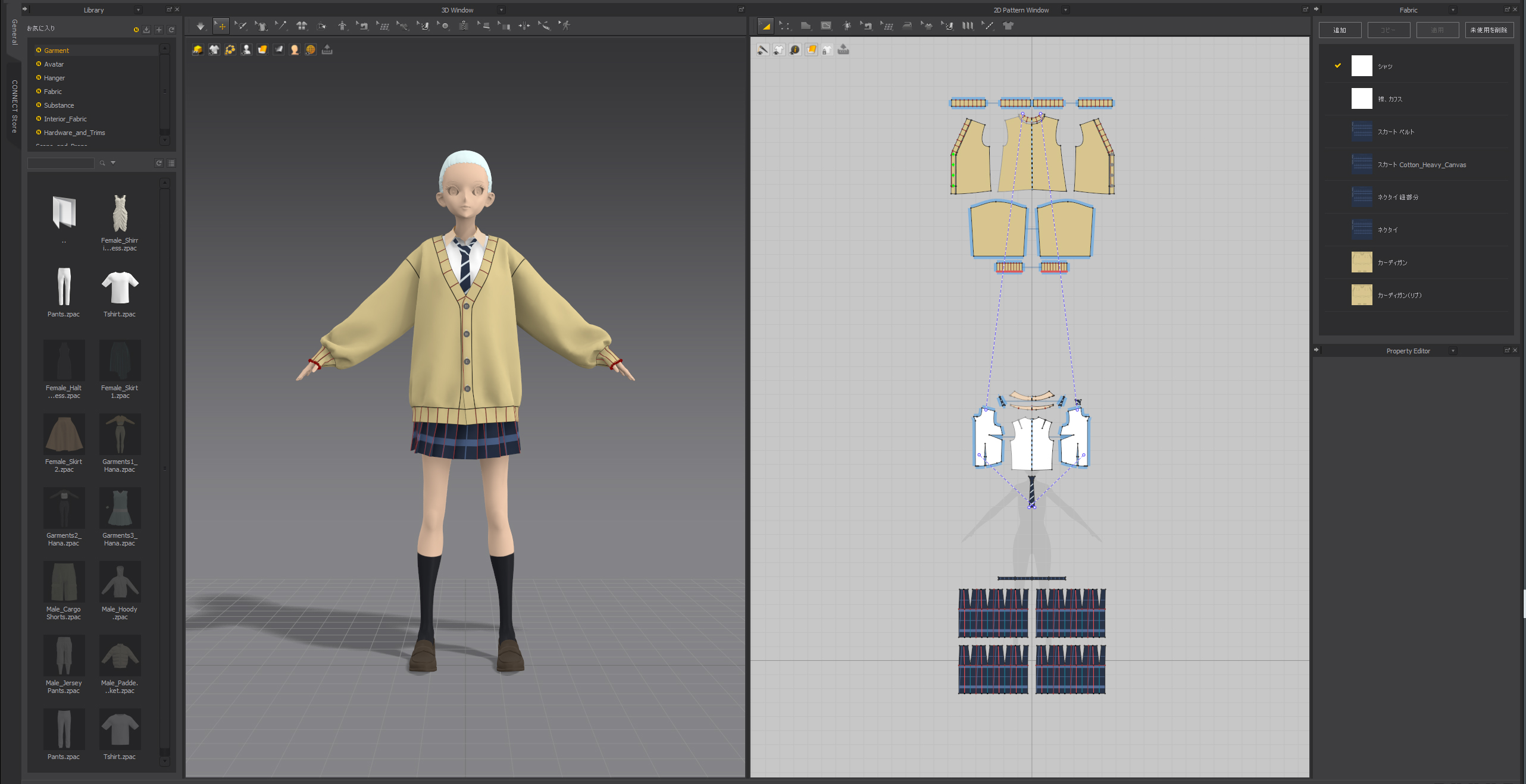
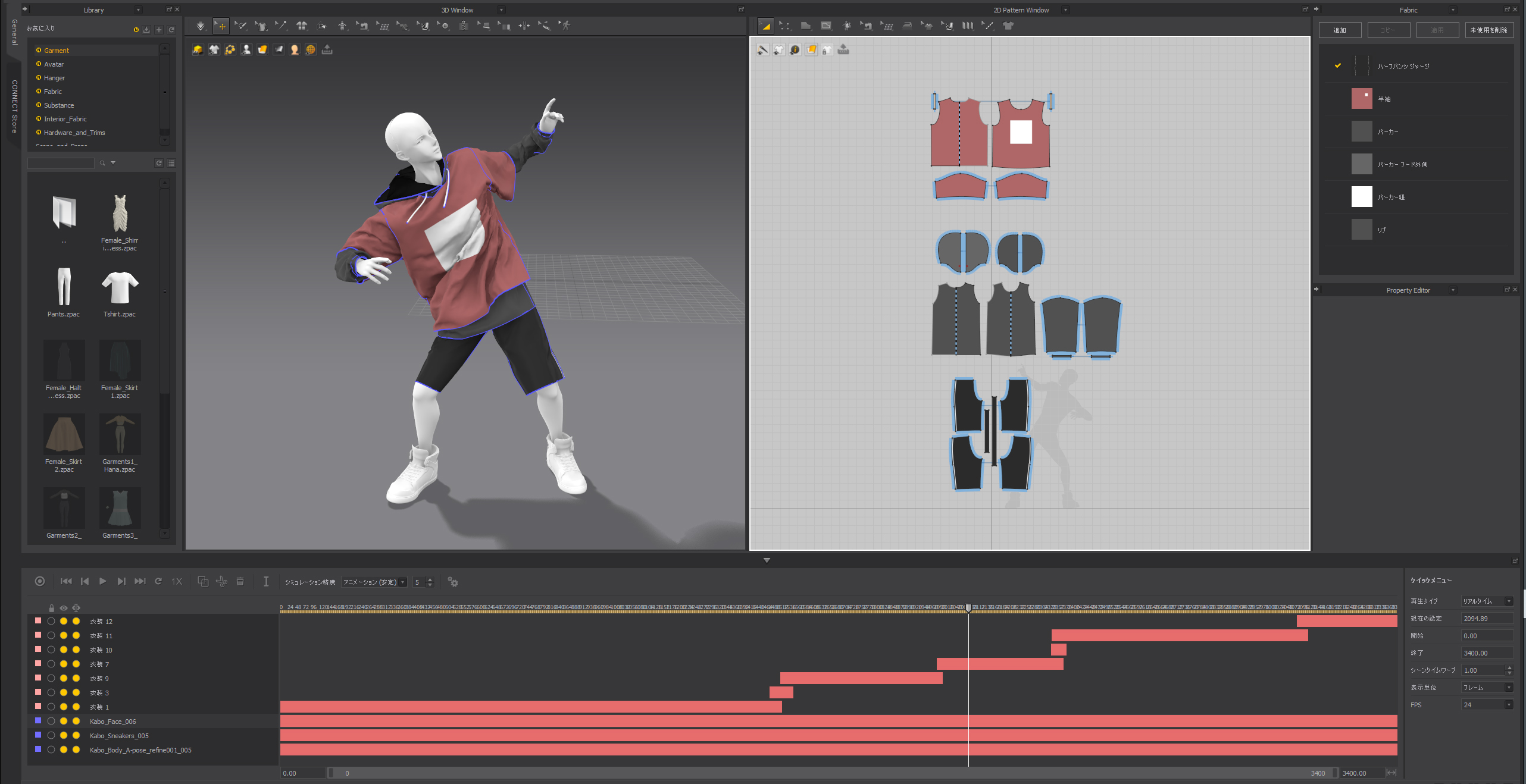
When it comes to our MD clothing patterns, we simply cannot talk about them without mentioning Tenju. After all, we started at a level where we literally had to learn how clothes were made. Based on the anime's costume designs, Tenju created a massive amount of clothing patterns for us.
5. Expanding the Expressions and Prospects of Animation
[Q]: Following the success of this workflow, how do you think tools like Marvelous Designer will change anime production in the future? (Do you think it opens up new possibilities for creators who want to make action-oriented works or anime focusing on fashion?)
[A]: Through this workflow experience, I am convinced that tools like MD will greatly expand the possibilities not only for fashion-focused works but for anime production as a whole.
Particularly for realistic crowd scenes, large-scale battles, and intense combat depictions, it will become an extremely effective means to drastically reduce production load while elevating the quality of expression. If we can maximize the "areas that can be made efficient by tools," we can concentrate our resources on the "processes where we truly need to spend calories," such as directing and drawing (sakuga). Also, what surprised me when using MD was that despite performing advanced physical simulations, the operation was incredibly light and responsive. I feel that this intuitive operational feel does not hinder the imagination of creators who constantly go through trial and error, ultimately pushing up the quality of expression.
[Additional Question]
[Q]: Based on this experience, what do you think is the "biggest advantage of using Marvelous Designer in animation production" compared to conventional methods?
[A]: For a project like Wandance, balancing that massive amount of dance scenes with the sheer variation of costumes would have been completely impossible without Marvelous Designer (MD). The impact it had on our production floor was that immense.
I believe the decisive difference from conventional methods, and its greatest advantage, is "being able to challenge your purely 'desired vision' without compromising on action or fashion details."
Expressions that we previously had to give up on due to technical constraints or production hour limits can now be brought to life with MD. Giving creators an environment where they can push forward without compromising on the "scenes they truly want to show"—I believe that is the true value of adopting this tool.
이 작업은 Animation, Avatar, Blender, Simulation, Pattern, Dance 등의 기술로 제작되었습니다.
Marvelous Designer로 이와 같은 3D 의상·캐릭터 작업을 직접 만들어볼 수 있습니다.