Banishers
Victorien shares the character creation story of her latest project, "Banishers: Ghosts of New Eden". Check out various tips, from the production pipeline to the practical workflow.
Interview with Victorien Berry | Banishers | Character Artist
Artist introduction
Hi my name is Victorien Berry, I am a character artist from south France based in Paris.
I started my career in 2015 as a young character artist working on classic “low poly style” artistic direction at Sloclap studio then moved to realistic projects at Ubisoft on the franchise Ghost Recon and more recently on the game Banishers: Ghosts of New Eden at Don’t Nod.
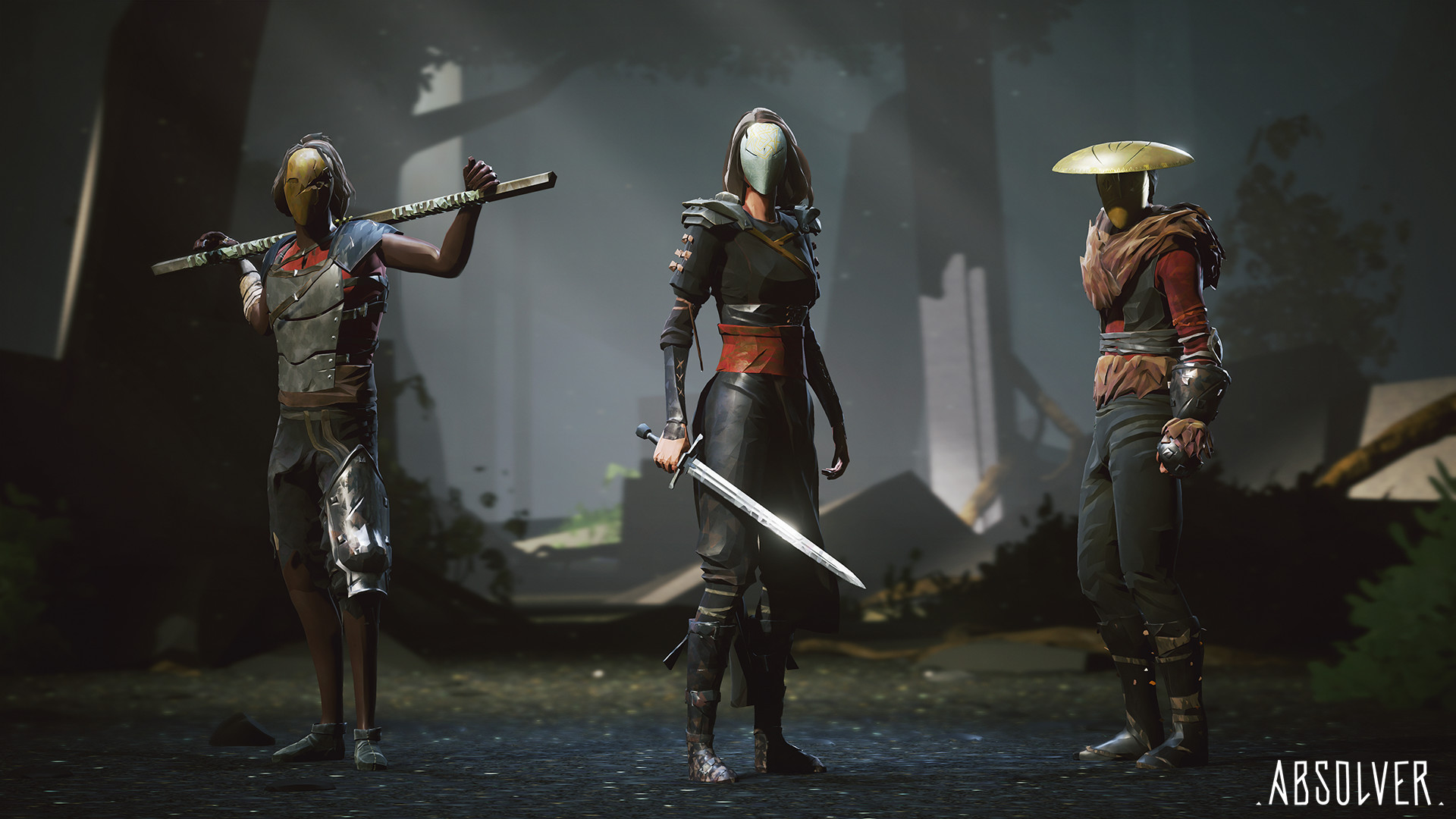
Absolver at Sloclap - players ready for 3v3
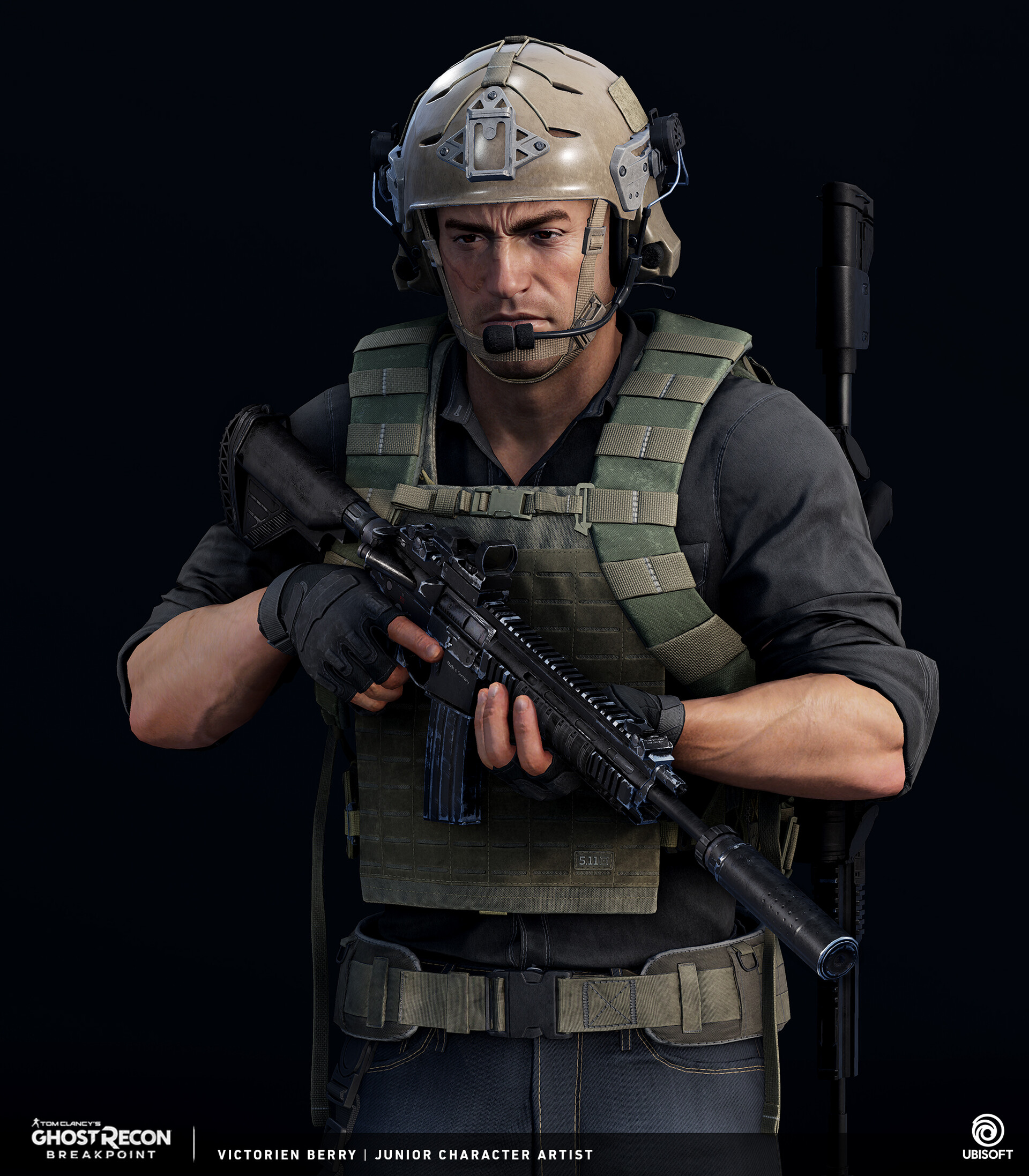
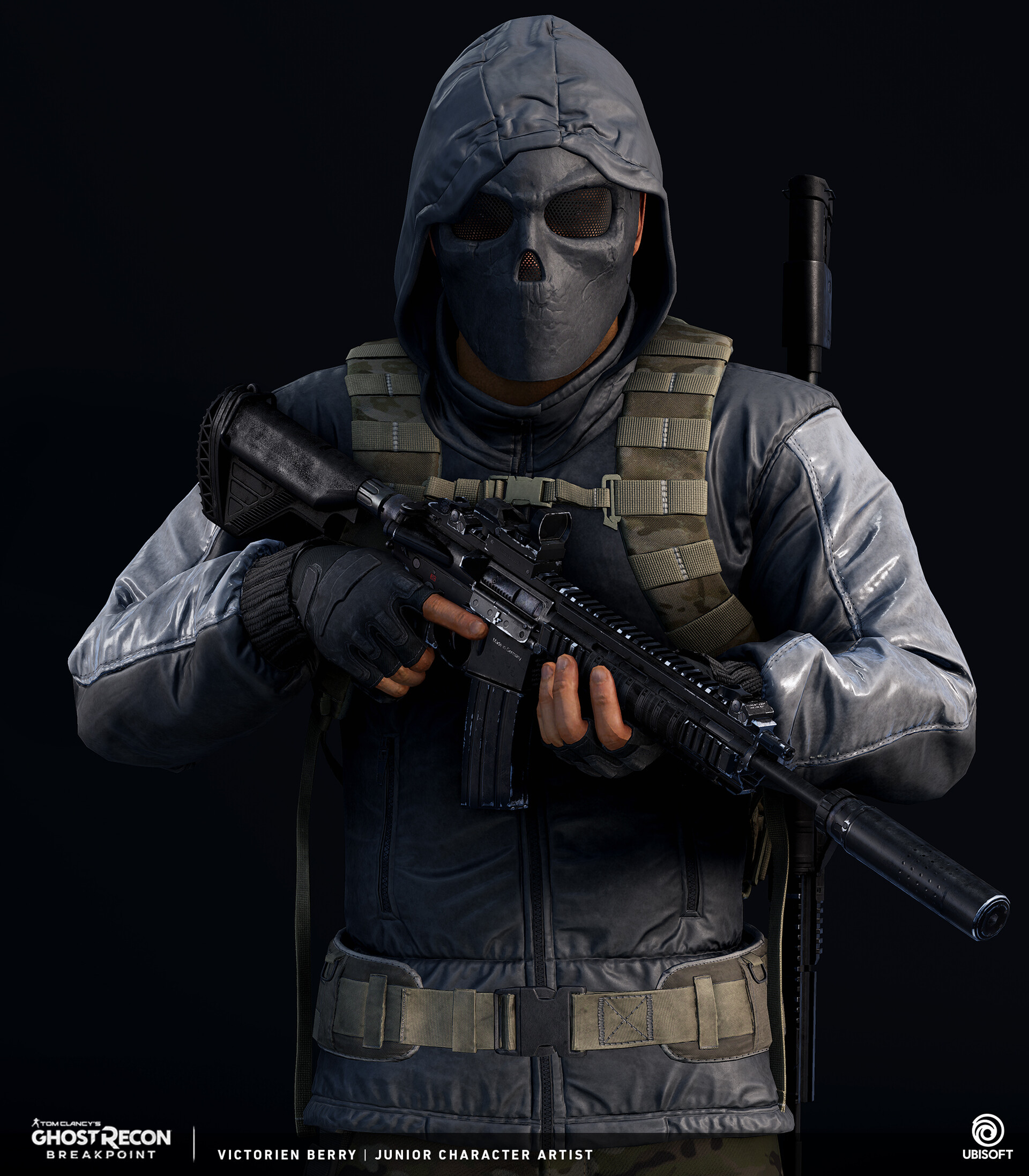
Ghost Recon - Ghost soldier and evil pnj
Can you provide details on the project you worked on: Banishers?
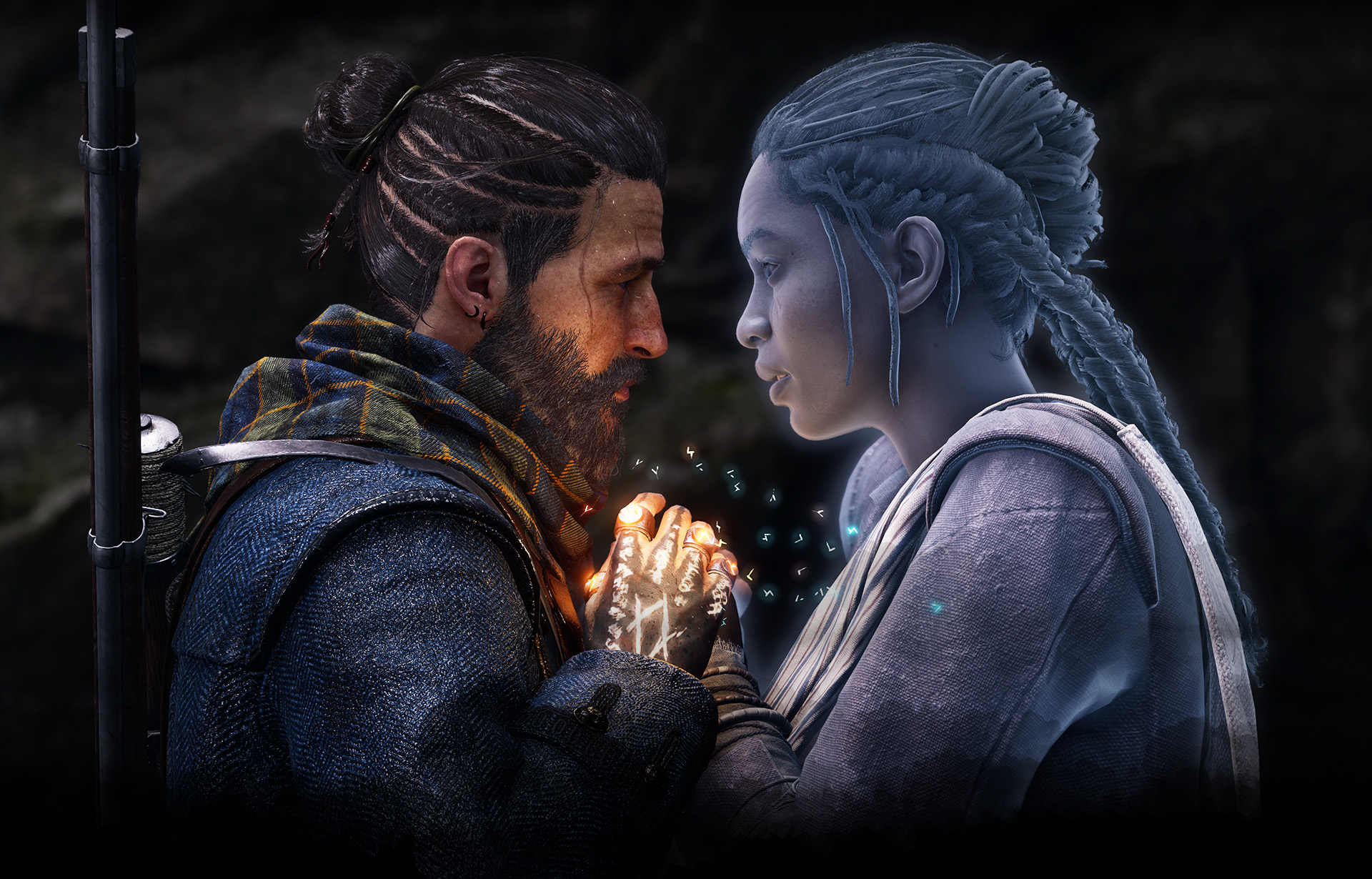
Banishers is the last action RPG game from Don’t Nod (who also created and worked on the Life is Strange series). It's a game about a couple of ghost hunters: Red and Antea, separated by the death of her. That takes place in the dark lands of New England, Red and Antea as a ghost, will make everything possible to resurrect or assent Antea to a peaceful death.
It's a kind of homeric tale about an epic journey and love stronger than death.
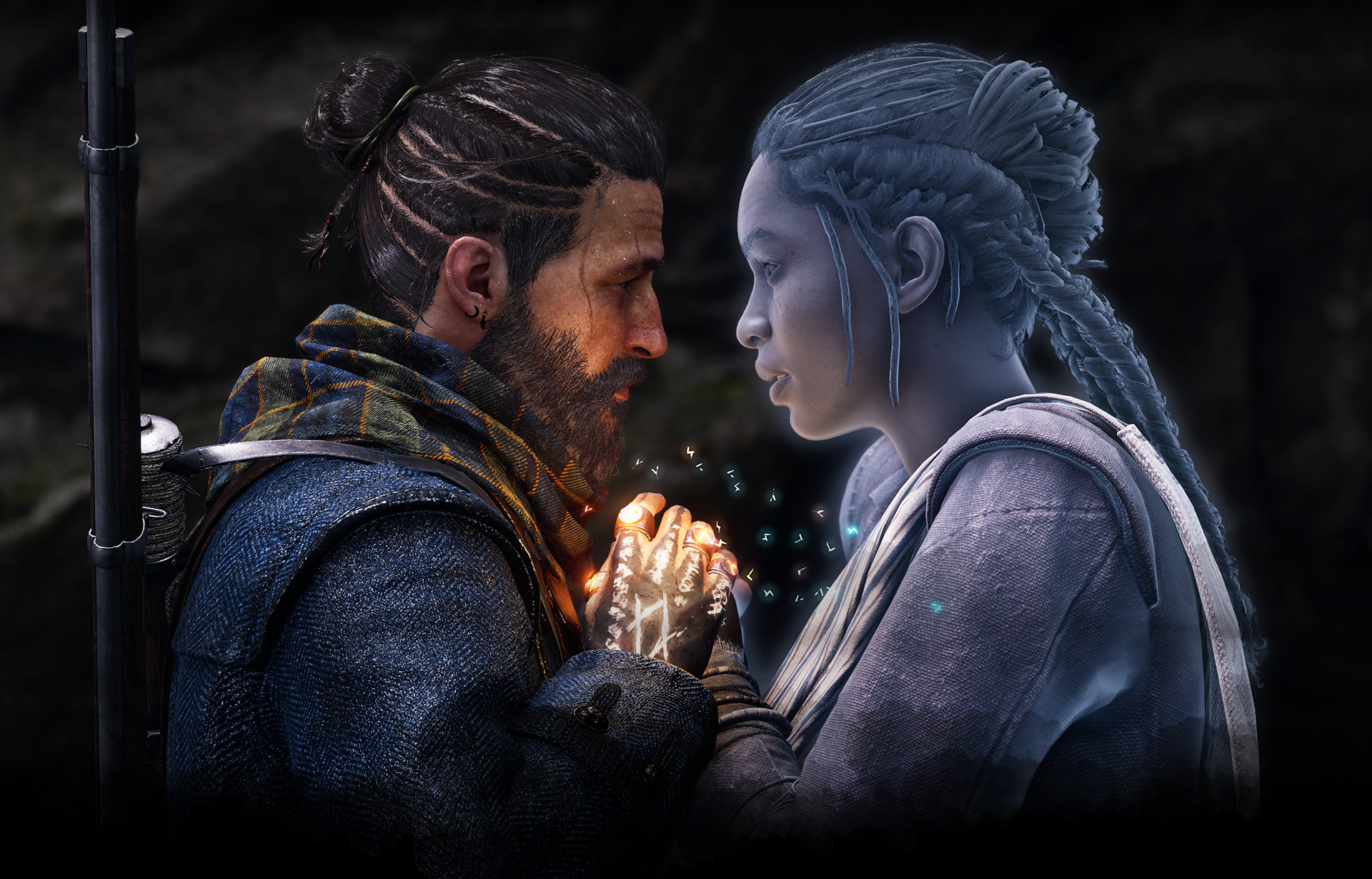
Banishers: Ghosts of New Eden - Red and Antea
Why did you decide to use Marvelous Designer? How did it help you serve art direction?
Banishers is very inspired by historical references, so it's natural that clothing takes a very important place for characters especially as there is very little armor or clothing that aren’t civilian suits in the game.
Characters also wear a lot of different dresses and matters depending on their activities and social status. For us it was very important to show those differences between them not only by mapping textures but also sculpting folds with accuracy. For example: soft cotton, a heavy twill or a thick leather and so on.
To do so, Marvelous Designer is a great tool for that as it allows you to simulate complex pieces of clothing straight on your characters.
Creating all these pieces of clothes from scratch (even if it was the case for some assets) would have been difficult and time consuming. Even for experienced artists it would end up with a kind of different interprétation based on each individual way of sculpting.
Using Marvelous Designer for sculpting and the same set of fabric details map really help to uniform every asset in the game and fit into the artistic direction.
Can you give us a quick overview of the different tools used in your pipeline?
Banishers stays pretty close from video game production standard:
First of all, multiple sizes of characters were created: S/M/L and XL for each gender, based on scan data; sharing the same topology, the same UVs, and the same body landmarks.
Then sent to the rigging team for rig and skin. Zbrush, Maya and R3DS are central tools at this stage.
We were after that able to modify the muscular and adipose structure of a character without moving the position of its joints based on concept requirement.
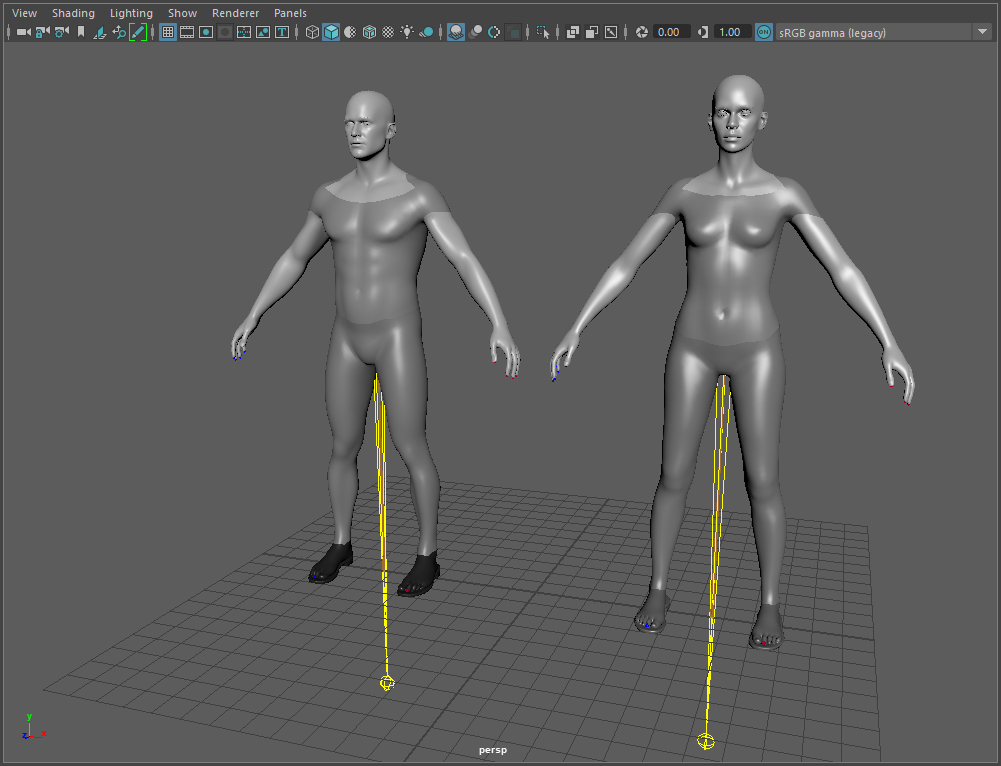
Base Body mâle and female basic size - Maya
After this step Marvelous Designer was extensively used for the clothing part of characters.
It’s interesting to mention that Banisher's Ghost of New Eden is a AAA game, with a tight schedule and meticulously allocated production time, we couldn't spend too much time on a task.
So, unlike what I've done in previous productions and to save some time, I chose to focus solely on the pattern and structure of folds in Marvelous Designer, faking to the maximum the contact between garments that never actually meet, with elastic bands.
Then deferred the assembly of each garments, silhouette, and fold rhythm to the Zbrush stage beacause data from Marvelous Designer would have had to be modified anyway to fit the templates and other technical requirements and the final result stayed pretty convincing.
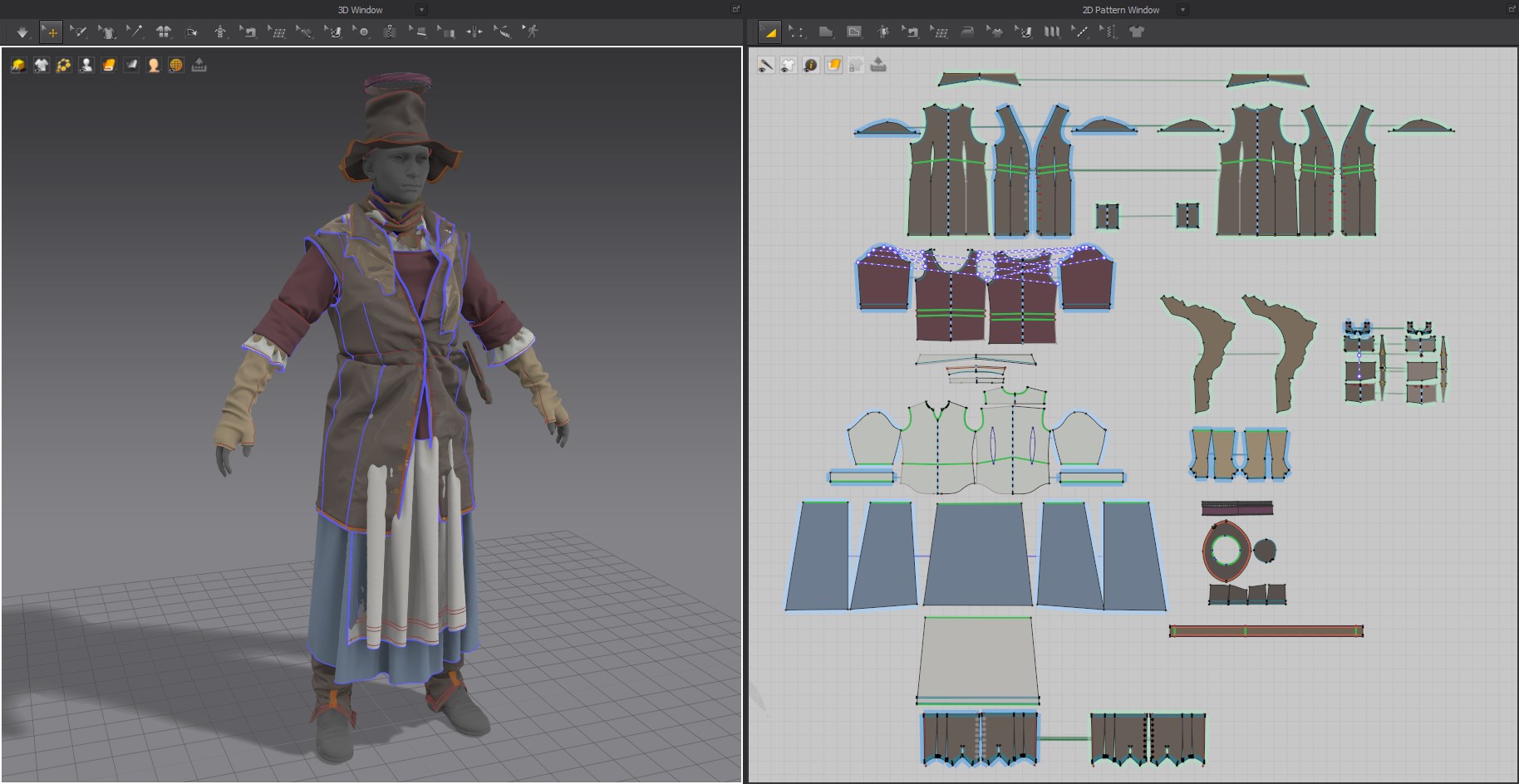
Kate - Marvelous Designer
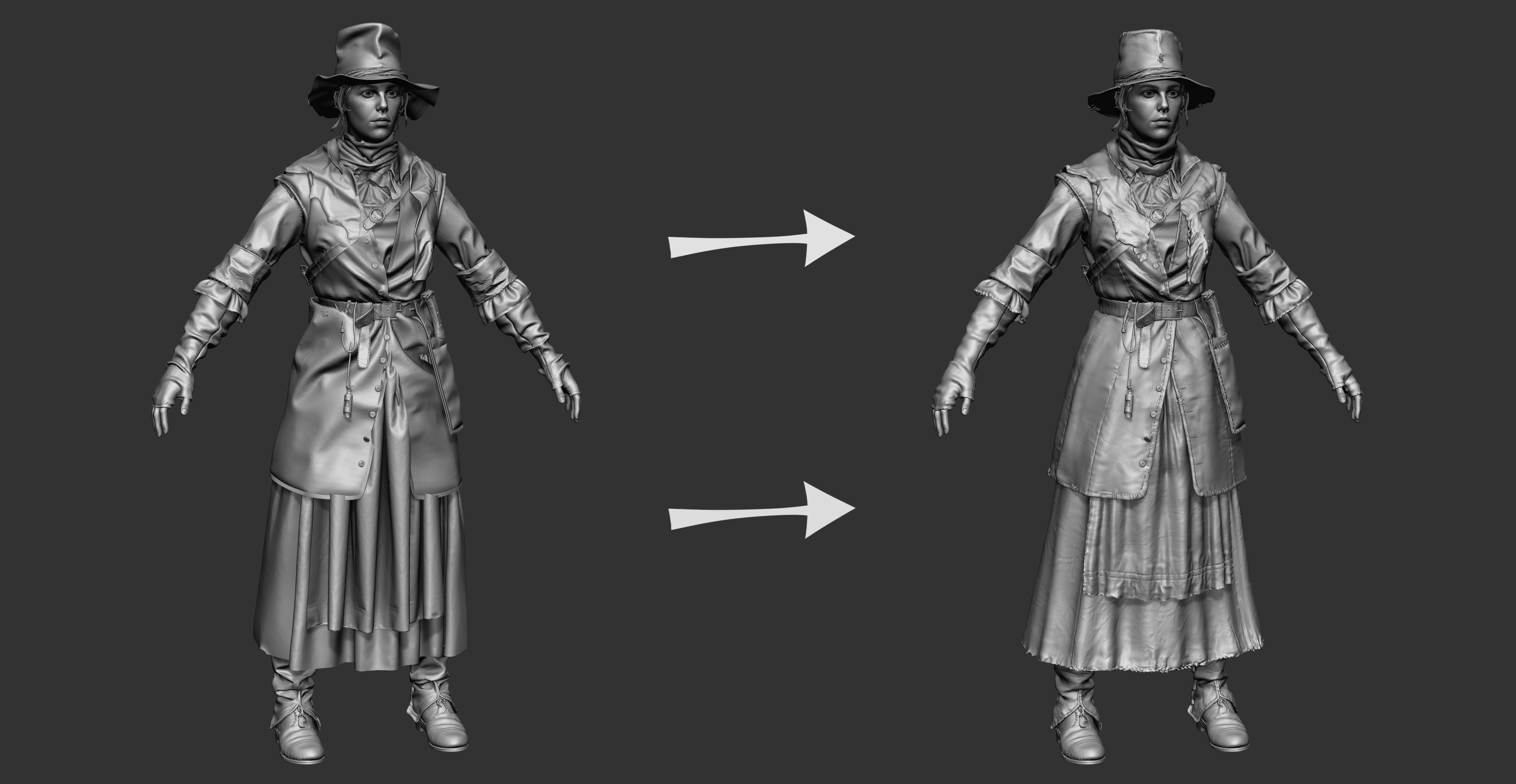
Kate - ZBrush
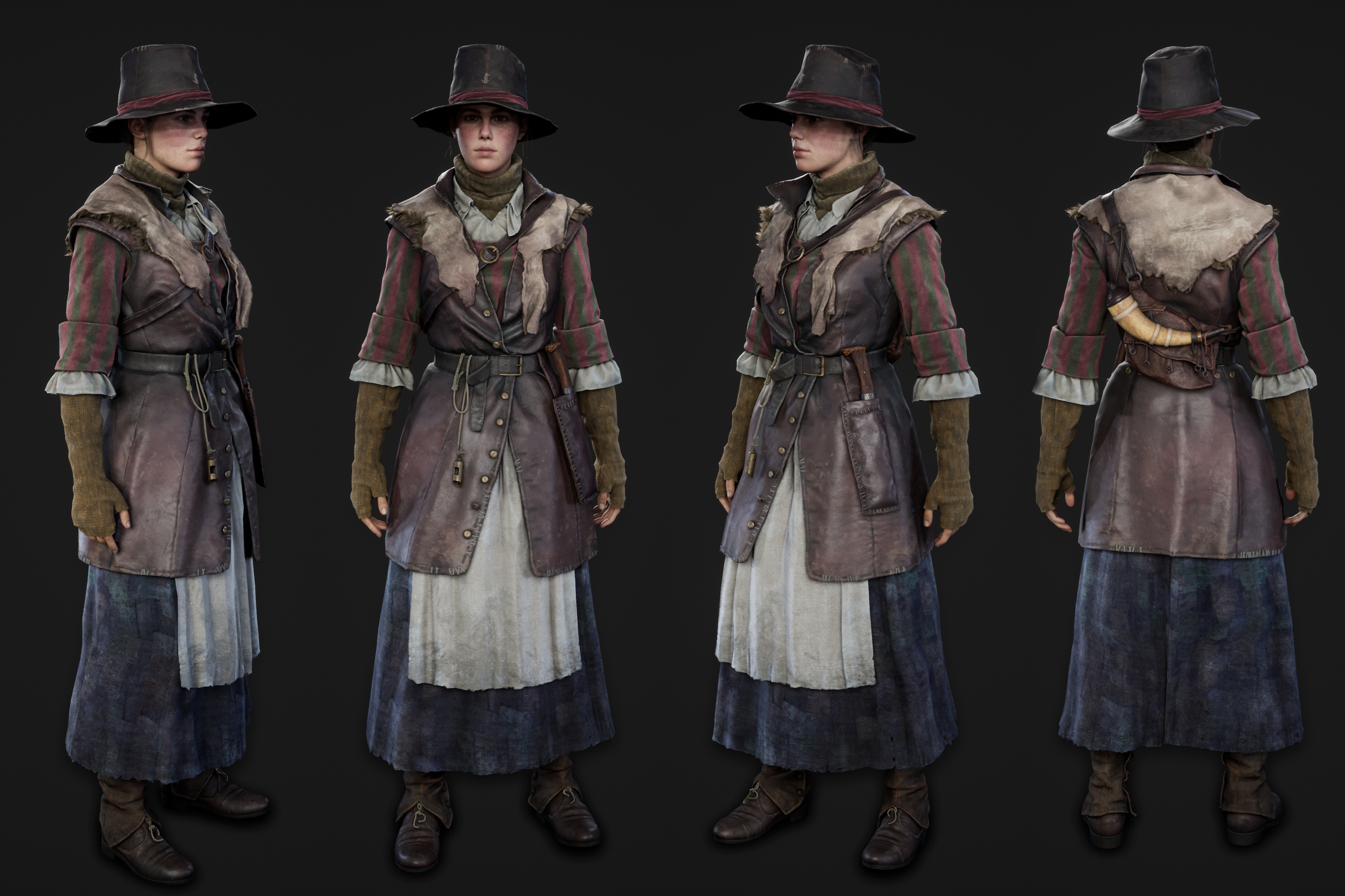
Kate - Unreal Engine
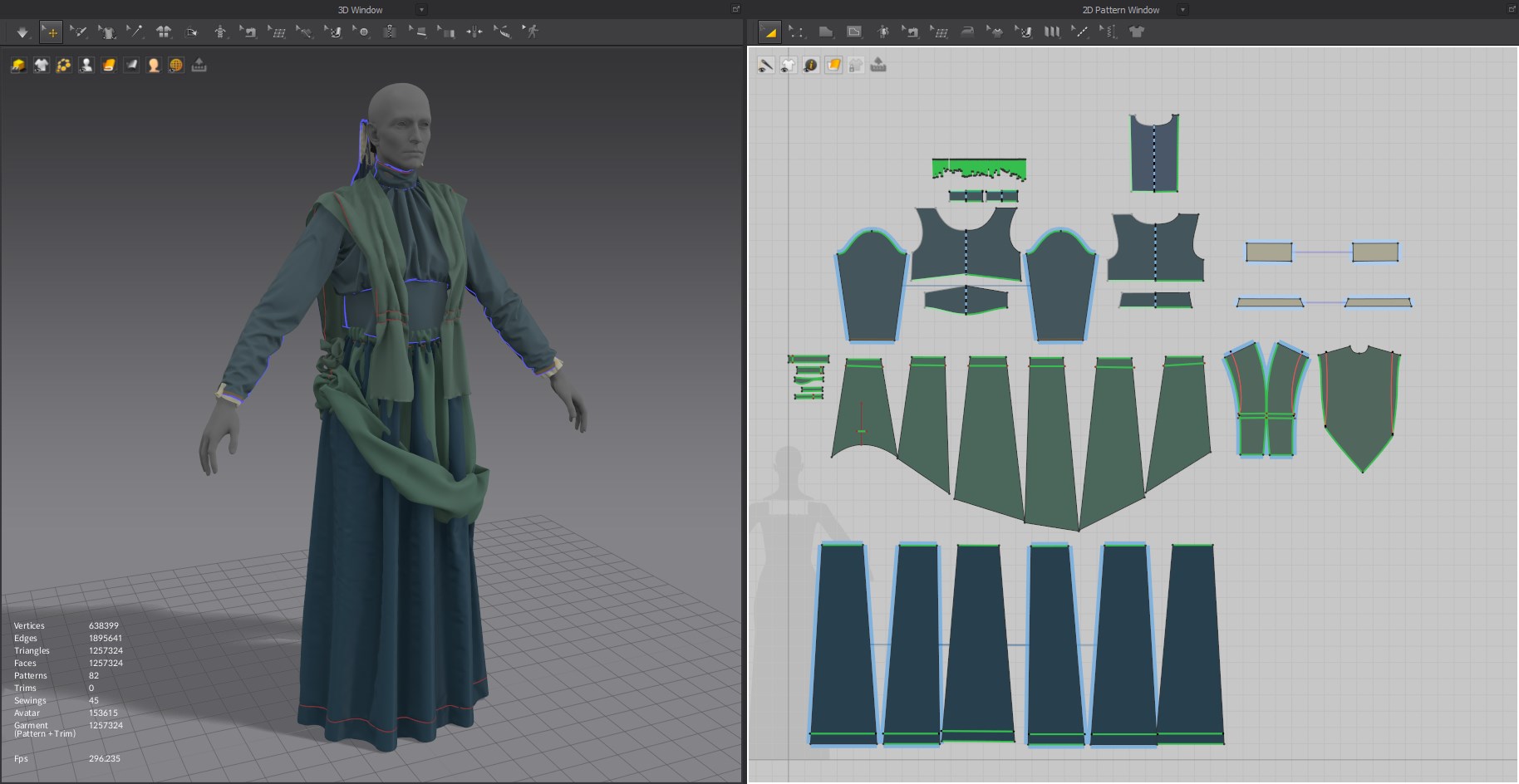
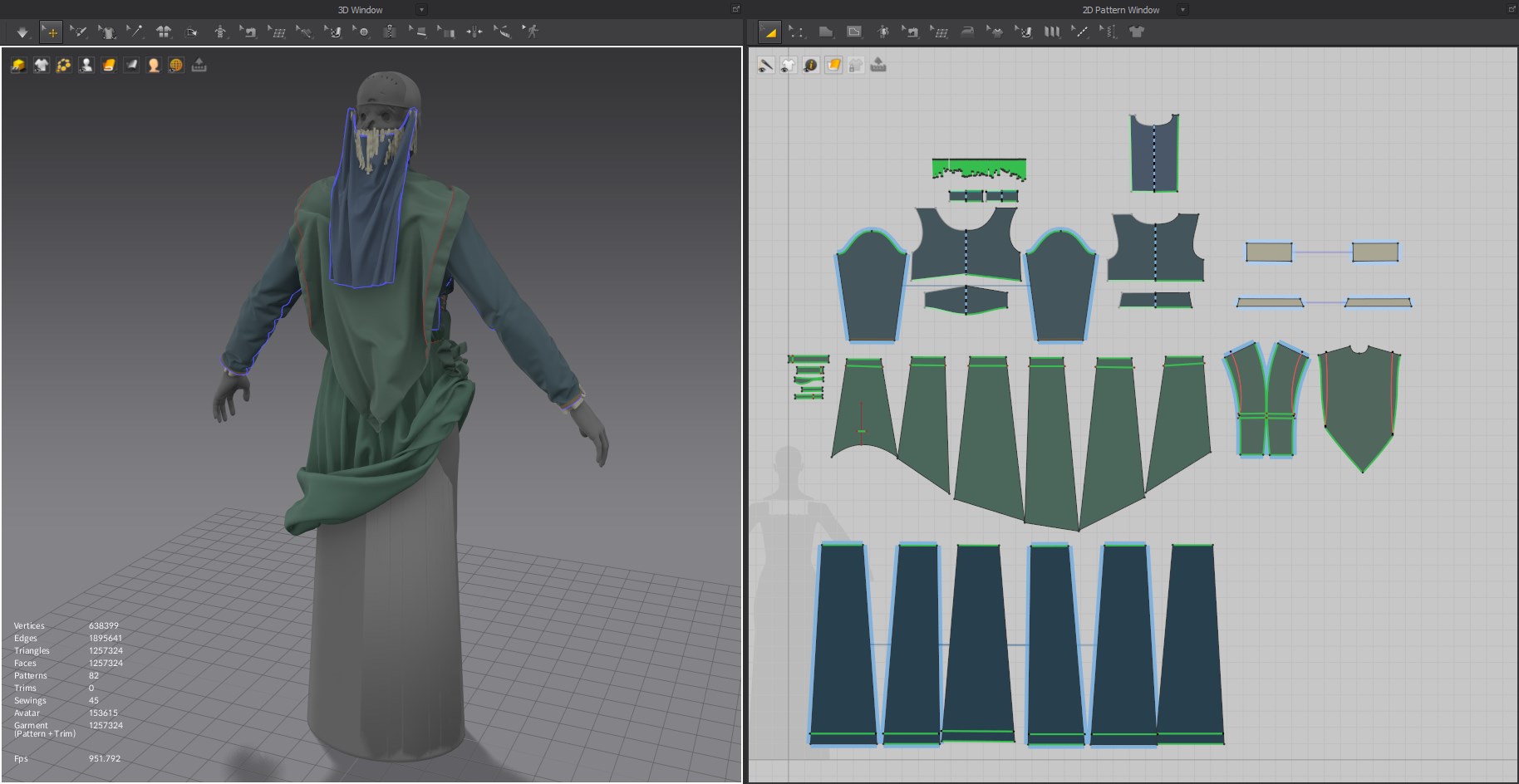
Siridean - Marvelous Designer
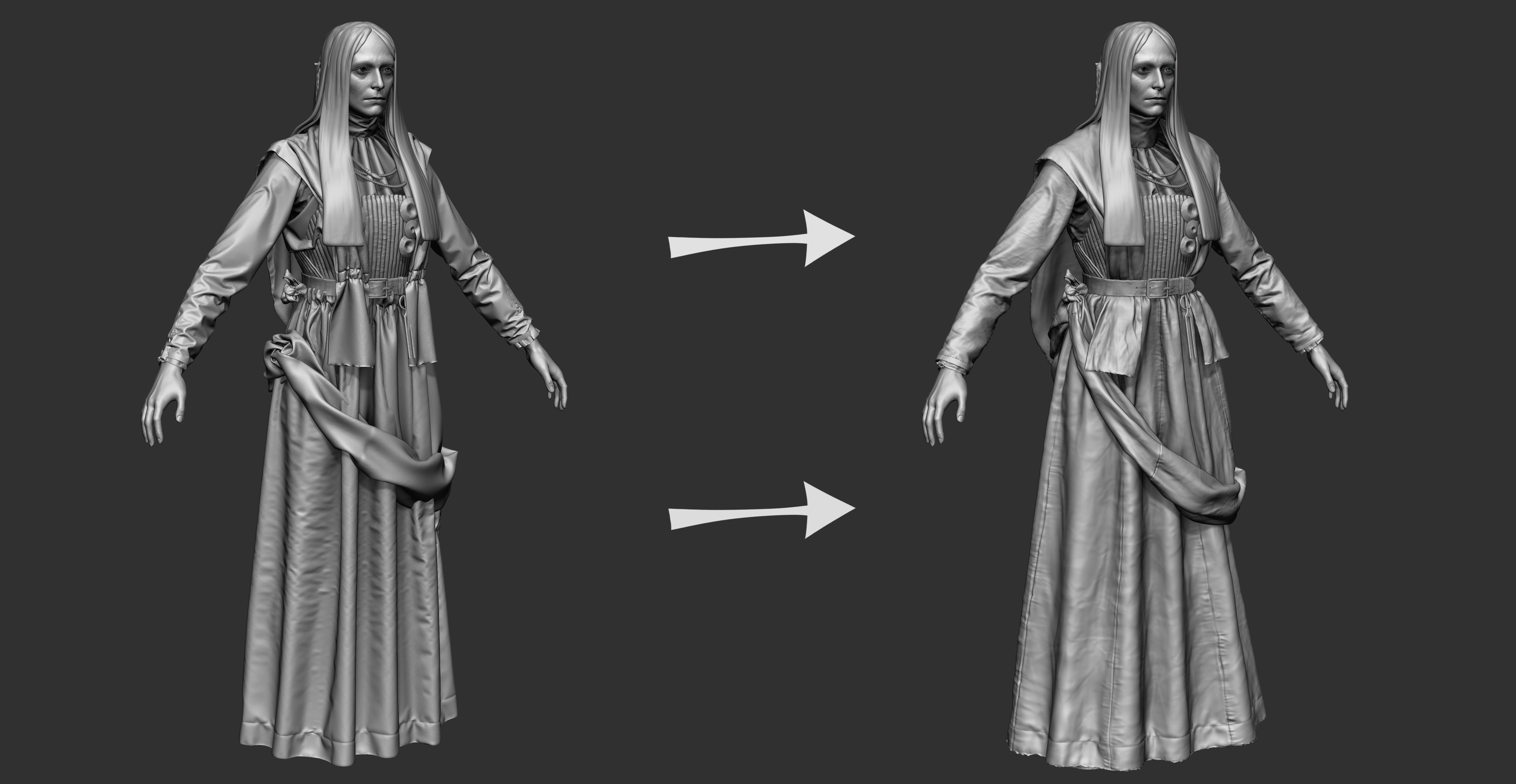
Siridean - ZBrush
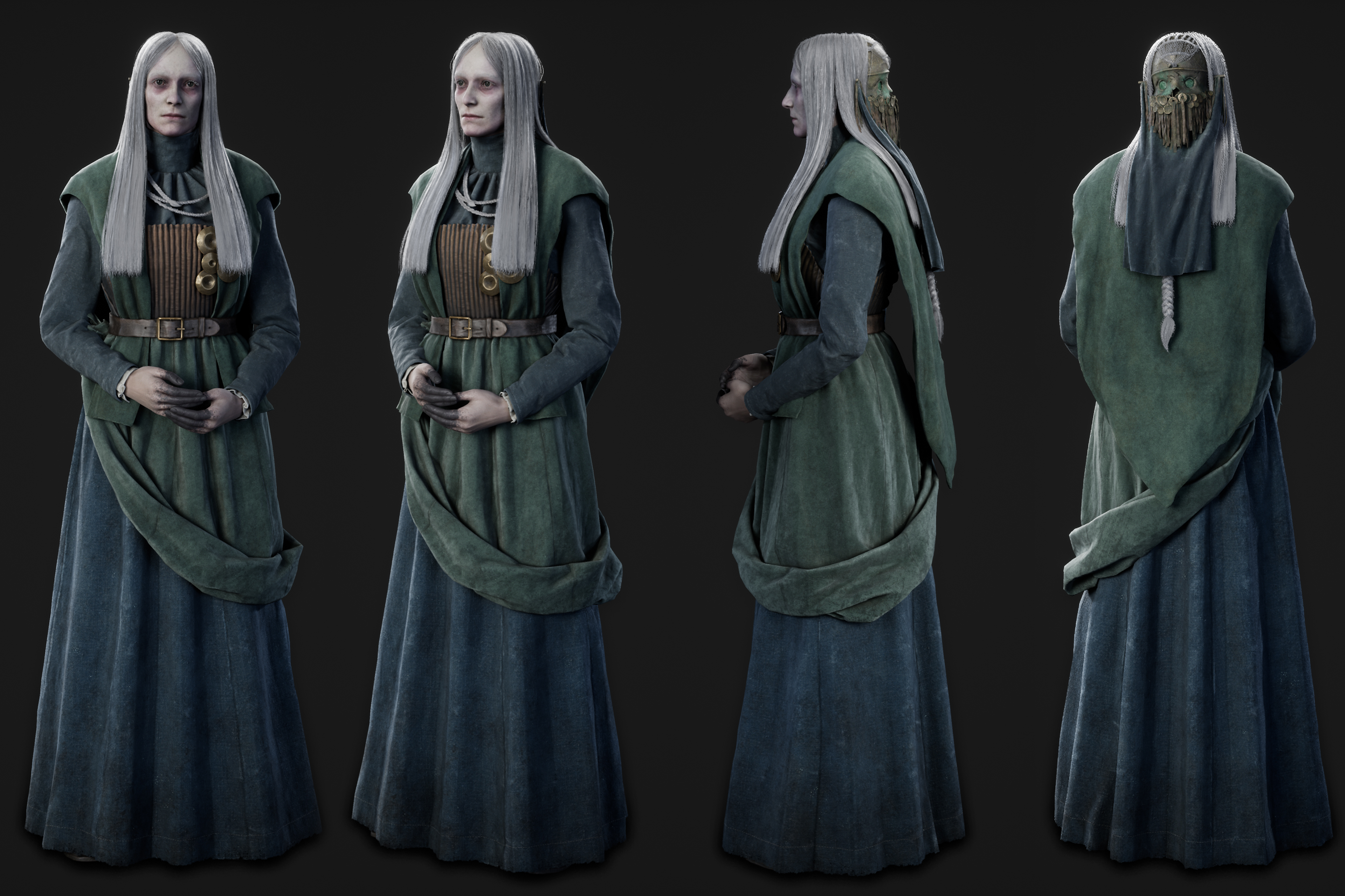
Siridean - Unreal Engine
I also like to adjust fold rhythms or fold strength after simulation in Zbrush. It's very effective to use the lowest subdivision to smooth a fold then jump back to the highest subdivision to only kind of reduce the lowest frequencies of a fold. I find it super nice for flat areas because they are made of fabric and are not exactly monotonous.
Once a character is done the clothing pieces are reused from one character to another, with changes in color and material (always respecting a logic of material specific to the folds). To do so each character's clothing piece is modeled in its entirety for its initial character and later deformed in Maya or Zbrush to fit a new character if needed. Hidden polygons are then cut away.
Because Banishers' story takes place in a far far region of New England, the game features only around fifty characters which is really few for a game like this. So, we were able to conceptualize and model each face individually in Zbrush.
We're quite free in that field because each face is specifically rigged. Skin pores are added using alphas sourced from XYZ or HD Scan Store.
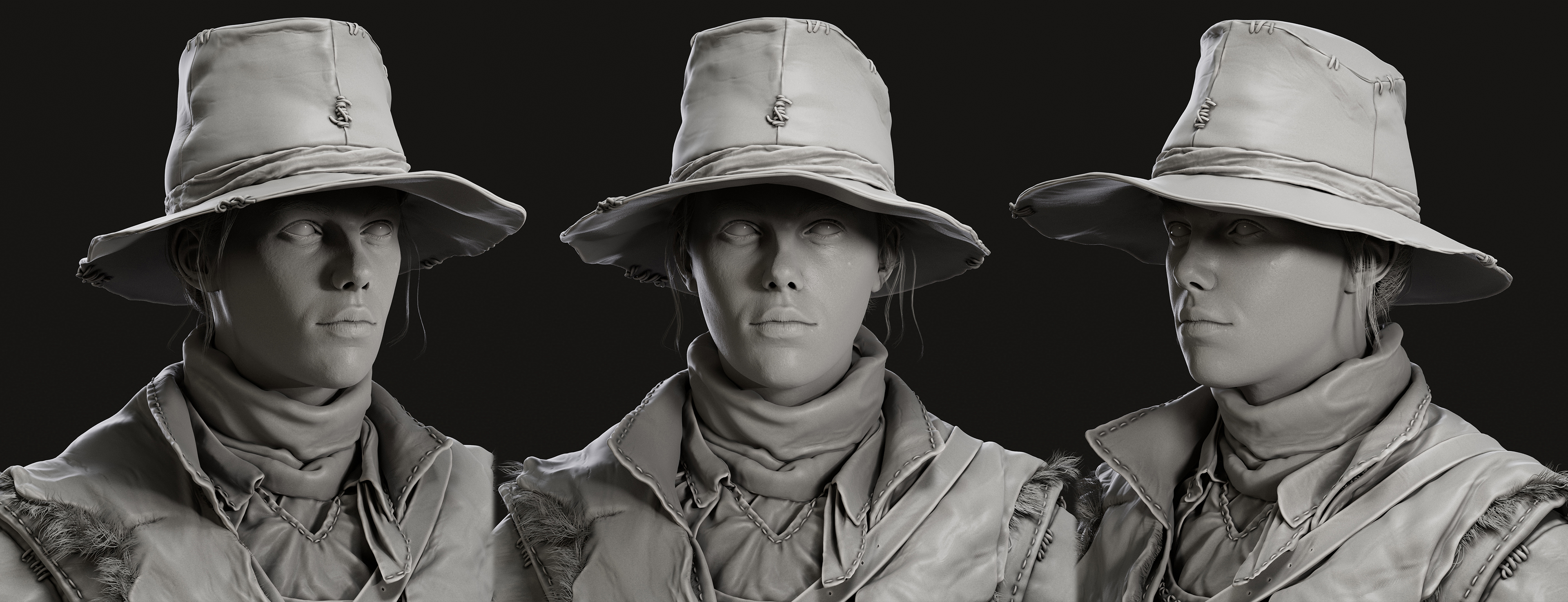
Kate - Highpoly
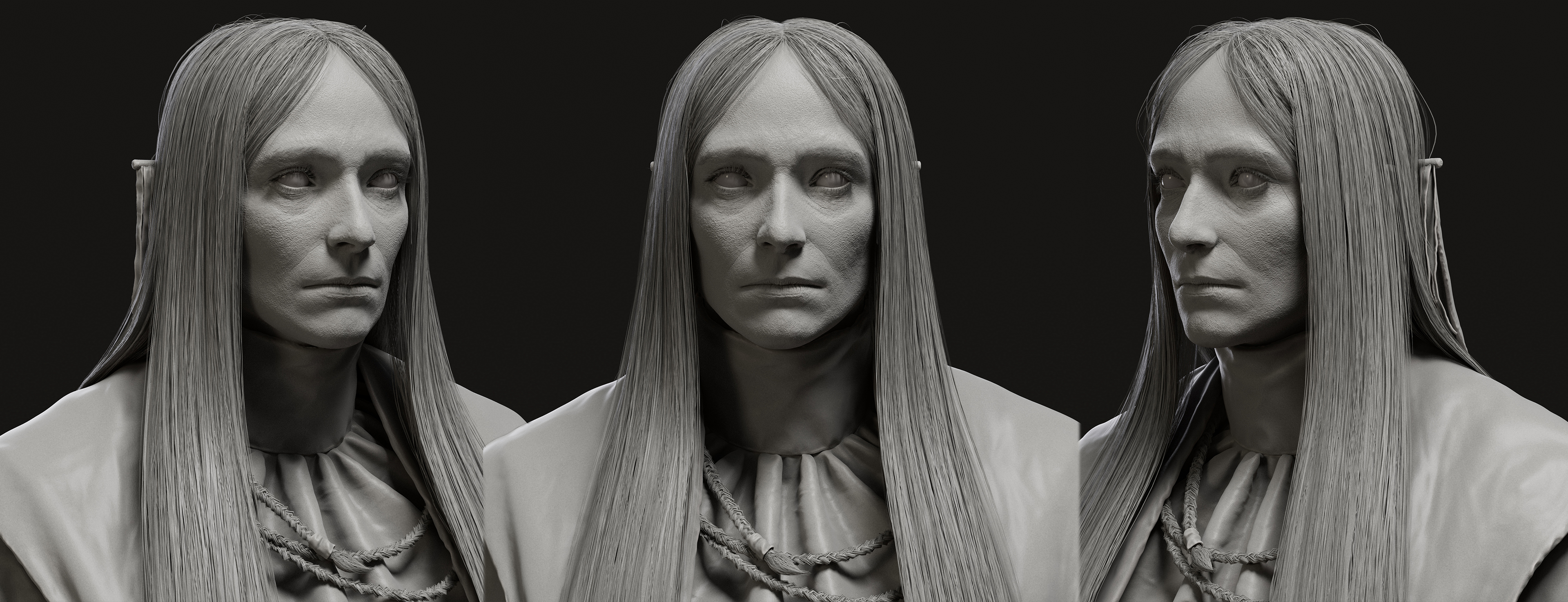
Siridean - Highpoly
Once the high poly model is finished, we perform retopology in a conventional manner using software such as Maya, Topogun, etc. Cloth folds whose direction does not follow the topology are triangulated to appear in the lowpoly volume. It is important to maintain a square topology underneath the triangulated folds for riggers. The facial topology is adjusted so that landmarks correspond exactly to their loops and portion (for example, eyelid loops, nasolabial fold loops, eyebrow, and so on).
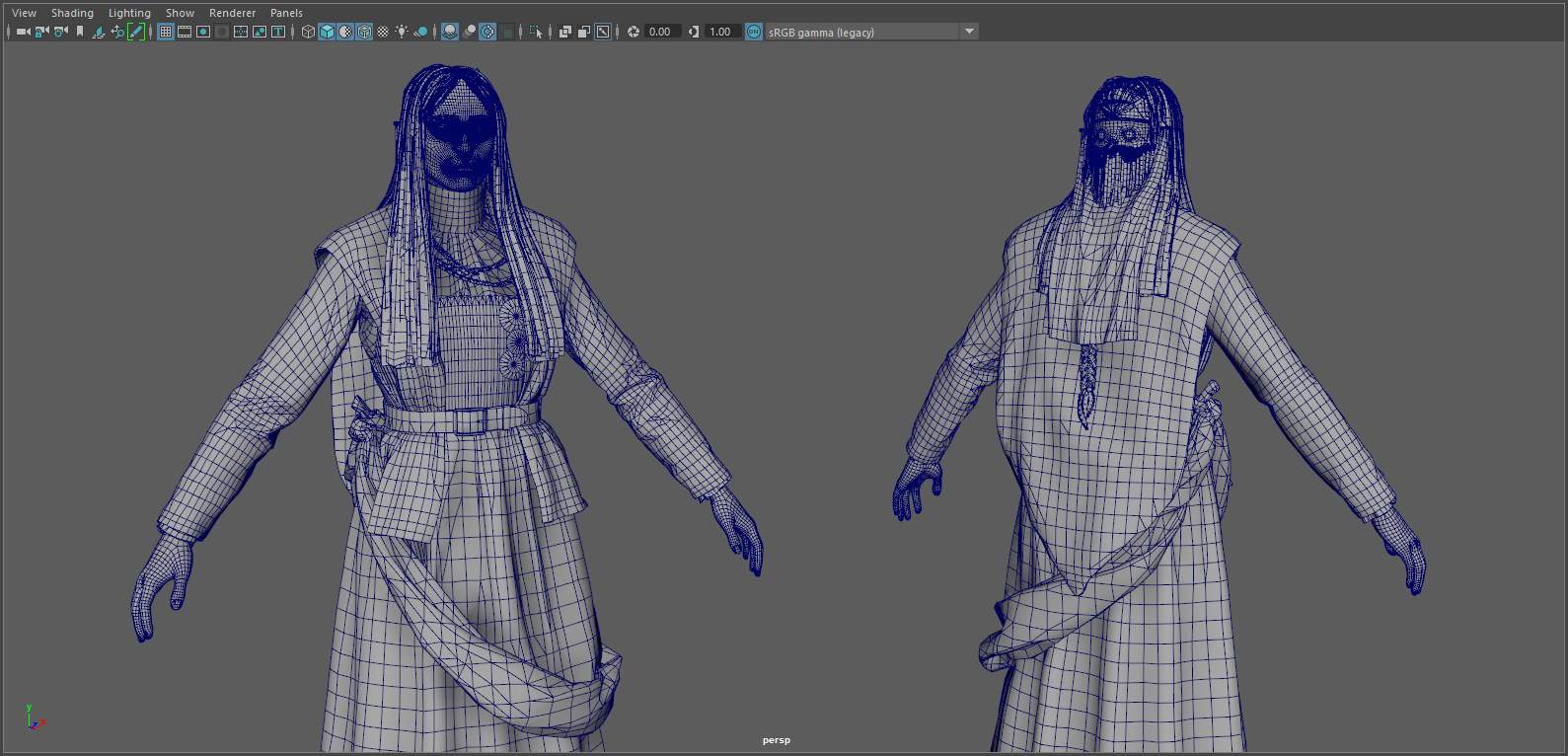
Siridean final topo - Maya
After retopology comes lookdev. To start, UVs are unwrapped into sewing pattern logic using tools like RizomUV or UV layout. Banisher's characters use the Udims system of Unreal Engine called Virtual texturing.
Baking and texturing are done using the Substance Painter and Designer.
In addition to standard PBR textures, we include an ID map, which will be used to adjust, on a single shader, around twenty different fabric fuzzes, despite being distributed across multiple texture sets.
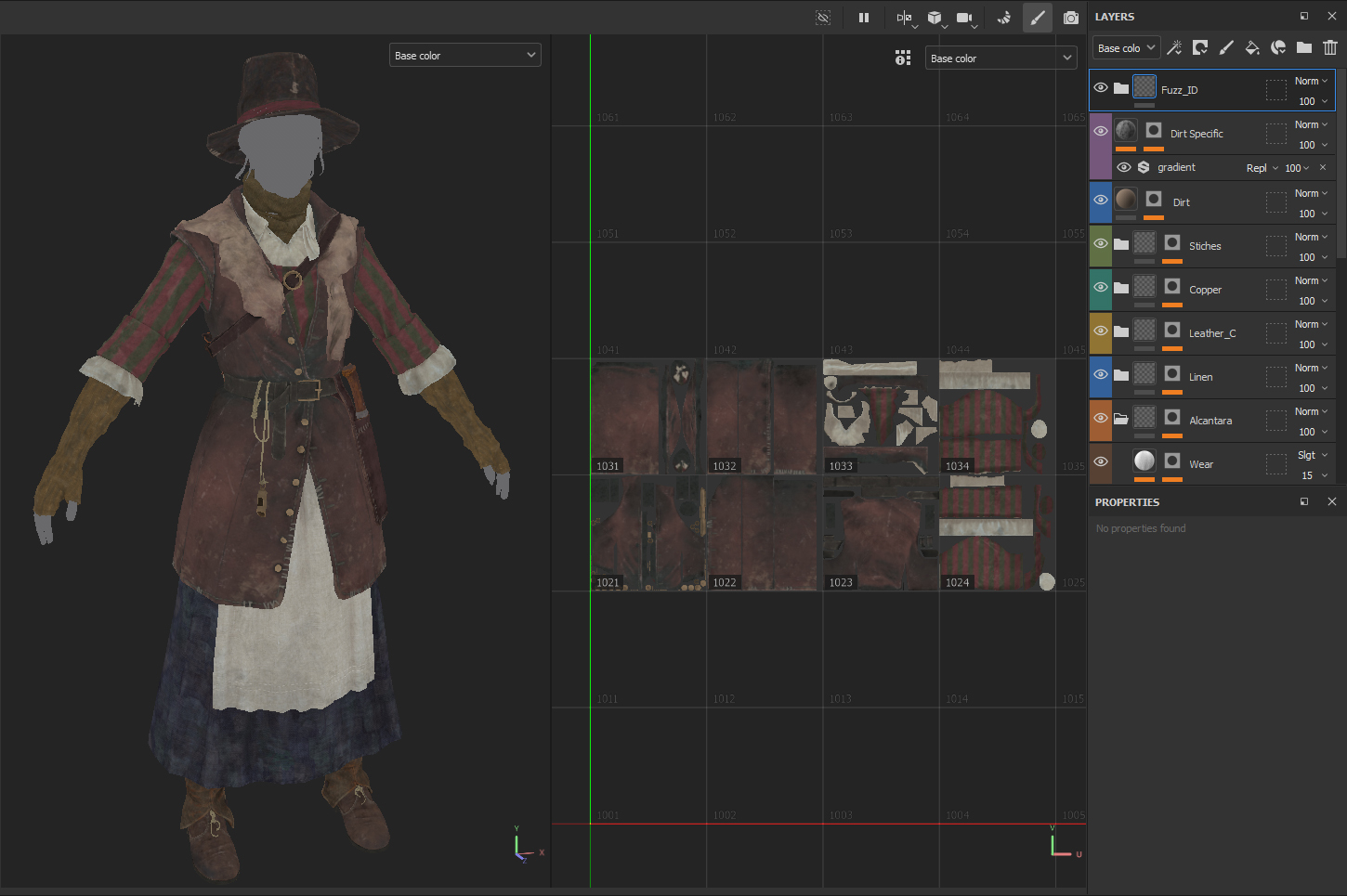
Kate - Adobe Substance Painter
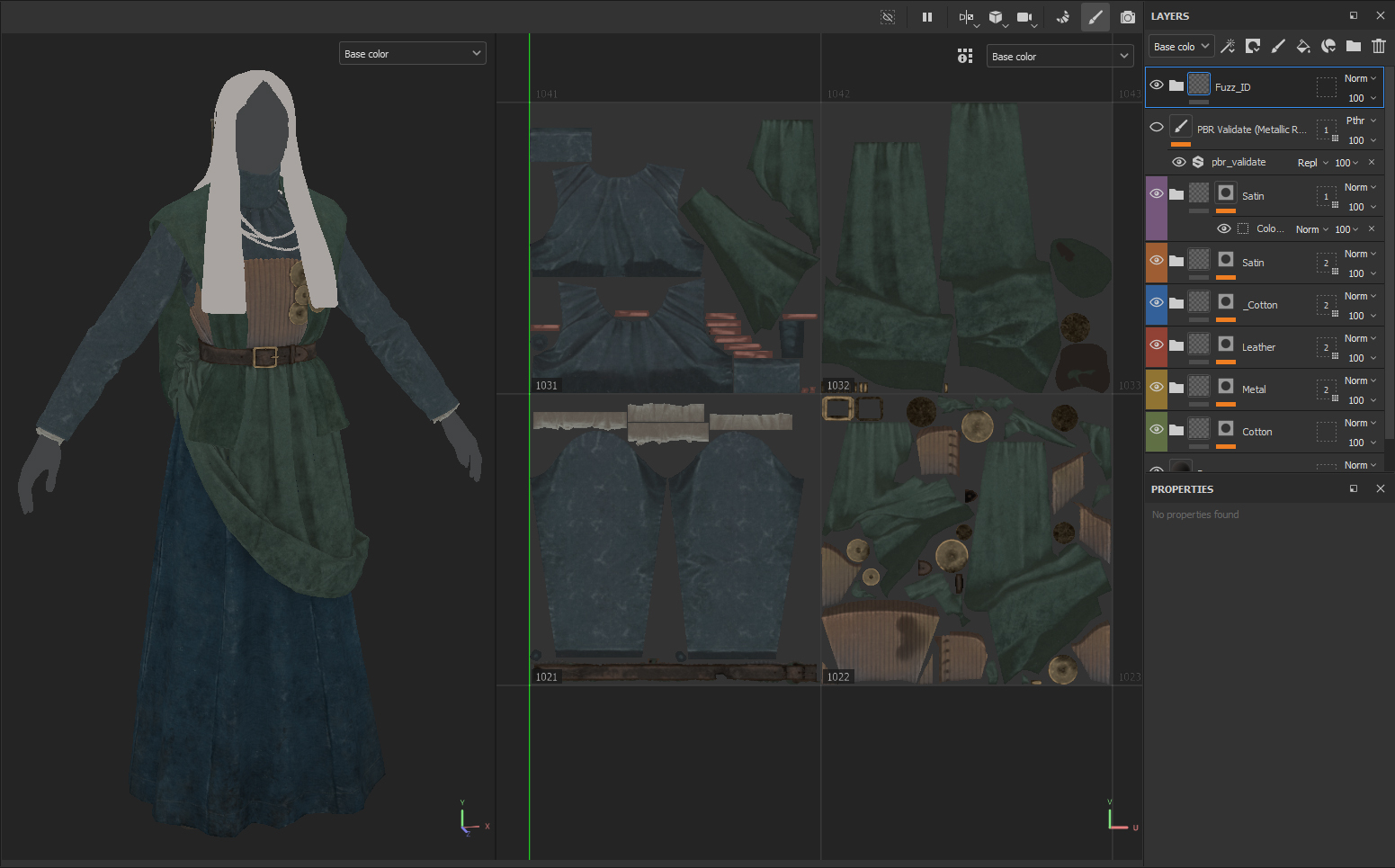
Siridean - Adobe Substance Painter
That’s it. You now have a Banishers settler ready to be used in the world!
What are the biggest challenges that you face during projects?
Banishers is the first game of the company released on the PS5, PC and Xbox series. So the character team had a part in increasing the quality standard of characters. We worked on several solutions such as Udims, details mapping and specific shaders depending on matters such as skin fabric and so on.
Also, asset reuse was key to finishing all the characters on time; Since the technical artists were already overwhelmed by other tasks and the concept art wanted to enjoy great freedom, we opted for a manual asset reuse system where each asset could be picked from a Maya scene and deformed to fit its new owner.
This way, we were able to create rather complex characters piece by piece without worrying about the compatibility of assets among them.
Let's shift our focus and talk about you! What inspired you to become a 3D artist?
I began to take an interest in applied arts during my school years. I've always loved the combination of artistic skills intertwined with technical skills. At that time, I envisioned working later on as a graphic designer or stage manager in theater or cinema. However, during my first days attending open houses at schools, I found myself more drawn to the fields of 3D and animation.
After a first year of general studies at my art school, I ultimately decided to specialize in the field of video games, where the emerging PBR (Physically Based Rendering) and very “direct” tools seemed so cool to me!
Lastly, What advice do you have for other 3D artists who may just be starting their careers?
The first thing I would advise starts right from your studies, and what I call the three thirds: one third of your knowledge comes from teachers, one third from online tutorials, and one third from your classmates ! That's why it's important not to settle for the minimum and to be in a group with a good working dynamic.
And this philosophy continues into professional life where it's very important to establish an atmosphere of knowledge sharing and sometimes challenge.
I also believe that working alone in one's corner, even for personal projects, is not ideal. Whether you're a junior or very experienced artist, it's important to have your work reviewed by your peers as much as possible. Hence, the importance of maintaining dedicated discussion groups among friends or at work.
Lastly, if something inspires you, try to make a study plan and go for it, whether it's seem complicated like a very complex hard-surface or Disney-style modeling and so on.. the internet is full of incredible tutorials that shouldn't be hesitated to be procured. Even though their prices may seem high, they generally remain affordable for educational content. Finding the right tutorials can also be a challenge, which is why it's important not to hesitate to seek advice from mentors.
by Victorien Berry
ArtStation
이 작업은 Maya, R3DS, game 등의 기술로 제작되었습니다.
Marvelous Designer로 이와 같은 3D 의상·캐릭터 작업을 직접 만들어볼 수 있습니다.